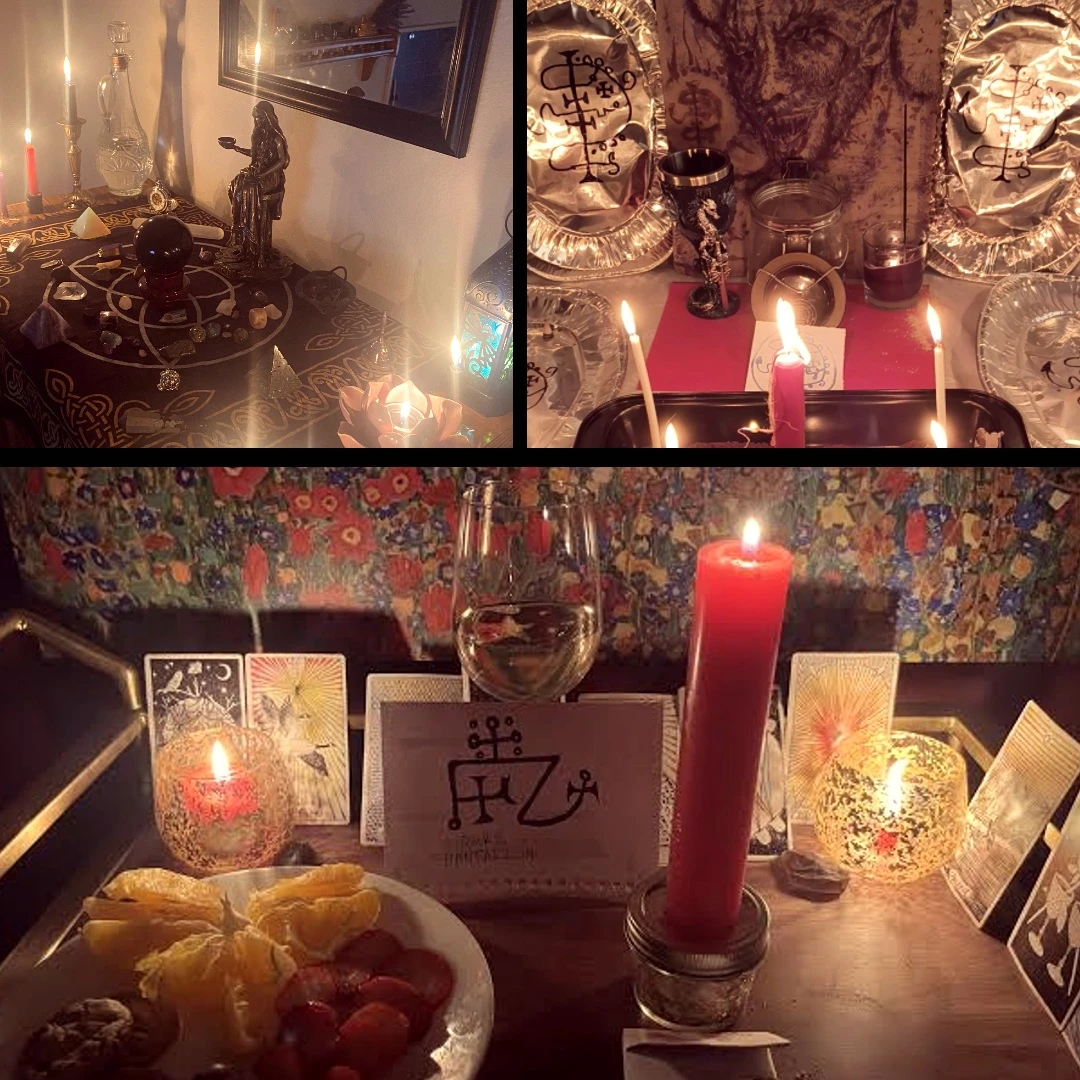
At first glance, the idea might seem straight out of medieval Europe: mysterious demon names, intricate sigils drawn with complex lines, candles and incense, makeshift altars, and offerings made to unseen entities in exchange for money, love, knowledge, or influence. But surprisingly, this culture hasn’t disappeared. Even in the age of artificial intelligence, space exploration, and genetic medicine, there are still Western communities that engage with figures like Paimon, Asmodeus, Belial, and Bune. Lilith and Lucifer, treating them as entities that can be contacted. These practices are no longer confined to secret societies; the internet has brought them to forums, Reddit, TikTok, YouTube, and Discord, where practitioners share photos of their altars and sigils, personal experiences, and what they believe are 'responses' from these entities.
In 2026 alone, there have been numerous recent posts from people describing altars dedicated to these beings. Some claim improvements in work, finances, relationships, or personal growth as a result. Of course, these are personal testimonials and not evidence of the existence of such entities or the effectiveness of the rituals. Still, they show that the culture of Satanism or what’s known as Demonology is no longer just a historical curiosity.
This raises the question:
Who are the most prominent demons whose names still appear in contemporary Western occult practices ?
And why do people in the 21st century turn to them?
Note
This article examines these beliefs from a cultural, folkloric, historical, and critical perspective only. It is not intended to teach, promote, or encourage magic or summoning practices in any way. Monotheistic religions condemn magic and seeking help from demons. In Islam, such practices are considered among the gravest prohibitions and may be seen as outright polytheism. The experiences shared by practitioners online are personal accounts, and there is no scientific evidence that their results are caused by supernatural beings.Key Terms
Before diving into the details, it’s helpful to clarify some of the terms used in this article. In the West, there are still individuals and groups interested in what’s known as Western esoteric magic, a broad field that includes beliefs and practices related to spirits, demons, symbols, and hidden knowledge. Some branches focus on specific entities, treating them as spiritual forces that, according to their followers, can be summoned or contacted.
Occultism This term describes the wide world of esoteric beliefs. The word comes from the meaning 'hidden' or 'concealed' and historically covers topics like magic, alchemy, astrology, spirit summoning, secret symbols, and certain spiritual schools.
Demonology This is one of the most controversial branches of occultism, the study of demons, their names, characteristics, and hierarchies as described in religious texts, folklore, and European grimoires. One of the most famous of these is the collection known as Ars Goetia.
Demonolatry Literally meaning the worship or veneration of demons, though in modern usage especially within some Western esoteric circles, the meaning can be broader than just worship.
Left-Hand Path: A term for a range of esoteric traditions that emphasize individuality, breaking taboos, and personal sovereignty. Some of these currents are associated with Satanism, Luciferianism, or forms of magic.
What is the Goetia ?
The Goetia is not an independent religion or the name of a modern secret society. Instead, it refers to an old European tradition of ceremonial magic focused on summoning or commanding spirits through specific rituals and symbols.
The most famous text bearing this name is the Ars Goetia, which is the first section of a magical book known as The Lesser Key of Solomon.
This book appeared in its well-known form in 17th-century Europe, but it draws on much older material. It was mythically attributed to the prophet Solomon, though scholars agree it was not actually written by him.
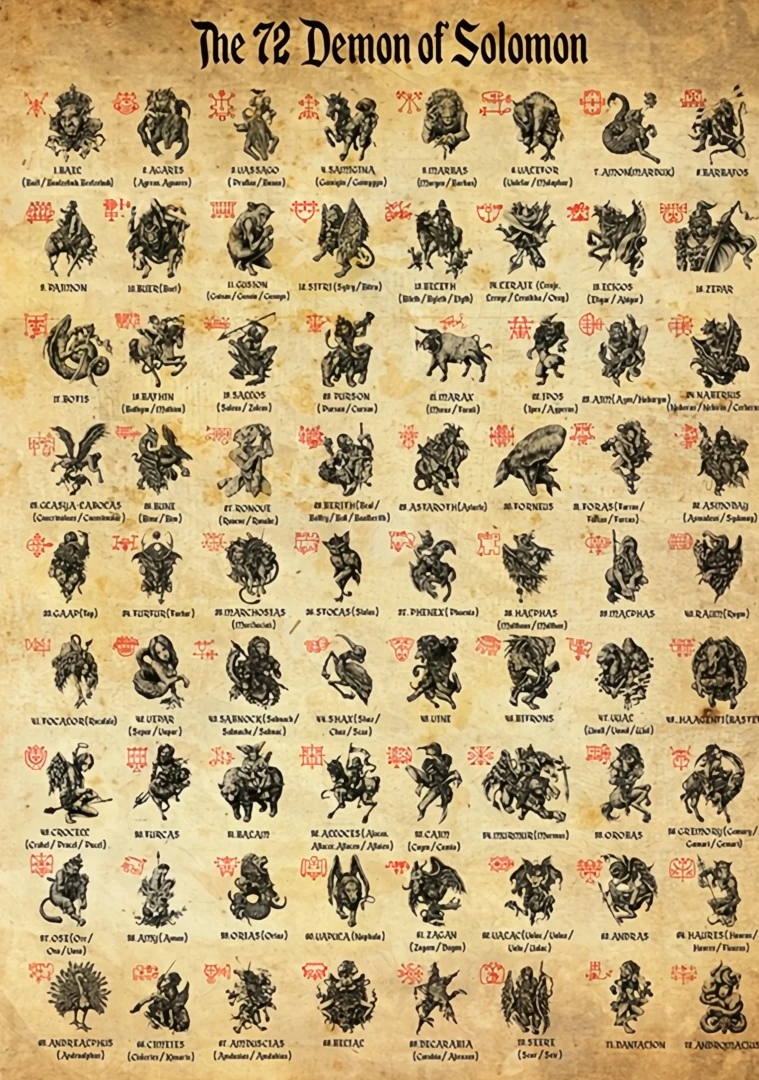
The Ars Goetia contains a list of 72 spirits or demons, each with a name, rank, characteristics, and supposed abilities. Many also have a unique symbol or 'sigil' associated with them.
However, just because a name appears in this book doesn't mean it originated there; some of these figures are much older and were later incorporated into European demonology.
Among the key sources for Satanism is the 'Grimorium Verum' or 'The True Grimoire,' a European magical text that emerged in the early modern period. It deals with summoning spirits and demons, placing Lucifer, Beelzebub, and Astaroth at the forefront of its entities.
It should not be confused with the Lesser Key of Solomon (Lemegeton); these are two different books, though both belong to the European magical tradition mythically linked to Solomon.
What is a demonic seal (sigil)?
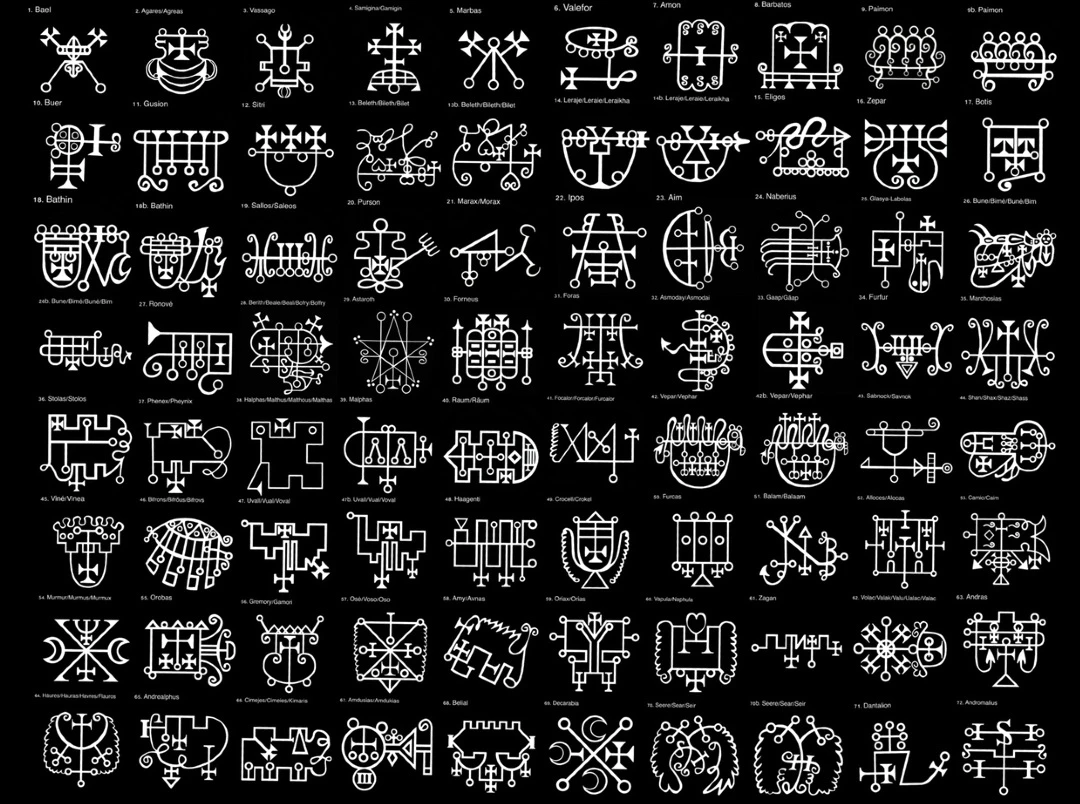
A sigil is a symbolic drawing attributed in magical texts to a specific spirit or demon. In ritual culture, it serves as a mark representing that entity. However, there's a common misconception: not all seals found online are 'ancient.' The Ars Goetia documents seals for figures like Paimon, Bune, Asmodeus, Astaroth, Dantalion, Belial, and Stolas. But figures such as Lilith , Mammon, Azazel, and Agrat bat Mahlat do not have historically standard Goetic seals; most symbols associated with them today emerged in more recent occult traditions.
Researcher Joseph H. Peterson notes that even the Goetic seals themselves do not appear in the oldest texts predating the Lemegeton (the Lesser Key of Solomon), indicating that these symbols also evolved over time.
What are symbolic correspondences?
In magical and demonological literature, the term 'correspondences' refers to sets of symbolic associations that a magical school or tradition links to a particular entity such as a planet, day of the week, color, metal, type of incense, or offering.
For example, when it's said that Bune is associated with Jupiter and Thursday, this falls under what's known as 'magical correspondences' symbolic connections rather than established historical facts. Not all sources or practitioners agree on these associations.
In fact, many of the links between days, planets, colors, materials, and offerings have evolved or been added in modern schools of magic. There isn’t a single ancient system that unifies them, so we present these as part of contemporary magical traditions and practices, not as confirmed historical information.
Between the Kings of the Jinn and Demonic Spirits
There are striking similarities between some traditions of Arabic magic and Western demonology. In Arabic occult texts, you’ll find names of jinn kings and their servants, each assigned ranks, roles, specialties, specific times or days, and unique symbols much like how Western grimoires assign each demon a name, rank, abilities, and a personal seal. However, the resemblance is more about the structure of classification and ritual than shared origins, as the religious backgrounds, texts, and traditions differ significantly between the two worlds. The Kings of the Jinn in Arabic Magic are not simply copies of Western demons, nor vice versa.The 13 Most Notorious Demons in Ritual Magic and Summoning
1- Asmodeus
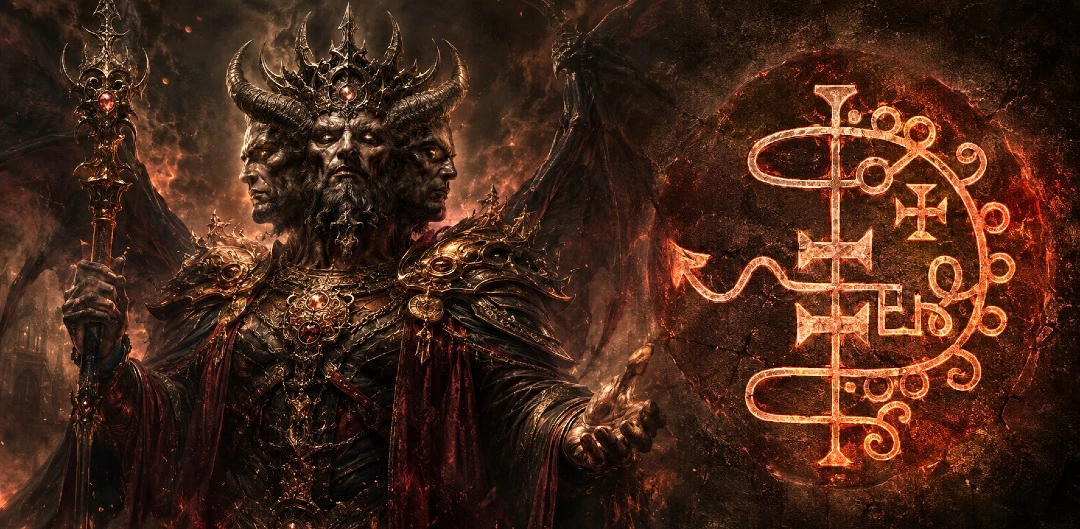
Known as the king of desire and wild power, Asmodeus is one of the oldest and most famous names on this list. His origins trace back to Jewish tradition before entering European demonology and magic.
In the Ars Goetia, he appears as Asmoday, the thirty-second spirit and a 'great and powerful king.' The text describes him as a strange composite figure with three heads—a bull, a man, and a ram—with a serpent’s tail, riding a hellish dragon. He is credited with knowledge of mathematics, geometry, astronomy, and crafts, as well as revealing hidden treasures.
His modern image has changed significantly. In demonology circles, Asmodeus is now especially associated with desire, sexuality, boldness, self-confidence, and confronting repressed feelings. For instance, in July 2026, a practitioner published an account of a supposed spiritual relationship with Asmodeus that lasted for years, linking it to themes of desire, art, and personal struggles.
Sigil Status : He has a well-documented historical Goetic seal.
Planet and DayMars and Tuesday, though this varies by tradition.
Offerings in Modern Practice: References include incense, spicy substances, drinks, and items linked to fire and desire; these are modern, non-standardized traditions.
Alleged Purpose : Desire, boldness, personal power, confronting repression, and ambition.
Cautions : Even practitioners themselves associate this figure with impulsiveness, excessive desires, and an overwhelming focus on sex or power.
2- Belial
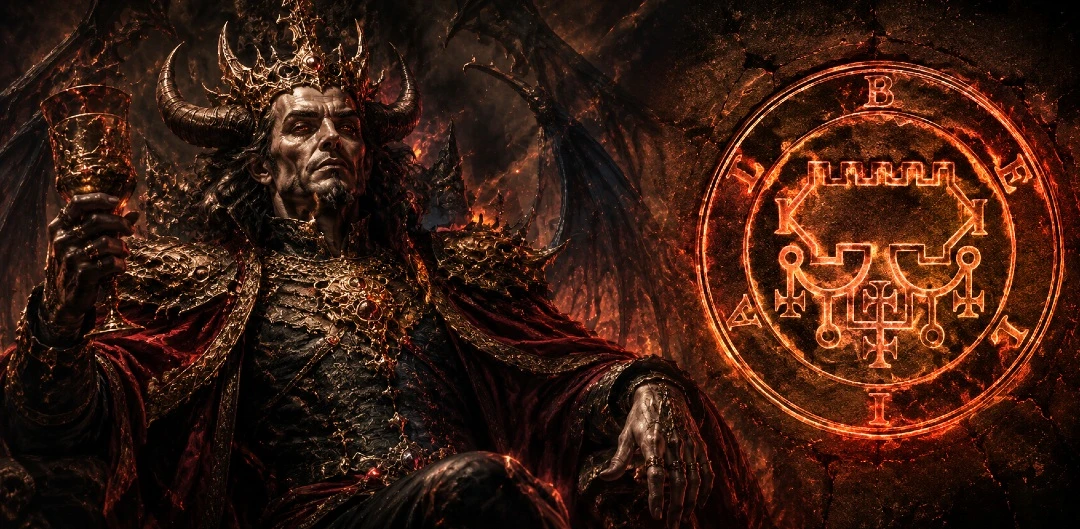
This demon has become a symbol of independence. The name Belial is one of the oldest in the Goetia, but within it, he is regarded as one of the most formidable demonic kings.
The Ars Goetia ranks him sixty-eighth and describes him as a "great and powerful king." He appears as a beautiful angel riding a chariot of fire and is said to grant positions of power, influence, and the ability to win over friends and enemies. Unlike many other spirits, the text specifically mentions offering gifts and sacrifices to him. In modern occult culture, Belial has come to represent independence, self-sovereignty, and breaking free from constraints.
Interestingly, this image persists even in very practical contemporary requests. In June 2026, someone on a Satanic community forum described turning to Belial for help with a work and legal issue, later crediting him with landing a better job opportunity. Again, this is a personal story, not evidence of anything supernatural. In modern culture, Belial is associated with extreme independence and strength, but also with the risk that "self-sovereignty" can turn into selfishness, cruelty, or an inflated ego.
Sigil StatusGoetic seal is documented.
Modern Associations : Saturn and Saturday are among the most common correspondences, though different systems exist.
Offerings : The Goetia text itself mentions offerings and gifts, but their nature varies widely in modern practice.
Intended Purpose : Influence, career opportunities, prestige, breaking free from limitations, and strengthening willpower.
3- Paimon
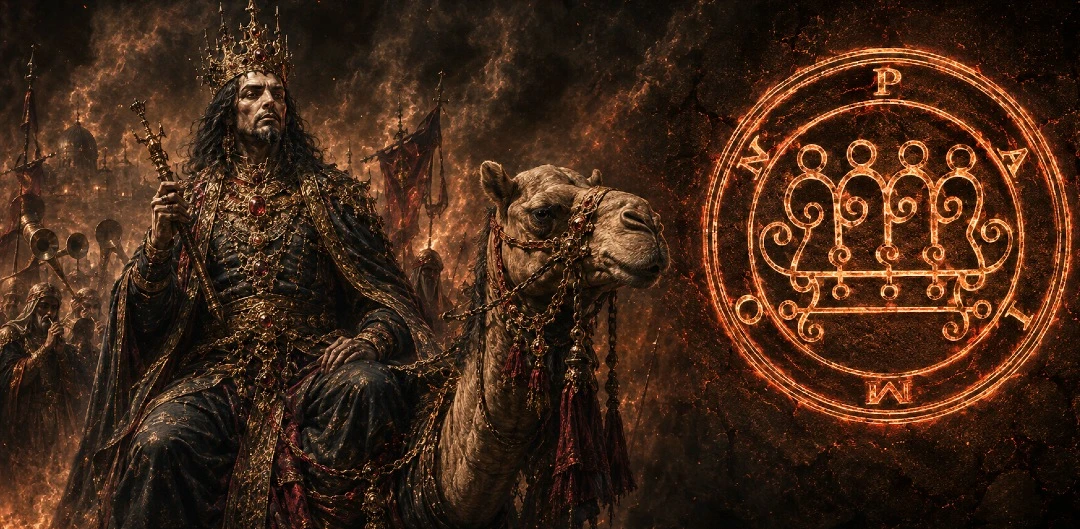
Paimon is known as the king of knowledge who has made his way into movies and social media. King Paimon is probably the most famous Goetic spirit among modern audiences.
He is the ninth spirit, described in the manuscript as a crowned king riding a camel, preceded by music, instruments, and noise. He is credited with teaching arts and sciences, revealing secrets, and granting status and influence. The old text also mentions offering sacrifices if he is summoned alone.
His fame skyrocketed after "Hereditary" movie. However, his modern presence extends far beyond cinema.
For example, in March 2026, a new user appeared in the Satanist community (Demonolatry), claiming to have started making offerings to Paimon and seeking to build a spiritual connection with him. This is a striking example of how a figure from an old European manuscript has evolved into a digital-age icon. It's worth noting the risks involved when someone becomes obsessed with power, influence, or the belief that they possess special knowledge or a unique 'calling' that sets them apart from others.
Sigil Status: A well-known historical Goetic seal.
Modern Associations: Often linked to the sun and Sunday, though sources vary.
Common Offerings: Incense, music, art, and items practitioners consider valuable or beautiful.
Claimed Purpose: Knowledge, arts, creativity, eloquence, influence, and status.
4- Dantalion
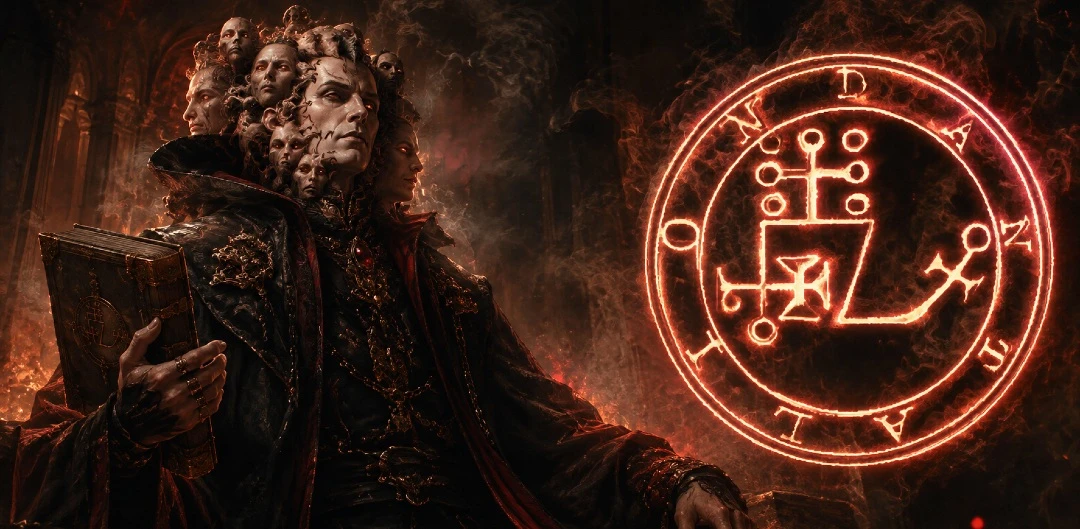
Dantalion is known as the demon of thoughts and hearts. He is the 71st spirit in Ars Goetia and is described in the text as an extremely unusual figure: a man with many faces, both male and female, holding a book. He is said to know the thoughts and secrets of people, and, according to legend, can change minds and feelings, inspire love, and teach arts and sciences.
These traits have made him especially relevant in modern love magic culture. On contemporary forums, his name frequently comes up in discussions about relationships, breakups, emotions, and psychological influence, earning him the reputation of the 'demon of minds and hearts.'
This type of magic often leads to obsession, attachment, and delusion, not to mention the obvious ethical issue of trying to influence another person's will.
Sigil Status : A historically documented seal in the Goetia.
Modern Associations : Venus or the Moon, and Friday in many contemporary correspondences.
Offerings : Flowers, perfumes, and items with personal emotional significance in some modern practices.
Purported Purpose : Love, understanding emotions, influencing others, relationships, and attraction.
5- Astaroth
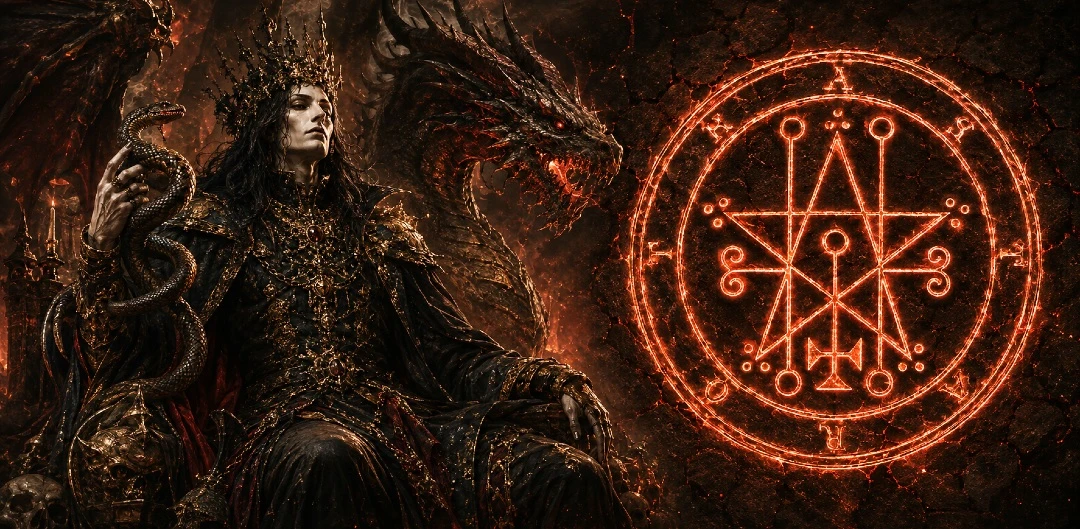
From the ancient goddess Astarte to a Duke of Hell, Astaroth is a fascinating figure that demonstrates how the meaning of a name can evolve over thousands of years.
Historically, the name is linked to Astarte, the ancient Semitic goddess closely related to the Mesopotamian Ishtar, but in Christian tradition and European occultism, it was transformed into a demonic figure.
In Ars Goetia, Astaroth is described as a male figure with the rank of 'powerful duke,' appearing as a distorted angel riding a dragon-like creature and holding a serpent. He is credited with revealing secrets, knowledge of the past, present, and future, and teaching sciences. The old text specifically warns against approaching him.
Today, some occult traditions have reimagined Astaroth as female or androgynous, reflecting the historical connection to Astarte. The original texts portray Astaroth as a deceptive and dangerous spirit, while modern culture adds the caution of falling into the illusion of possessing 'secret knowledge' that others do not have.
Sigil Status : A historical Goetic seal is associated with Astaroth.
Modern Associations: Venus and Friday are among the most common correspondences.
Offerings : Perfumes, flowers, incense, and other items associated with beauty in some modern traditions.
Claimed Purpose : Hidden knowledge, secrets, allure, and wisdom.
6- Agrat bat Mahlat
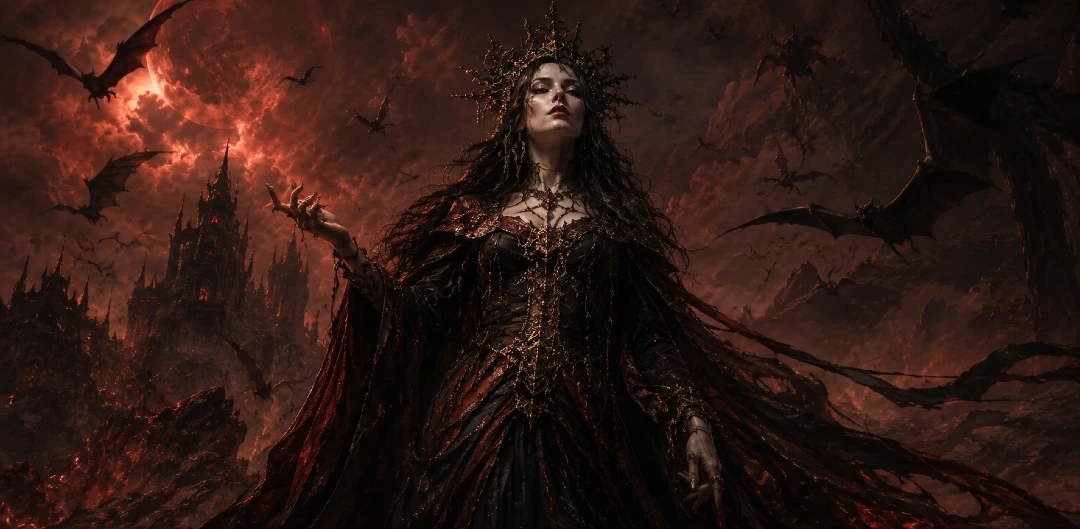
Agrat bat Mahlat is a demonic queen from Jewish folklore. She is not one of the spirits of the Goetia, but rather a figure from Jewish and Kabbalistic demonology. In various stories, she appears as a queen or nocturnal demoness, sometimes associated with the nights before Wednesday and Saturday, leading a vast procession of harmful spirits. Later traditions group her with Lilith and Naamah as one of several demonic queens.
Agrat has found new life in some modern Left-Hand Path circles, where she has been reimagined as a symbol of dark femininity, night, and independence.
Most aspects of her current 'ritual persona' are based more on contemporary additions than on established historical texts.
There is no known standard historical sigil for Agrat bat Mahlat. The symbols circulating online are modern occult creations, and even practitioners acknowledge that different or personal symbols can be used.
Sigil Status: No agreed-upon ancient seal exists.
Today : Traditional accounts mention Tuesday and Friday nights in relation to her nocturnal activities, but not as specific 'summoning dates.'
Planet: Any association with the Moon or Venus is a modern development.
Recently Claimed Purpose : Independence, allure, night, dreams, and dark femininity.
7- Bune
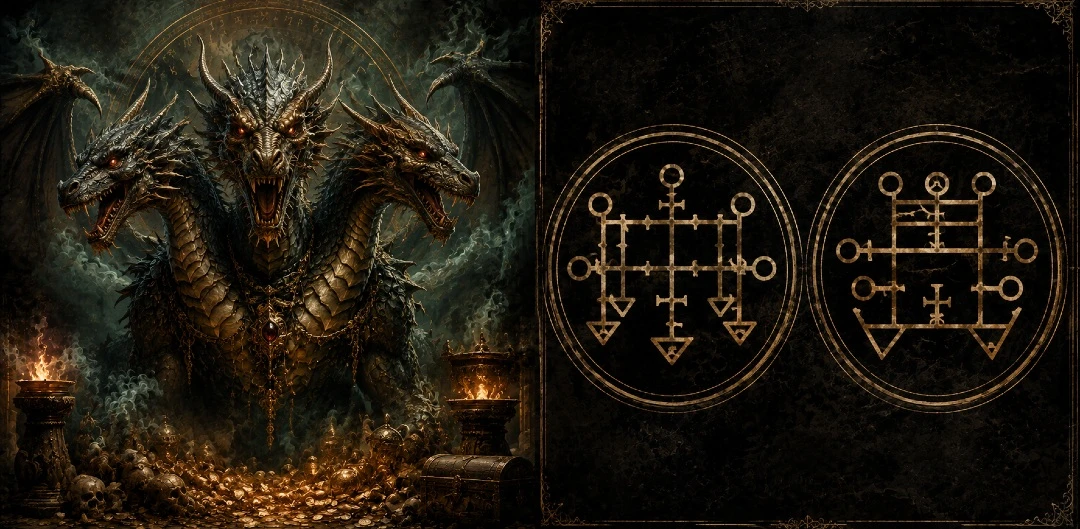
Bune, also spelled Buné, is known as the demon of wealth who has become something of a digital celebrity. He stands out as one of the most intriguing figures on this list. Bune is the 26th spirit in Ars Goetia and, according to the text, appears as a dragon with three heads. He is associated with powers over the dead, but at the same time—
He is believed to grant wealth, wisdom, and eloquence. Interestingly, the manuscript describes two distinct sigils for Bune, either of which can be used.
This long-standing link to prosperity has made Bune one of the most popular names in what is now called 'prosperity magic.'
In May 2026, someone shared a photo of the first altar they built for Bune, explaining that after spending money on others to perform magic for them with no results, they decided to try it themselves. The altar featured coins, cash, and food offerings.
This story almost perfectly sums up the phenomenon: a modern financial crisis drives a 21st-century person to seek help from a name found in a centuries-old book of magic. The most concerning aspect is the way economic hardship gets tied to magical solutions, which can make vulnerable people more susceptible to illusions or commercial exploitation.
Sigil Status: Bune has two historical seals in the Goetia tradition.
Modern Associations: Jupiter and Thursday are the most commonly linked.
Modern Offerings: Coins, fruit, sweets, and other symbols of prosperity.
Claimed Purpose: Money, jobs, opportunities, wisdom, and eloquence.
8- Azazel
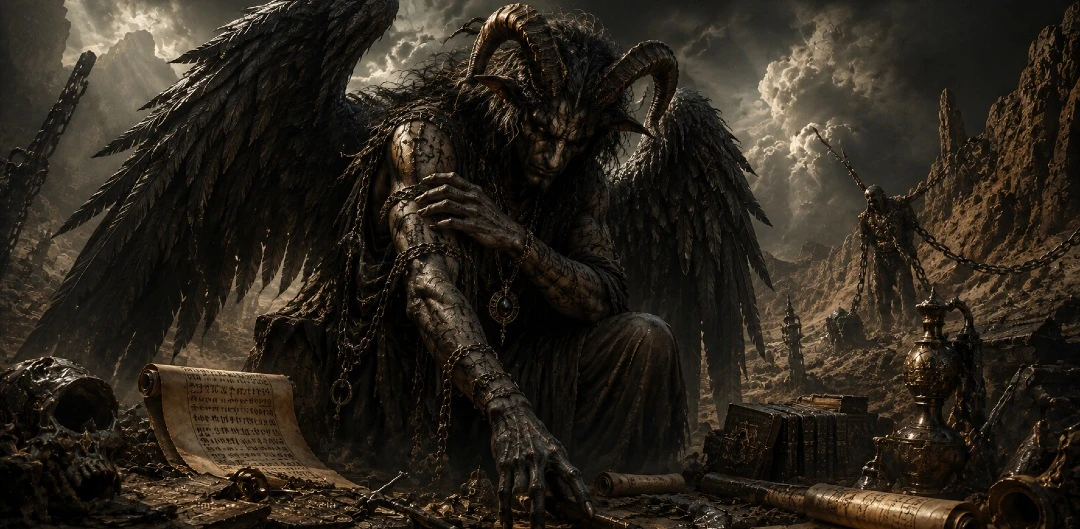
The Teacher of Forbidden Knowledge. Azazel's roots go back much further than the Goetia. The name first appears in Leviticus in the ritual of the 'scapegoat,' and the character becomes more defined in The Book of Enoch where Azazel is one of the rebellious angels who taught humans forbidden knowledge, from weapon-making to metallurgy and adornment. In the Enochian account, he is eventually punished and bound in the wilderness. This has made Azazel a modern occult symbol of forbidden knowledge, rebellion, and breaking boundaries. It's important not to confuse the ancient figure of Azazel with the 'spiritual guide' image created by some modern occult groups; older sources primarily portray him as a cause of corruption and violence.
Sigil Status: There is no single, standardized historical sigil that can be traced back to ancient sources; the designs commonly associated with it today are modern creations.
Modern Associations: Often linked to Saturn or Mars, but there is no consensus.
Offerings: Some contemporary practitioners symbolically associate it with metals, stones, or ritual tools, drawing inspiration from the Book of Enoch.
Purported PurposeKnowledge, independence, empowerment, and confronting the "shadow."
9- Lucifer
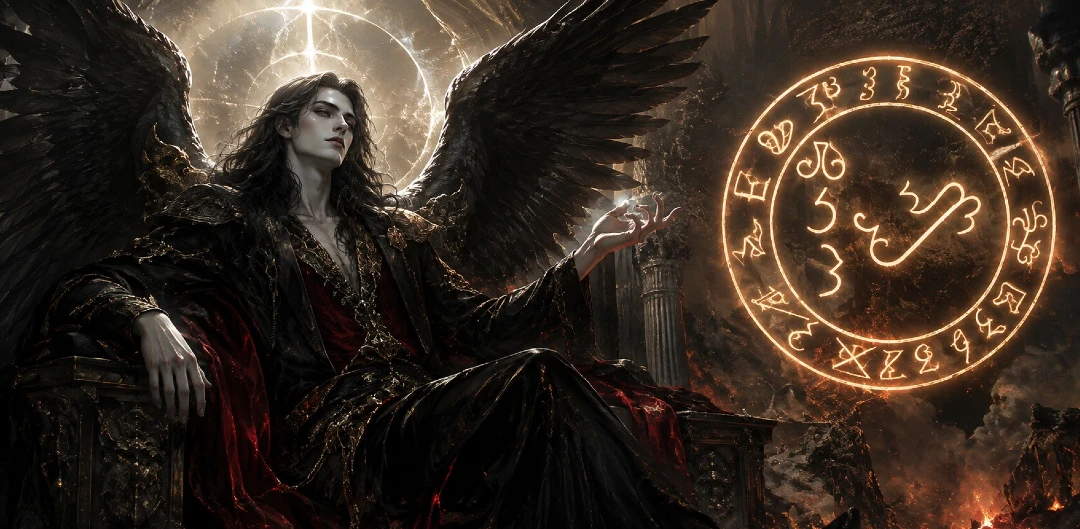
Known as the Light-Bringer who became the lord of rebellion, the story of Lucifer is more complex than commonly believed. The Latin name means "light-bearer" and originally referred to the planet Venus when it appeared as the morning star. A phrase in the Book of Isaiah was later associated with the fall of the King of Babylon, and over time, Christian tradition reinterpreted it as a symbol of Satan's fall, which is how Lucifer became identified as the fallen angel.
In later grimoires, Lucifer is portrayed as an independent entity. In the Grimoirium Verum, for example, Lucifer appears alongside Beelzebub and Astaroth as one of the three highest powers, each with their own seals and depictions in the book's tradition.
Modern Luciferianism sometimes presents Lucifer as a symbol of enlightenment, reason, independence, and knowledge, rather than simply as an embodiment of evil. This culture remains very much alive; in August 2026, for instance, a new discussion emerged where practitioners shared their experiences with Lucifer, and in April, similar testimonies described engaging with him as a guide for personal growth. The symbolism of Lucifer centers on pride and rebellion, so the idea of "self-sovereignty" can easily shift into arrogance or a sense of superiority.
Sigil Status: Historical seals appear in the Grimoirium Verum, in addition to a widely used modern sigil. These should not be confused with each other.
Planetary Association: Venus is the most clearly established historical connection.
Modern Day: Friday, due to its association with Venus.
Alleged Purpose: Knowledge, independence, creativity, intellectual freedom, and personal growth.
10- Mammon
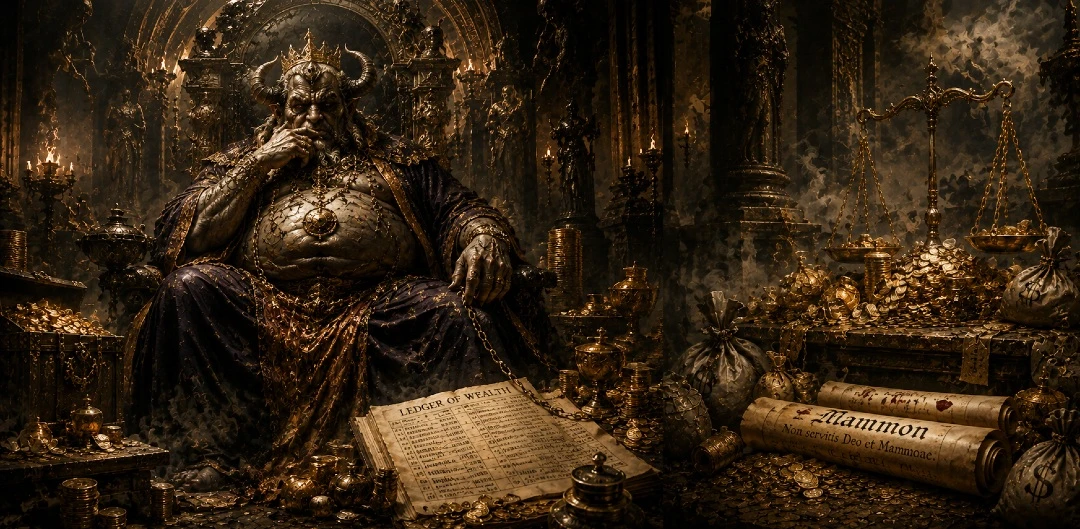
When money itself becomes the devil, Mammon represents a very different case. Originally, Mammon wasn’t the name of a demon—the Aramaic word simply meant wealth or possessions. In the biblical phrase, "You cannot serve both God and Mammon," it referred to money or riches, not a separate deity. Over time, especially in medieval Europe, the word gradually took on a life of its own and Mammon became personified as a demonic figure associated with greed. Ironically, what started as a warning against worshipping money has, in modern occult circles, turned into an entity some people invoke to gain wealth.
For example, in June 2026, someone wrote about turning to Mammon to hit a sales target and boost their income. By August, there were more questions about using Mammon for success in sales jobs. This is a clear example of how financial stress can lead people toward magical thinking—making Mammon especially appealing to those under economic pressure.
Sigil Status: There is no documented, standardized ancient seal; most Mammon symbols in use today are modern creations.
Modern Associations: Jupiter and Thursday are commonly linked to Mammon, due to their symbolism of wealth and expansion.
Offerings: Money or symbols of success and prosperity are sometimes used as offerings in certain practices.
Alleged Purpose: Money, business, commerce, sales, and prosperity.
11- Lilith
From a night demon to an icon of dark femininity, Lilith is now one of the most well-known occult figures online, though her modern image is very different from her origins.
In ancient and medieval Jewish sources, she appears as a female night demon associated with dreams, seduction, and the dangers of the night. Later stories cast her as Adam’s first wife, who refused to submit to him.
Modern occult and spiritual movements have radically reimagined Lilith. Instead of a frightening demon, she has become, for some, a symbol of independence, rebellious femininity, sexuality, freedom, and embracing the shadow side of the self.
This belief is still very much alive. For instance, in February 2026, a user asked whether Lilith is worshipped as a real goddess or as an energy. In August, there was a story about someone who set up altars for both Lilith and Mammon and made offerings to them.
The biggest mistake is to present the modern image of Lilith as if it's identical to the character found in ancient texts; in reality, she's largely a modern reinvention of an old figure.
Sigil Status: There is no standard ancient sigil for Lilith; the most popular symbols associated with her today are of recent origin.
Modern Associations: The moon, Venus, and Saturn are linked to her depending on the tradition, but there's no consensus.
Offerings: Flowers, perfumes, fruits, and items related to beauty or independence are common in modern practices.
Intended Purpose: Independence, attraction, self-confidence, liberation, and 'shadow work.'
12- Stolas
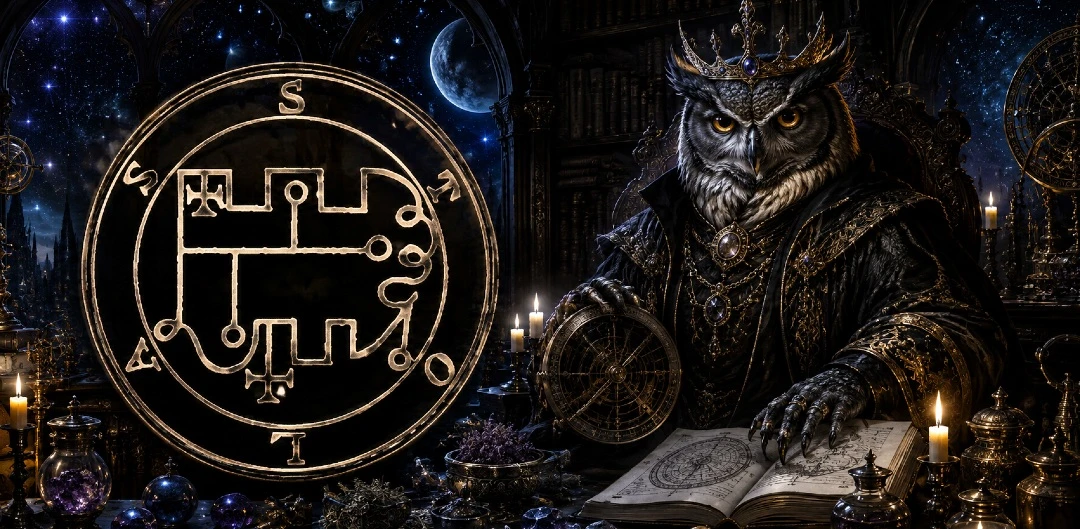
Known as the Prince of Stars and Herbs, Stolas is one of the most famous Goetia demons in modern internet culture. He is the thirty-sixth spirit, described as a powerful prince who first appears as a nocturnal bird before taking on a human form. He is said to teach astronomy, the properties of herbs and gemstones, and commands 26 legions of spirits.
His image later became popular as a crowned owl, even though ancient texts refer to him as a night raven. Modern pop culture especially animation has turned the owl version of Stolas into one of the most recognizable Goetia demons for a new generation.
This reveals an interesting phenomenon: sometimes, the way a character is depicted in modern art influences even those who believe they are spiritually connecting with it.
Most contemporary descriptions of his friendly personality or temperament come not from old manuscripts, but from personal experiences and pop culture.
Sigil Status: A historically documented Goetic seal.
Modern Associations: Jupiter and Thursday are commonly linked to him in many correspondence systems.
Offerings: Books, herbs, stones, and objects associated with learning are commonly used in modern practice.
Intended Purpose: Astrology, herbalism, stones, study, and knowledge.
13- Beelzebub
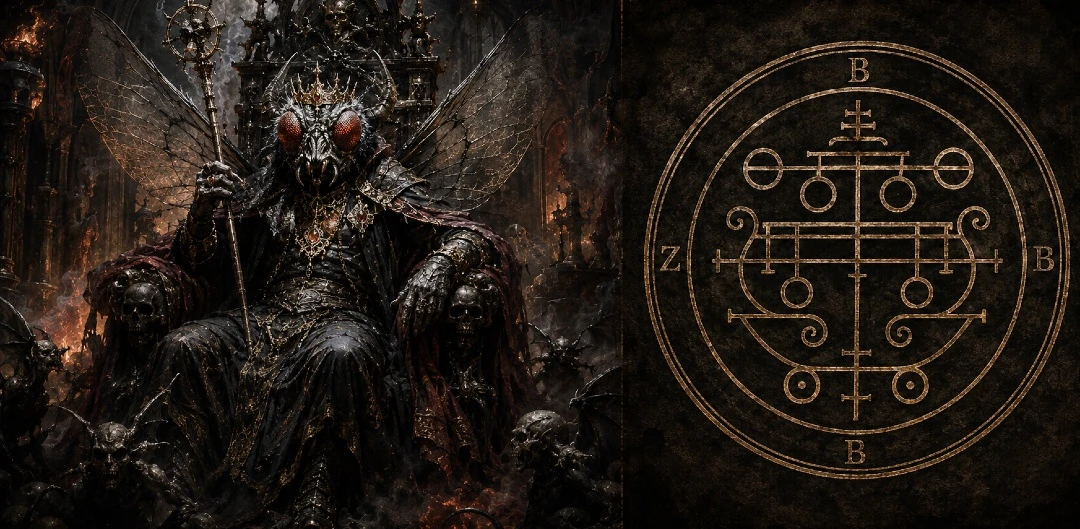
Known as the Lord of the Flies, Beelzebub is one of the most significant names in Western demonology. The name originates from Baal-Zebub, a deity worshipped in the ancient city of Ekron, and later evolved in Christian tradition into Beelzebub, the 'Prince of Demons.'
In the Grimoirium Verum, Beelzebub is ranked alongside Lucifer and Astaroth as one of the three great powers. The book describes Beelzebub in various monstrous forms, including that of a giant fly, and features his sigils and symbols within this magical tradition.
The title 'Lord of the Flies' has become inseparable from his modern image, and there are still active practitioners today. In June and July 2026, images surfaced of altars dedicated to Beelzebub within Satanist communities, including one that deliberately incorporated insects, bones, and symbols of decay. The ancient figure of Beelzebub, the Christian persona, and the 'entity' encountered by modern practitioners are not necessarily a single, unbroken identity; rather, they represent layers of religious and folkloric transformation over time.
Sigil Status: Historical seals associated with Beelzebub can be found in the Grimoirium Verum.
Modern Associations: Linked to Jupiter or the Sun in different systems, with no universal agreement.
Offerings: Practices vary widely; some associate Beelzebub with nature, insects, decay, and incense.
Intended Purpose: Knowledge, power, protection, transformation, and confronting fear or disgust.
Why do some people still seek to summon them?
Perhaps the most intriguing question in this entire discussion isn’t 'Who is Paimon, Bune, or Lilith?' but rather: Why do such beliefs continue to attract people today?
The Search for Control
Psychological studies have shown that superstitious and ritualistic behaviors become more appealing when people feel that outcomes are important but beyond their control.
In research on coping with uncertainty, people were more likely to turn to superstitious strategies as the risk of failure increased and the desire to influence the outcome grew. Other experiments found that simply making people feel things were more random led them to rate rituals as more effective.
This helps explain the kinds of requests commonly found in occult communities:
Money, jobs, love, legal issues, business success, influence, healing from crises, or life changes—these are exactly the areas where people desperately want a certain outcome but can’t guarantee it.
The Internet Turned the Solitary Magician into a Community
In the past, anyone seeking magic needed a rare manuscript, access to a closed group, or a hard-to-find library. Today, all it takes is a smartphone.
An academic study on WitchTok found that TikTok has become a space where modern magic users share images of altars, spells, tools, materials, and beliefs, blending 'digital religion' with material and consumer culture.
In a 2026 study, researcher Chris Miller focused specifically on how curses and harmful magic circulate on WitchTok, and how users collectively shape their views on when such practices are acceptable or not.
Social media didn’t invent magic, but it has radically changed its environment. What was once a solitary experience is now a post read by tens of thousands, followed by comments like:
"The same thing happened to me."
"It worked for me too."
"This entity is trying to contact you."
Personal experiences can end up reinforcing each other within a closed loop.
Magic Has Also Become an Identity and an Aesthetic
It’s not just about belief, there’s also an aesthetic: black candles, incense, statues, geometric seals, jewelry, cards, ornate altars, music, and artwork.
This explains how a figure like Stolas can move from an old manuscript to animated series, and then from pop culture back into modern spiritual discourse. It’s a cycle where myth, art, and social media constantly influence each other.
The Economy Plays a Role, Too
There's a less romantic side to the phenomenon: a thriving commercial market.
Paid spells, readings, amulets, candles, jewelry engraved with seals, e-books, courses, and coaches—some claiming they can perform rituals for a fee.
This becomes especially concerning when someone seeking these services is in financial or emotional distress. For example, in the case of Buné, one user openly admitted to previously paying 'fortune tellers and magicians' before deciding to try it themselves. Here, magic becomes not just a belief, but an industry that sometimes profits from hope and fear.
Are all of these people 'Satan worshippers'?
The answer is no, not everyone interested in Satanism (or demonology) is a Satanist, and not everyone labeled a follower of Satan actually believes in a literal devil.
There’s Demonolatry, which treats demons as entities worthy of respect or worship; Theistic Satanism, whose followers believe in a real Satan; Luciferianism, with its various schools; and some branches of the Left-Hand Path. There are also practitioners of ceremonial magic who may view these figures in entirely different ways.
There are also forms of 'atheistic' or symbolic Satanism that don’t believe in Satan or demons as real beings. So, the term 'Satan worshippers' alone doesn’t capture the complexity of the modern landscape.
Do these people sell their souls to demons?
The idea of 'selling your soul' is more famous in myth and literature than it is a core belief in modern Demonolatry.
The Faustian legend —the story of someone trading their soul for money, knowledge, youth, or powerhas had a huge impact on European imagination.
But many contemporary practitioners use the word 'pact' to mean a commitment or reciprocal relationship, and reject the Hollywood-style notion of 'handing over your soul.'
Still, websites literally discussing 'selling your soul' persist, showing how old folklore can survive even as its interpretation changes.
In the end, someone in 2026 might sit in front of a modern screen, use a satellite-connected phone, and according to their beliefs ask Buné for money, Dantalion to restore a relationship, Paimon for knowledge, or Mammon to boost sales.
This paradox doesn’t mean science has failed. People don’t always turn to belief because they lack knowledge of physics or medicine, but because they’re afraid, they desire, they feel powerless, and they seek meaning, control, or hope when the outcome is uncertain.
Maybe only the tools have changed. Once, there was a manuscript, a castle, and a candle.
Today, there’s a smartphone, an algorithm, an online community… and the sigil still glows on the screen.
About the Author