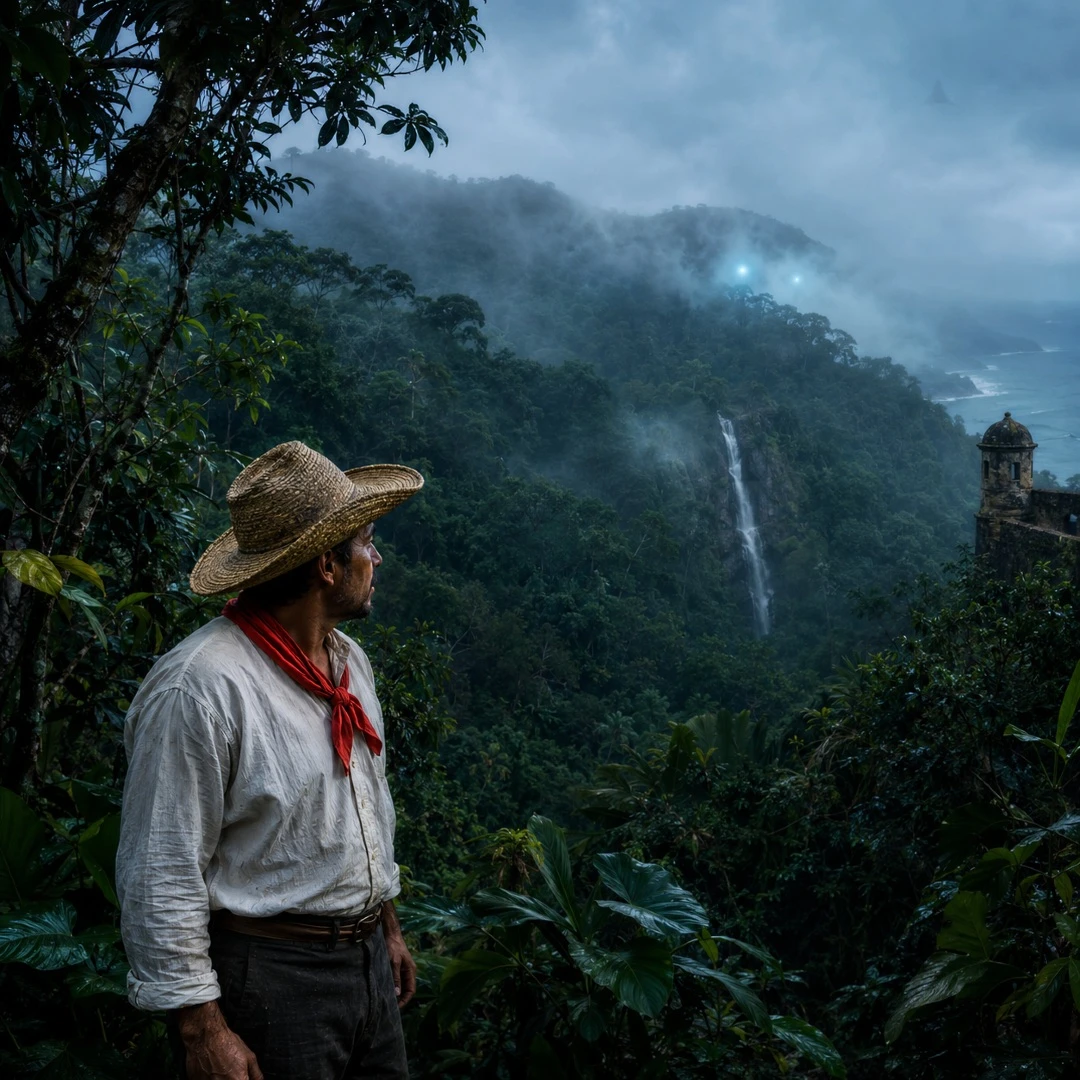
On rainy nights in El Yunque Forest, thick fog can swallow the mountain peaks within minutes, while the sounds of frogs and birds echo through the trees as if coming from another world. In this setting, it's no surprise that locals and visitors alike report mysterious lights above the forest, shadowy figures moving among the plants, and unexplained noises.
But Puerto Rico's mysteries aren't confined to the forest. Alongside these mountains are military bases, airports, and radar installations. In its waters, a US fighter jet once chased an unidentified triangular object, and in its towns, stories have emerged of animals found dead under strange circumstances culminating in the birth of one of modern culture's most infamous creatures: the Chupacabra.
Some of these stories are clearly rooted in folklore, while others have been shaped by the media and popular imagination. Yet there are also incidents that have made their way into military reports, radar logs, and official thermal recordings. This blend of legend and documented event is what makes Puerto Rico one of the Caribbean's most prominent hotspots for mysterious phenomena.
A small island with layers of mystery
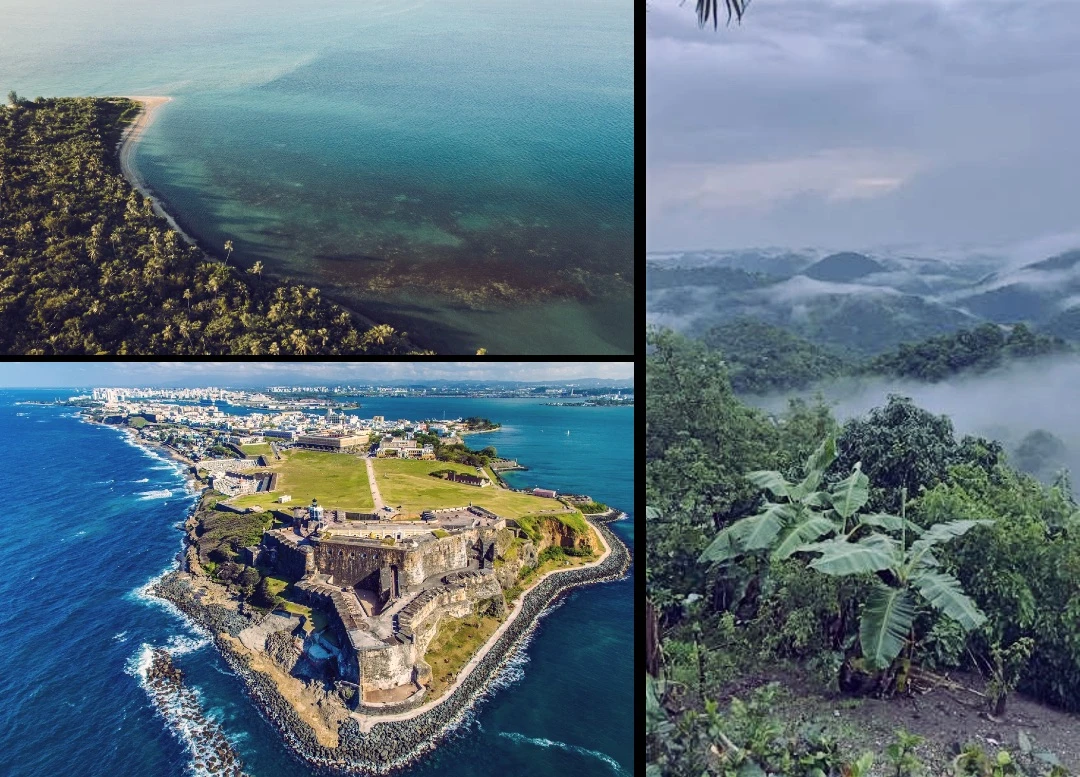
Puerto Rico sits in the northeastern Caribbean, between the Atlantic Ocean and the Caribbean Sea. It's a US territory rather than an independent nation, and its location has given it major strategic importance, especially due to its proximity to shipping routes leading to the Panama Canal and Latin America.
However, Puerto Rico's reputation for mystery predates the US military presence by centuries. The island has seen the beliefs of the indigenous Taíno people, followed by Spanish and African influences, and in the twentieth century, a new culture emerged, one steeped in tales of UFOs, military experiments, and unknown creatures.
As a result, it's often hard to separate ancient legends from modern anxieties. A light once thought to be a wandering spirit might now be seen as a spacecraft, and a small folkloric creature could be reimagined as an extraterrestrial being.
The Taíno spirits that roam at night
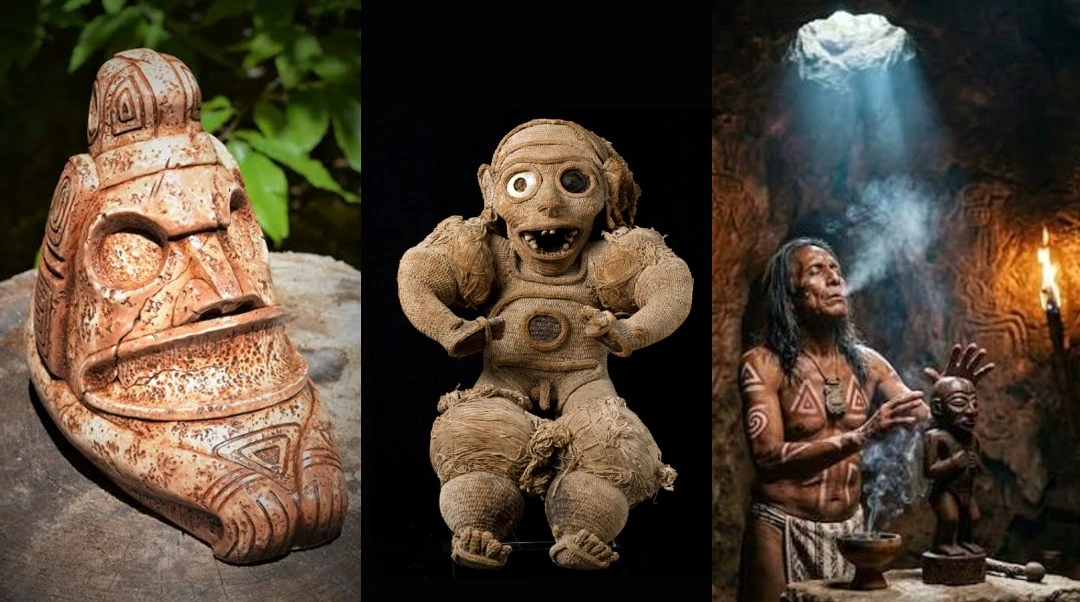
For the Taíno, the indigenous people of the Antilles before the Spanish arrived, mountains and forests held deep spiritual significance. The El Yunque area is closely linked in local tradition to the god Yúcahu, associated with life, nature, and cassava, one of the Taíno's most important crops.
The Taíno didn't see the world of the dead as completely separate from the living. They believed in spirits called Hupia souls of the dead who would leave their realm at night to wander among the living. According to accounts of their beliefs, these spirits could take human form, but could be recognized because they lacked a navel.
It was said that the Hupia would emerge under cover of darkness to eat guava fruit and mingle with people. That's why night, forests, and caves held special meaning in the Taíno view of the afterlife. While modern stories about creatures in El Yunque aren't a direct continuation of these beliefs, the idea of spirits has been part of local imagination for centuries, long before tales of UFOs.
With Spanish colonization came stories of the Duende mischievous little creatures said to inhabit forests and remote places, leading travelers astray or making strange noises to confuse them. These beings are part of Spanish and later Latin American folklore, and shouldn't be confused with the original Taíno spirits.
El Yunque: Lights in the mist
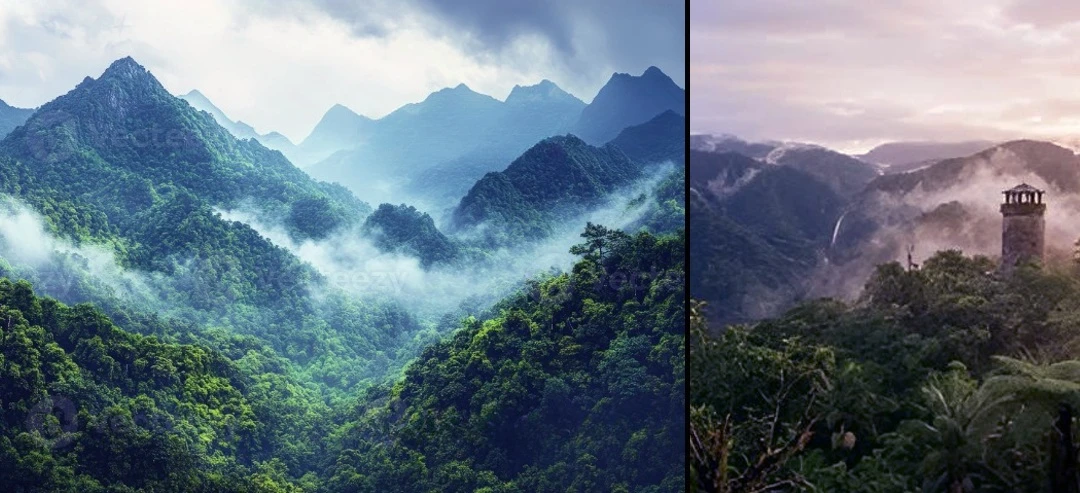
El Yunque National Forest is the only tropical rainforest in the US National Forest System. It's a lush, densely vegetated area that receives enormous amounts of rain, with clouds and fog often shrouding its high peaks throughout the year.
The forest's unique environment has inspired stories of glowing lights appearing above the trees or silently moving along the mountain ridges, only to change direction or vanish into the mist. Other tales describe human-like shapes glimpsed among the plants before disappearing into the forest.
Some UFO theories go even further, claiming there's a secret facility or underground base in El Yunque, or tunnels connecting the mountains to nearby military installations. However, there's no credible evidence to support the existence of such a base, and most reports of mysterious lights lack clear witness names, original photos, or verifiable data.
Recent writings mention hikers who allegedly saw strange creatures in the fog during the 1970s, and others claim to have photographed small humanoid beings near Mount Britton in 1992. But these stories lack independent sources, and the supposed photos have never surfaced in any verifiable archive. As a result, they remain part of the modern folklore surrounding the forest, rather than documented incidents that can be considered evidence.
Some of the lights might have been airplanes, helicopters, or atmospheric phenomena, especially since the area is close to airports and military installations. However, the lack of detail in many sightings has left plenty of room for speculation, turning El Yunque into the perfect place where ancient legends meet modern fears.
The military base next to the forest
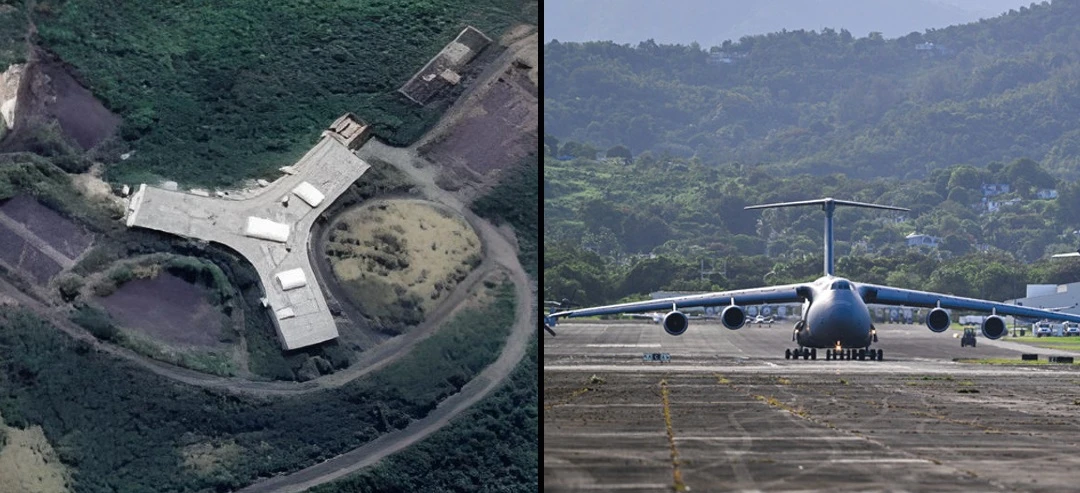
On Puerto Rico’s eastern coast, near El Yunque, sits the Roosevelt Roads Naval Station, built by the United States during World War II. The base included a large airfield, a deep-water port, and military facilities that made it a key hub for American operations in the Caribbean.
The Navy officially closed the base in March 2004, but U.S. forces and aircraft began using some of its facilities again in 2025 as regional tensions rose. Sightings of fighter jets, helicopters, and military planes in the area have revived old theories about mysterious lights and hidden secrets near El Yunque.
Still, there’s no evidence linking the base to unknown creatures or extraterrestrial craft. Military activity might explain some of the sightings, but it also fuels suspicion. Every time an unfamiliar aircraft appears or an area is closed to civilians, conspiracy theorists find new reasons to believe something secret is happening behind the fences.
Vieques: The Real Military Secret
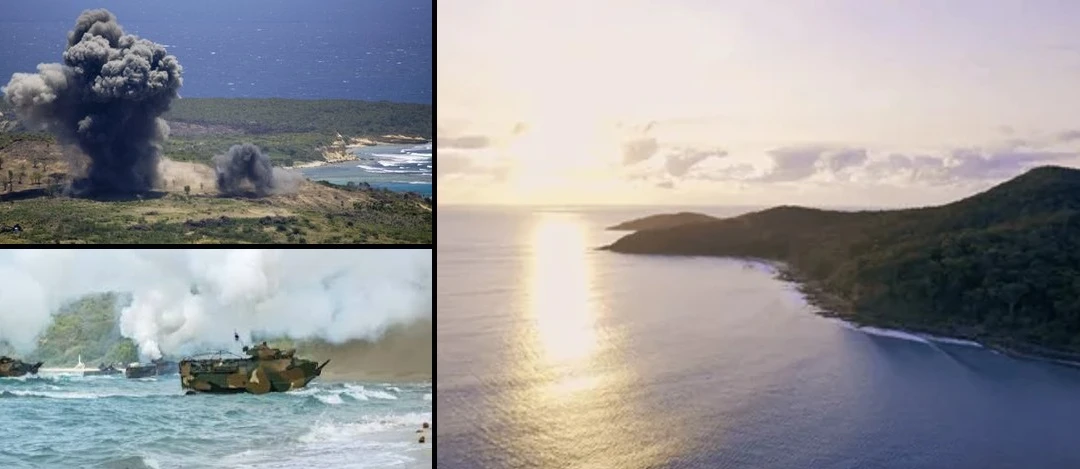
While the rumored space bases in El Yunque lack evidence, the military history of Vieques Island doesn’t require any imagination to seem grim.
For over sixty years, the U.S. Navy used large parts of the island for live-fire bombing drills, artillery tests, and military landings. Live-fire exercises stopped in 2001, and all Navy training ended in 2003, but the effects remain.
Military operations left behind unexploded ordnance and pollutants on land and in the surrounding waters. Parts of Vieques have been included in the U.S. Superfund program for cleaning up highly contaminated sites. Cleanup and environmental remediation are still ongoing.
This real history of military activity and restricted zones helps explain why rumors thrive. When people live for decades next to operations they know little about, nighttime lights, explosions, and strange aircraft naturally become the stuff of wilder theories. Still, there’s no direct evidence linking what happened in Vieques to reports of UFOs or unknown creatures.
The object that completely outpaced a U.S. fighter jet
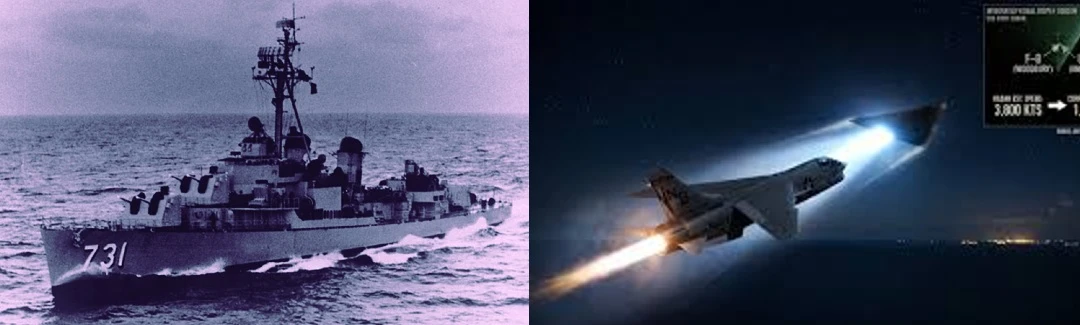
One of Puerto Rico’s most striking aerial incidents took place in November 1964. It wasn’t just a single eyewitness account radar on a Navy warship, a U.S. fighter jet, and military documents all recorded the event.
On the nights of November 16, 17, 18, 19, and 24, the radar of the USS Gyatt destroyer detected an unidentified aerial object north of Puerto Rico. The object appeared at different speeds and altitudes, then vanished before aircraft could intercept it.
On the night of November 19, the destroyer picked up the target again about sixty nautical miles north of the island, heading toward them at supersonic speed. Fortunately, an F-8 Crusader fighter from Roosevelt Roads was already in the area and was ordered to intercept.
The fighter was piloted by Marine Lieutenant Colonel Kyle H. Woodbury, a highly experienced and reliable jet pilot according to military reports. At around 35,000 feet, he spotted the object in clear weather under the moonlight.
Woodbury described a dark, triangular or delta-wing-shaped object about sixty feet long. It had no visible lights, but as it began to accelerate, it emitted a single burst from its rear that looked like a cone of fire.
The object moved alongside the fighter jet, then repeatedly changed direction. Woodbury engaged the afterburner and climbed to 50,000 feet in an attempt to close the distance, but when he got within about five miles, the target shot away at incredible speed, ascending sharply until it vanished. The pilot later said the object was "completely outclassing" his jet.
The destroyer's radar captured part of the chase, and photos were taken of its screens. Reports were then sent to various military commands and to those involved with Project Blue Book, the Air Force program investigating UFO sightings.
However, the official conclusion was more complicated than what UFO books suggest. The project director determined that the target was a confirmed aircraft of unknown type or origin, and believed that some of the initial speed estimates were incorrect. In other words, the case was not officially classified as a spacecraft or extraordinary object, but the identity of the aircraft that appeared on radar and outperformed the fighter remains unknown in the surviving documents.
This is where the real mystery lies: the incident didn't prove a visit from extraterrestrials, but it did document an unidentified aerial object observed by a pilot and tracked by military equipment over several nights, with no definitive explanation for its origin.
The Moca Vampire
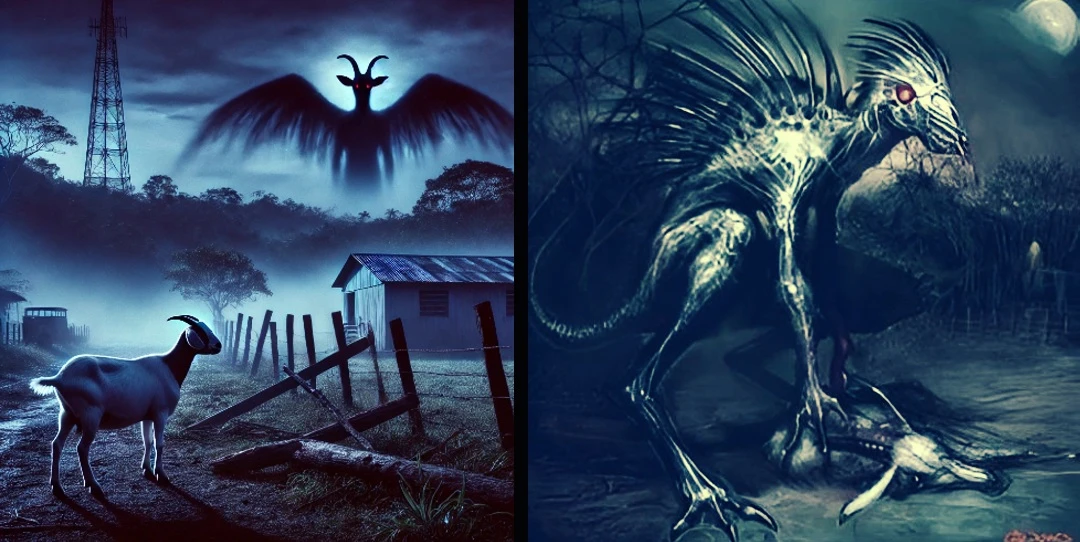
Eleven years after the destroyer incident, the mystery shifted from the skies to the farms of Moca, a town in western Puerto Rico.
In 1975, locals began finding dead cows, goats, birds, and other animals, their bodies marked by wounds or circular punctures. Some reports claimed the corpses appeared to have been drained of blood, prompting the press to dub the unknown culprit:
The Moca Vampire (El Vampiro de Moca)
Newspapers offered various explanations, ranging from an unknown predator to a group performing satanic rituals. Some coverage linked the animal deaths to strange lights and objects seen in the sky, while other stories described winged shapes or human-like creatures roaming rural areas at night.
The newspaper El Vocero and its Moca correspondent, Augusto Vale Salinas, played a major role in spreading the story. Some journalists and historians accused them of exaggeration and fearmongering. There were also claims of abnormal radiation levels detected at one farm, though other sources later questioned these findings.
No reliable autopsies confirmed that the animals had been drained of blood, nor was any unknown creature or suspect ever found. After about six months, reports dwindled, but the Moca Vampire didn't disappear entirely, it paved the way for another monster that would emerge twenty years later.
The Birth of the Chupacabra
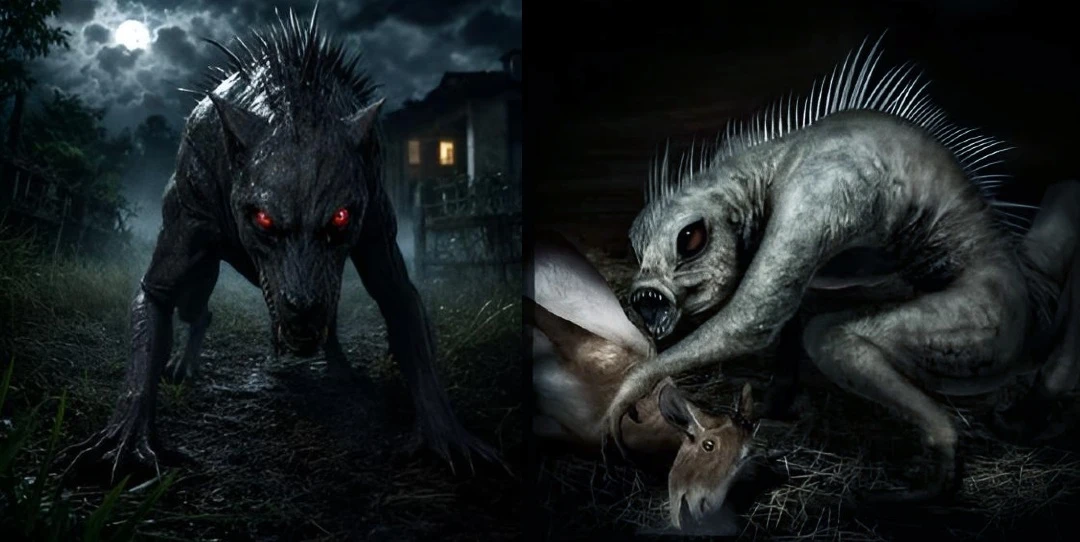
In 1995, reports of dead animals with strange puncture wounds returned to Puerto Rican headlines. In March of that year, eight dead sheep were found, each said to have three wounds on its chest and bodies reportedly drained of blood.
Then came the eyewitness account that gave the attacker a face. In the town of Canóvanas, a woman named Madelyne Tolentino claimed to have seen a creature standing on two legs, with large eyes, claws, and spines running down its back. As reports of animal deaths increased, broadcaster and comedian Silverio Pérez coined the name Chupacabra, meaning "goat-sucker," for the creature.
The Chupacabra quickly became a global phenomenon, with stories spreading from Puerto Rico to Mexico, South America, and the United States. TV shows, movies, and the internet repeatedly reinvented its image.
However, a five-year investigation by skeptical researcher Benjamin Radford suggested a different possibility. He noticed a strong resemblance between Tolentino's description and the female creature from the 1995 sci-fi horror film Species, and confirmed that she had seen the movie before giving her account. Radford concluded that her mental image was likely influenced by the cinematic creature.
As for the bodies later presented in the United States as Chupacabra, DNA analysis in multiple cases showed they were dogs or coyotes suffering from mange, a disease that causes hair loss and gives animals a frightening, unfamiliar appearance.
But these explanations didn't kill the legend. The original Puerto Rican Chupacabra wasn't described as a mangy dog, but as an upright, spined creature and no body matching that description has ever been found. The monster lives on in popular culture, even if its existence in nature remains unproven.
The Aguadilla object, which appeared to enter the sea
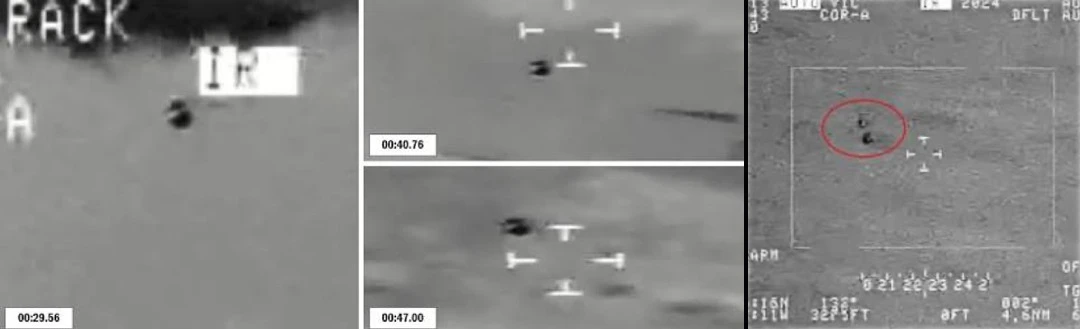
On April 26, 2013, a US Customs and Border Protection aircraft took off near Rafael Hernández Airport in Aguadilla. During the flight, its thermal imaging system captured an unidentified object moving over the area.
In the footage, the object seems to fly at high speed, skimming the coast before plunging into the water without slowing down. Near the end of the video, it appears to split into two. The leak of this recording made it one of the most significant UFO videos, especially since it was captured by a government aircraft equipped with advanced surveillance technology.
However, the Pentagon’s All-domain Anomaly Resolution Office (AARO) later reanalyzed the footage and, in a 2025 report, stated that the objects did not display extraordinary speed or movement. With moderate confidence, they concluded the objects were most likely sky lanterns drifting with the wind.
According to the analysis, the movement of the surveillance aircraft made the objects appear faster than they actually were, while their overlapping heat signatures concealed the fact that they were separate from the start. Their temporary disappearance behind coastal terrain created the illusion that they entered and then emerged from the sea.
The Aguadilla incident is a prime example of the difference between an "unidentified" object and an "extraordinary" one. The footage was real and came from an official source, and the object remained unidentified for years. But that alone wasn’t proof of a spacecraft or something defying the laws of physics.
The guard swallowed by the night
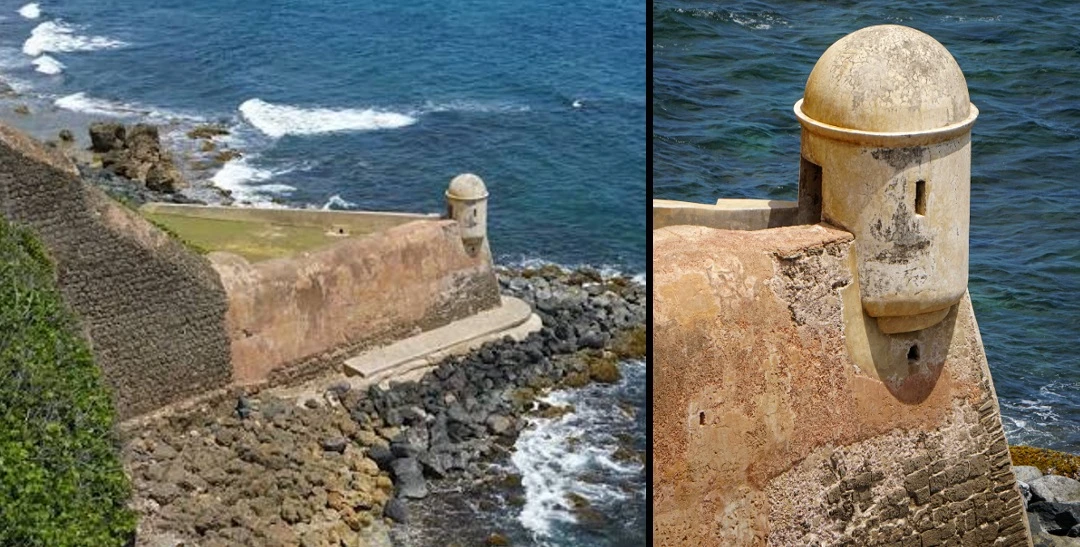
Puerto Rico’s mysteries aren’t limited to forests, monsters, and aerial phenomena. In Old San Juan stands a small sentry box known as La Garita del Diablo, or the Devil’s Watchtower.
Legend has it that a Spanish soldier named Sanchez was on night watch along the coast. When other guards called out to him from nearby towers, he didn’t respond. By morning, the sentry box was empty, with no sign of a struggle or anyone falling into the sea. Rumor spread that the devil had emerged from the darkness and taken him away.
A less frightening version claims Sanchez was in love with a woman named Dina, and the two took advantage of the guards’ fear of the remote post to run away together. In this telling, the 'supernatural disappearance' was just a cover story invented by the couple or their friends to hide a forbidden romance. Still, the name and legend endured, leaving the truth lost between two tales: a guard swallowed by the devil, or a lover fleeing his military duty.
Why Puerto Rico?
Puerto Rico isn’t defined by a single mystery above all others, but by the accumulation of many layers of intrigue in a small area: ancient beliefs about spirits of the dead, mist-shrouded forests, restricted military zones, radar sightings, dead livestock, monsters created by the media, and official recordings that seemed extraordinary before possible explanations emerged.
Some of these stories are backed by documents confirming sightings or reports, others survive through oral tradition, and many lack the evidence needed for a definitive answer. An official document doesn’t necessarily prove a paranormal explanation; it might confirm that a pilot saw something, but not that it came from outer space.
Still, it’s hard to ignore this strange accumulation: the spirits of the Jíbaro said to roam at night, the lights of El Yunque, the triangular craft chased by a US fighter jet, the Moca vampire, and then the chupacabra, which became Latin America’s most famous monster.
The island may not offer proof of unknown creatures or visitors from other worlds, but it does provide a unique record where military events, public fears, and ancient legends overlap, sometimes making it hard to tell where fact ends and fiction begins.
That’s why Puerto Rico remains one of the Caribbean’s most mysterious places not because it gives us answers, but because it never stops raising new questions.
About the Author