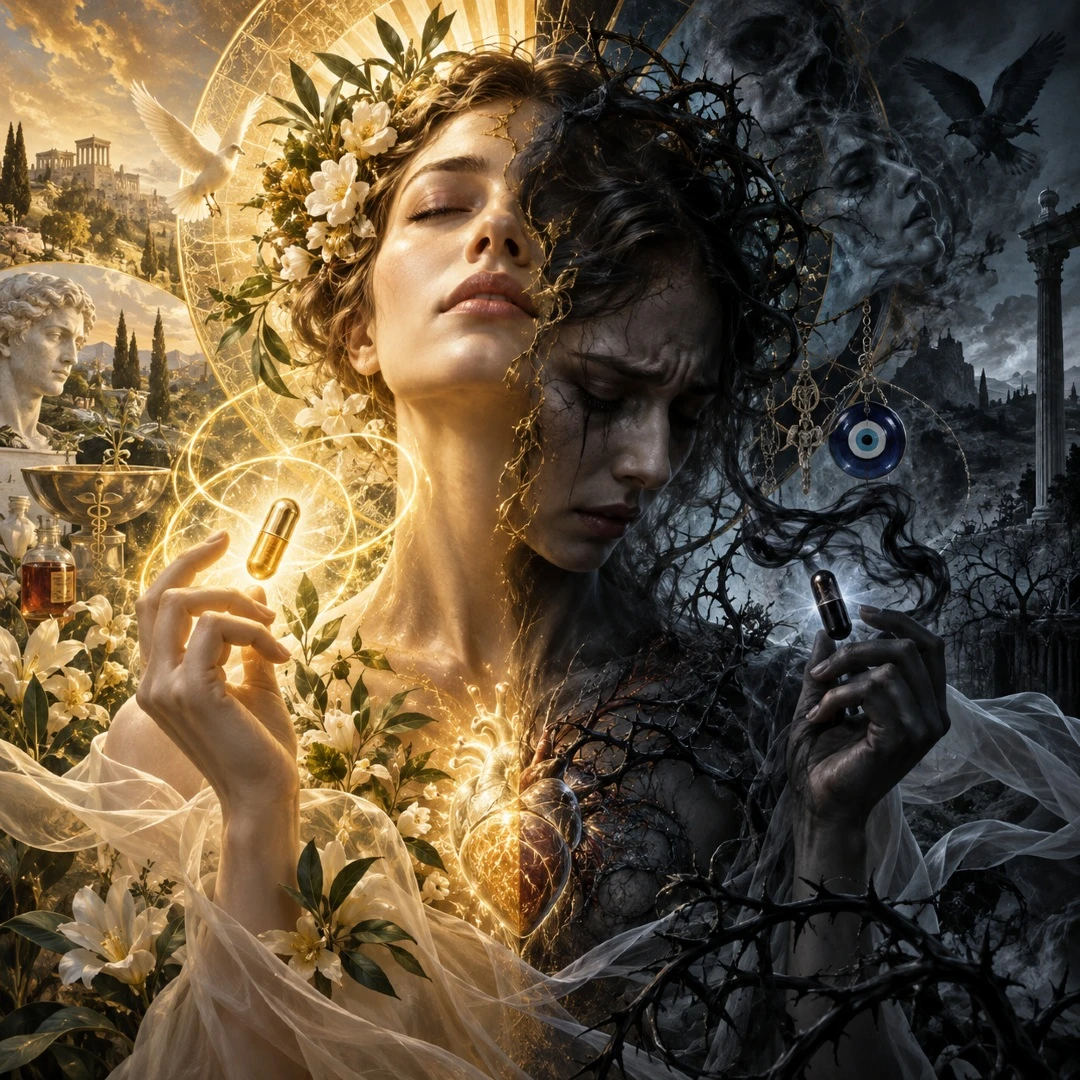
Imagine someone waking up one morning, convinced they've been cursed by envy or struck by something unseen. There are no visible marks on their body, and no medical diagnosis yet, but they feel that a specific moment marked the beginning of a change. Since that day, they've become hyper-aware of themselves: headaches they used to ignore, a fluttering heartbeat that comes and goes, insomnia, a heaviness in the chest, loss of appetite, disturbing dreams, and a vague sense that something just isn't right.
Every new symptom becomes further proof, and as their conviction grows, so does their self-monitoring. The more they pay attention, the more pronounced and persistent their physical sensations become. Eventually, they turn to someone they trust, hear an explanation for what's happening, and undergo a ritual, whether it's a prayer, spiritual session, or healing recitation. Afterwards, they feel noticeably calmer and sleep better than before.
This raises more questions than it answers: Was there really an external influence that disappeared? Or did fear itself create the symptoms, while reassurance helped ease them? And is this psychological explanation enough to account for every experience of this kind?
At this blurry intersection, two key concepts from medicine and psychology come into play: Placebo and Nocebo.
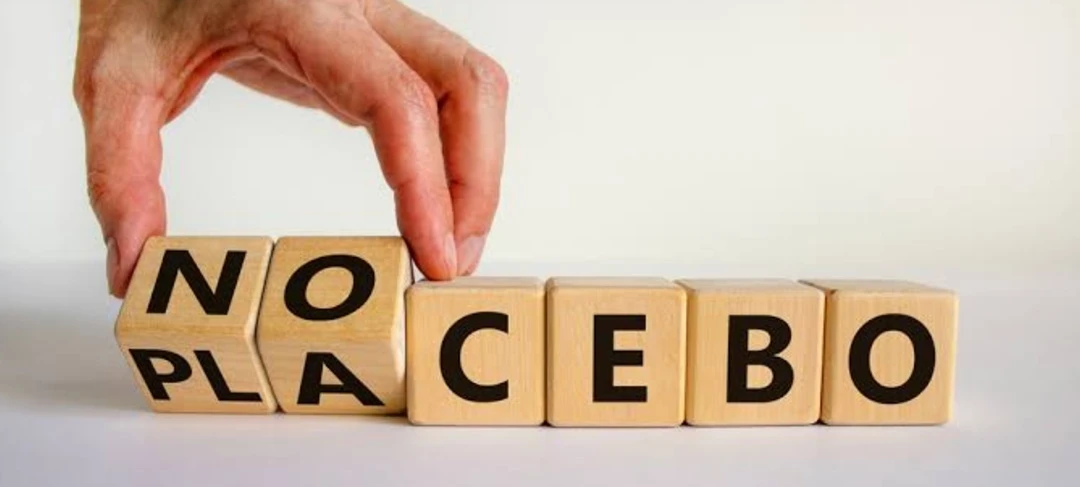
Placebo: When Expectation Drives Improvement
The placebo is often called a "sugar pill," but that label oversimplifies the phenomenon. In medical trials, someone might receive a treatment with no active ingredients, yet still experience real relief from pain, nausea, anxiety, or other symptoms. What changes isn't necessarily the illness itself, but the patient's experience of it.
People don't just respond to the chemical itself, they react to the entire context around it. The patient's trust in their doctor, the appearance of the treatment, how it's administered, their past experiences, their expectations, and even the way the doctor explains the medication can all influence the outcome. Research has shown that some placebo responses are linked to actual neurological mechanisms, including natural opioids, dopamine, expectation, and learning.
So telling someone their improvement is "all in their head" isn't always accurate. The improvement might be limited and not caused by the treatment itself, but it's still a real experience for both mind and body.
Nocebo: The Other Side of Belief
If expecting to get better can sometimes ease symptoms, expecting harm can have the opposite effect. This is where the nocebo comes in.
When someone believes something bad will happen to them, their body can start reacting to that expectation. They become more sensitive to pain and more aware of every physical change. Symptoms like headaches, nausea, palpitations, anxiety, and insomnia can intensify. Sometimes, just being told that a medication might cause a certain side effect makes a person more likely to experience it.
This can create a powerful cycle: the belief in danger triggers fear, fear leads to increased body awareness, and that heightened awareness uncovers sensations that might otherwise have gone unnoticed. These sensations are then interpreted as evidence of the danger, feeding the fear and making the experience even more entrenched.
This doesn't mean the person is faking or imagining things. The symptoms can be entirely real, even if the cause they attribute them to isn't the actual reason.
From Nocebo to Envy and Magic
In many Arab and Muslim communities, beliefs about envy and the evil eye and magic still play a major role in explaining sudden illness, setbacks, or unexpected disturbances. Someone facing unexplained fatigue or loss might wonder if they've been cursed or targeted by envy before considering psychological or physical causes.
From a psychological perspective, this belief can itself become a powerful influence. If someone is convinced they've been harmed by unseen forces, they may become hyper-vigilant—every headache feels like a sign, every bad dream a warning, and every setback another link in a chain of misfortune.
Here, the concept of the nocebo effect offers an important explanation for some cases. However, it shouldn't be used as a catch-all answer. Just because fear and negative expectations can create or worsen symptoms doesn't mean that everything attributed to envy or magic is simply a nocebo effect. Being able to explain some cases doesn't justify applying the same explanation to all of them.
When fear makes us sick
The mind and body are deeply connected. Fear can change our breathing, speed up the heart, tense muscles, disrupt sleep, alter appetite and digestion, and keep the body in a constant state of alert. If this fear lasts for weeks or months, these temporary changes can turn into real, daily suffering.
This is why some researchers have long been interested in stories of people whose health declined after believing they were cursed or under a spell. One of the most well-known to explore this was physiologist Walter Cannon in the 1940s, who discussed what later researchers called 'voodoo death.' His main idea was that intense fear could trigger dangerous physical reactions in the body.
But these stories weren't based on controlled laboratory experiments, and many came from anthropological sources that are hard to verify by modern research standards. So while it's fair to say that extreme fear can harm people, these accounts can't be taken as direct scientific proof that 'curses kill.'
Why do some people feel better after spiritual healing?
If fear can make symptoms worse, it's natural to wonder about the opposite: why do some people feel noticeably better after spiritual rituals, traditional healing, or sessions with a healer?
The answer isn't always straightforward. Someone who enters a session anxious and leaves feeling understood and cared for receives more than just words or rituals, they get an explanation, attention, a sense of being heard, and the belief that the threat is now under control.
These factors can reduce anxiety, improve sleep, relax muscles, and ease pain or related symptoms. The improvement can be real, even if people disagree about its cause.
That's why it's not accurate to jump from improvement to the conclusion that a spiritual diagnosis has been proven, nor is it fair to dismiss the entire experience as mere illusion. Improvement is one thing; explaining why it happened is another.
Spiritual healing and the placebo effect
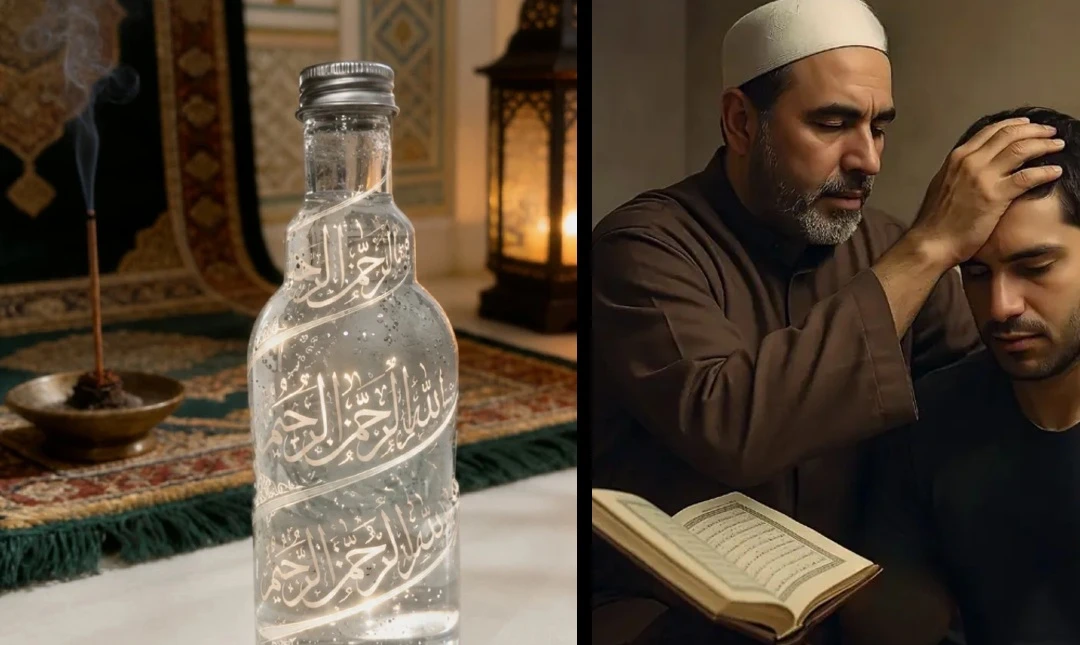
The placebo effect may help explain some of the improvement people feel after Ruqyah (Islamic spiritual healing) This is especially true when someone genuinely believes in its effectiveness and trusts the person performing it. Feelings of reassurance, reduced stress, a sense of protection, and the expectation of improvement are all well-known factors that can help alleviate symptoms like anxiety, insomnia, and pain.
However, the presence of these effects doesn't prove that ruqyah works solely through the placebo effect, nor does it dismiss the spiritual dimension that believers hold. Scientifically, we can measure how expectation and meaning influence the mind and body, but questions about the supernatural aspect remain beyond what laboratory experiments can confirm or deny.
The Meaning Response
For this reason, some researchers have proposed a broader concept than placebo, known as the Meaning Response. Patients don't just react to what enters their bodies, but to what the treatment means to them.
A pill isn't just a small object, it's a promise of getting better. A doctor isn't just someone in a white coat, but a symbol of expertise, authority, and reassurance. The exam room, the equipment, the prescription, and even the medical language all help create an environment that signals to the patient that treatment has begun.
The same thing happens in traditional or religious rituals. Familiar texts, the way they're recited, the healer's appearance, the presence of family, the setting, and even prior expectations, all of these carry powerful cultural meanings. In some communities, these meanings can have a deeper impact than any clinical explanation.
This is why studying placebo and nocebo effects is as much about anthropology as it is about pharmacology. The question isn't just: What does the treatment contain? It's also: What does the treatment mean to the person receiving it?
The patient is more than just a body
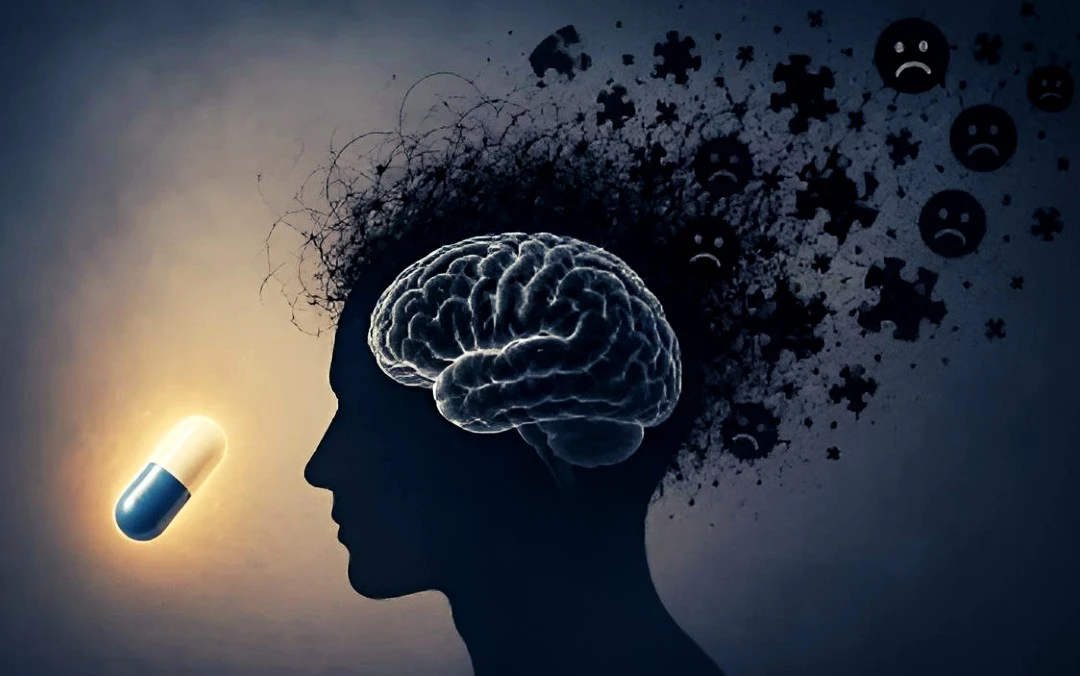
A key idea in medical anthropology is distinguishing between illness as defined by medicine, and the personal experience of illness as it's understood and lived within a person's culture.
A doctor might see a panic attack, while the patient believes it's the result of envy. The doctor might diagnose anxiety-related sleep issues, but the patient interprets it as the onset of a magical influence. They're not speaking the same language or telling the same story.
Problems arise when one side dismisses the other's worldview. A doctor who mocks a patient's beliefs risks losing their trust, while a patient who refuses medical evaluation because they have a supernatural explanation might overlook a treatable physical cause.
The solution isn't to dismiss either perspective from the start, but to prioritize wisely: examine what can be examined, treat what can be treated, and respect the patient's cultural background without automatically turning it into a medical fact.
Even modern medicine has its rituals.
We often associate the word 'ritual' with religion, magic, or traditional practices, but modern medicine is full of its own rituals and symbols. The hospital room, the white coat, medical devices, prescriptions, scheduled doses, and drug names all send subtle messages to patients.
This doesn't mean medicine relies on suggestion alone. Real medication works through chemical or biological mechanisms, but the context surrounding treatment can strengthen or weaken a patient's sense of its effectiveness.
Even the way a doctor communicates can have an impact. Overemphasizing potential side effects can make patients more likely to expect them, while offering clear and honest reassurance can reduce anxiety and help patients cope with treatment. In this way, the meaning of treatment becomes part of its effect—even when the treatment itself is genuinely effective.
The body learns, too.
One of the most fascinating aspects of this topic is that learning isn't limited to conscious thought. In some experiments, the body was trained to associate a certain stimulus with a drug response, and later showed some of the same responses even after the real drug was removed.
Examples of this have appeared in research on immunity and conditioned physiological responses. These studies don't suggest that thinking alone can cure serious illnesses, but they do reveal that the brain, nervous system, and body are intertwined in ways far more complex than a simple split between 'psychological' and 'physical.' This is one reason why placebo and nocebo effects are so important in studying phenomena at the intersection of belief and the body.
Where does the power of the placebo end?
Despite all this, it's a mistake to portray the placebo effect as an almost magical force. Its impact has clear limits, and it's usually strongest with subjective symptoms like pain, discomfort, nausea, and fatigue, rather than with measurable physical changes detected by objective instruments.
One of the most important studies in this area involved asthma patients. Some received real medication, others got a placebo. Many of those given the placebo felt better, but when lung airflow was measured, only the real medication produced clear physiological improvement.
This experiment sets important boundaries: belief can change how illness is experienced, but it doesn't always change the illness itself to the same degree.
This is crucial when discussing spiritual healing. Someone might genuinely feel better, sleep more soundly, feel less anxious, and experience less pain, but the underlying physical illness may still be present and require direct treatment.
The Quran and the unseen dimension
When discussing envy and magic in Arab and Islamic societies, it's not accurate to treat them as mere remnants of folklore. These concepts also have a clear religious presence.
The Quran mentions magic in Surah Al-Baqarah, describing how it can cause division between people, while emphasizing that harm only occurs by God's will. Surah Al-Falaq includes prayers for protection from those who practice magic and from the envy of others.
For Muslims who believe in the possibility of magic or the evil eye, this belief isn't just rooted in popular tradition—it comes from a faith system with its own texts and interpretations.
However, the presence of a religious dimension doesn't automatically make the issue a matter for scientific investigation. Religious texts address the unseen within a framework of faith, while science focuses on what can be measured, tested, and replicated.
Science can study how belief in magic or the evil eye affects people, but proving or disproving the existence of magic itself is a different matter.
Between the Laboratory and the Unseen
Sometimes, science is expected to answer questions it never claimed it could. If a phenomenon can be measured and repeated, an experiment can be designed to study it. But if it belongs to a realm that, by definition, lies beyond the laboratory, the discussion shifts to a philosophical or theological level.
Science can state that it hasn't found convincing experimental evidence for a specific supernatural mechanism, but that alone doesn't mean everything beyond current measurement tools is impossible.
On the other hand, not every gap in knowledge should be taken as proof of the supernatural. The phrase 'science doesn't know' doesn't automatically mean 'therefore, it's magic.'
A balanced approach begins by recognizing the difference between the unknown and the supernatural, just as there's a difference between possibility and evidence.
When Explanations Become Dangerous
Perhaps the greatest risk for someone convinced they're under a spell or cursed comes from two extremes: a doctor who mocks their concerns, causing them to lose trust in medicine, or a healer who immediately insists they're bewitched and dismisses all other explanations.
Either way, the result can be the same: the real diagnosis is missed.
A headache might be related to anxiety, it could be a migraine, or it might be caused by high blood pressure or another issue. Heart palpitations could be due to fear, but they might also require a cardiac evaluation. Insomnia can be psychological, but it can also accompany various health conditions.
That's why the most balanced approach isn't 'either medicine or spiritual healing,' nor 'either reason or the unseen.' It's about not letting a single explanation prevent you from considering others.
Between Illness and the Stories We Tell About It
When people get sick, they don't just ask about the biological mechanism. They also wonder: Why did this happen to me? Why now? Why after that person or event?
This need to create a narrative around illness is ancient. Religions have offered stories, so have myths, and traditional medicine has done the same. Modern medicine arrived with a different language, focusing more on measurable causes.
But the search for meaning hasn't disappeared. That's why some people still visit traditional healers even when the best hospitals are nearby. A doctor might provide a diagnosis, but a healer can offer a comprehensive explanation for what they're experiencing and the psychological impact of that explanation can be powerful, regardless of its objective accuracy.
What Do Placebo and Nocebo Really Explain?
Placebo and nocebo effects show that belief is far from a trivial part of human life. Expectations can alter pain, amplify or ease fear, affect sleep, shape how we notice symptoms, and even influence certain neurological and physiological responses.
This is why the nocebo effect can offer a strong explanation for some cases people attribute to envy or magic, just as placebo effects and the power of meaning can help explain improvements seen after certain spiritual or traditional healing practices.
But jumping from 'this might explain it' to 'this explains everything' isn't scientific.
The existence of a possible psychological mechanism doesn't automatically rule out all other explanations, just as the absence of a complete scientific explanation doesn't prove a supernatural one.
The gray area that deserves further exploration

Perhaps the real value of placebo and nocebo effects is that they force us to move beyond the simple dichotomy we've long favored: that illness is either 'real' and physical, or 'just in the mind.'
Reality is more complex. The mind affects the body, the body affects the mind, culture shapes what we fear and hope for, and belief gives certain experiences a meaning that can't be understood outside its own context.
That's why the role of an objective researcher isn't to reduce every unusual phenomenon to a psychological disorder, nor to treat every personal experience as proof of the supernatural.
A more accurate approach is to ask: What can we explain ? What remains unexplained ? How much is shaped by belief ? And how much is still unknown?
In the end, perhaps the most intriguing question isn't whether envy or magic are real.
Maybe the deeper question is:
How much can belief alone change a person,
and where does the power of belief end and the realm of the unknown begin ?
About the Author