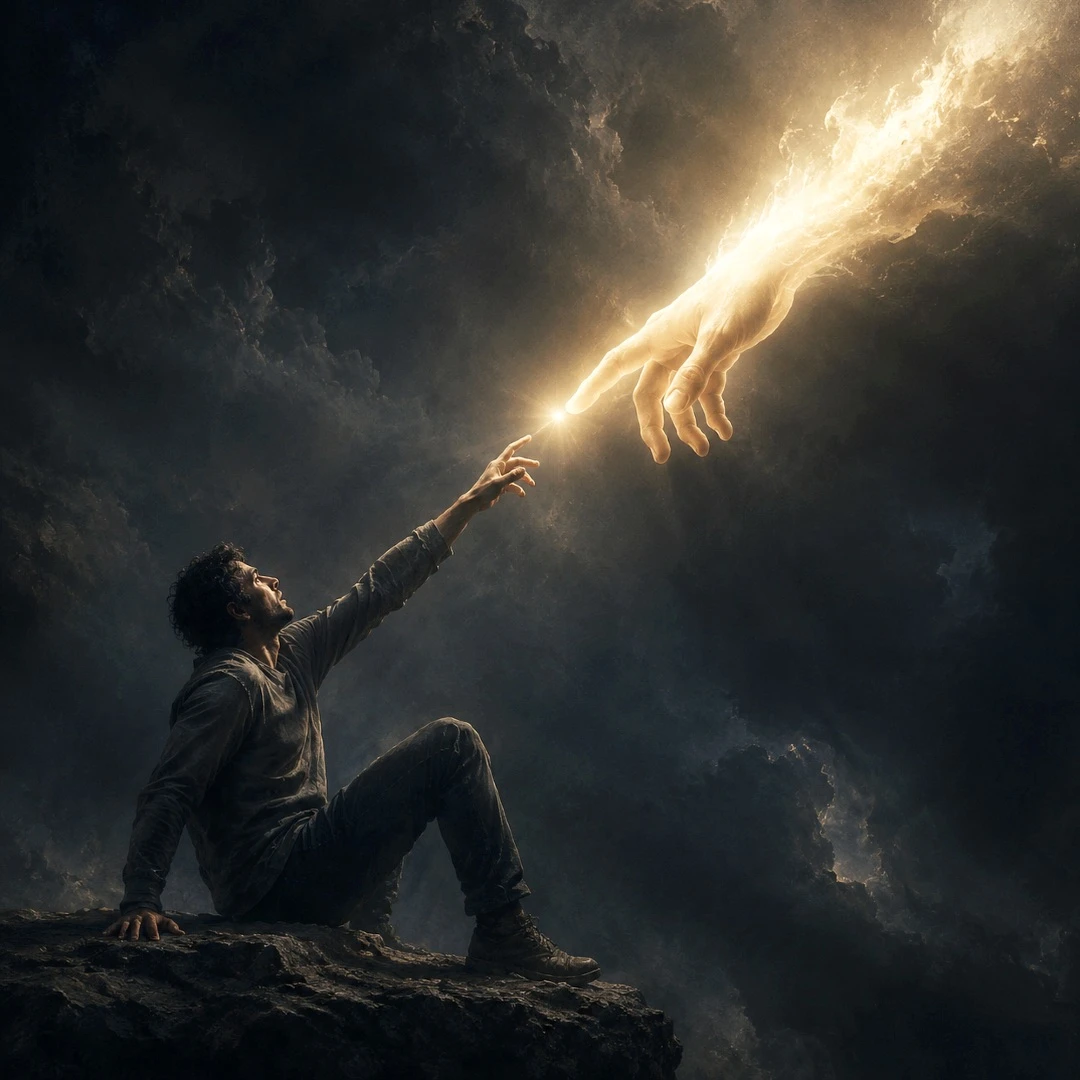
Enlightenment doesn't always come in the solitude of a monk or the contemplation of a philosopher. Sometimes, it begins in a moment of vulnerability when life feels overwhelming or when we’re confronted by life’s biggest questions: Does my existence have meaning? Does God hear me? Is there something beyond the world we see?
In those moments, a person might ask for a sign, not a miracle that defies the laws of nature, but a small gesture that brings certainty. It could be an animal appearing at just the right time, a phrase overheard by chance, or a book opening to a page that answers a burning question. We're not talking about prophets or messengers who received divine revelations, but ordinary people who, in times of doubt and despair, experienced something they saw as a personal response.
Throughout history, many such stories have been told. These are events that could be explained naturally, but their timing and impact led people to see them as answers from God. Were they acts of divine providence working through everyday means, coincidences given meaning by the mind, or what Carl Jung called "Synchronicity" or "meaningful coincidence" ?
When People Asked God for a Sign
Is it possible for prayers to be answered without a miracle that breaks the laws of nature?
This was the question posed by a user who shared their experience on reddit. Feeling lost and depressed, they were driving alone down a country road after photographing the sunset. Out loud, they said:
"God, or the universe... if you exist, show me a sign.".
About five seconds later, a young roe deer appeared in front of them, paused at the edge of a field, and looked back as the sun set behind it. The person snapped a photo of the scene (shown below) and later wrote that, although they had been an atheist, that moment made them believe there’s more to life than we know.

Seeing a deer isn’t a supernatural event, the animal is common in rural areas and forests. What changed this person’s life was the timing: they asked for a sign, and within seconds, witnessed a rare and beautiful scene, as if nature itself had answered.
This isn’t an isolated story. History is full of accounts from people who, during crises of faith or moments of despair, experienced something they felt couldn’t be dismissed as mere coincidence.
The Child’s Voice That Answered Augustine
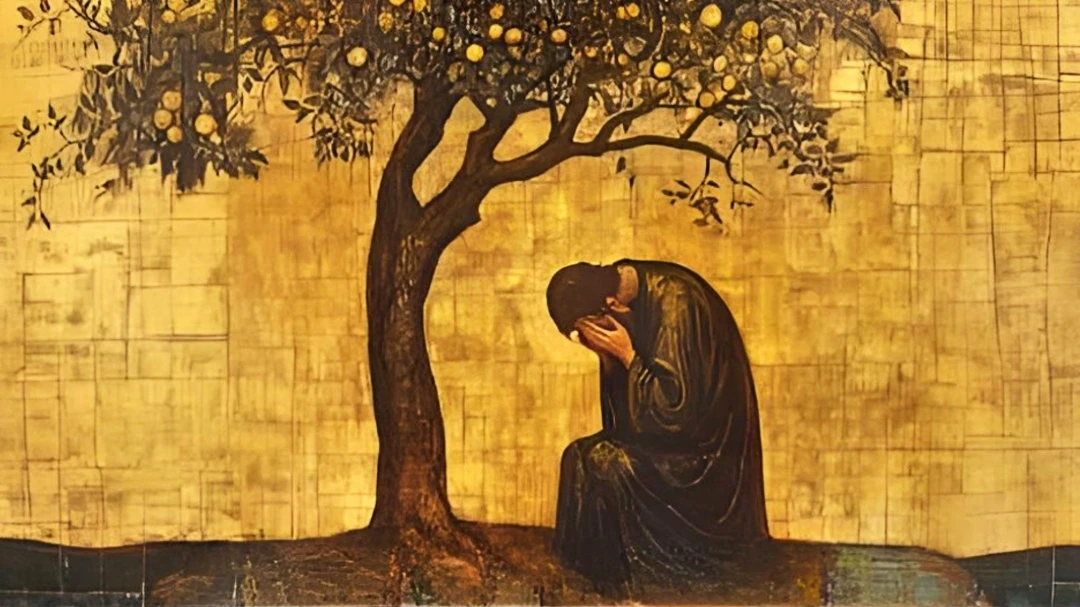
In 386, Augustine who would later become one of Christianity’s most influential thinkers was struggling with a deep spiritual crisis in Milan. He knew he needed to change his life, but felt powerless to break free from his old habits.
He withdrew to a garden and, overwhelmed with emotion, threw himself under a fig tree, weeping and praying, wondering how long he would remain trapped in this struggle. At the height of his despair, he heard a child’s voice from a nearby house, he couldn’t tell if it was a boy or a girl singing repeatedly, "Take and read... take and read."
Augustine paused in surprise, trying to recall if the phrase was part of a children’s game, but it was unfamiliar to him. He returned to where he had left a book of Paul’s letters, opened it at random, and read a passage urging him to leave behind a life of indulgence and start anew.
In his "Confessions," Augustine wrote that, in that moment, the darkness lifted from his heart and his indecision vanished. The voice could have been a child singing nearby, but the words came at a time that made them feel like a direct answer to his crisis. The story is a personal account he wrote years later, not an event confirmed by independent sources, but its impact on his life was profound.
A Voice from the Sky
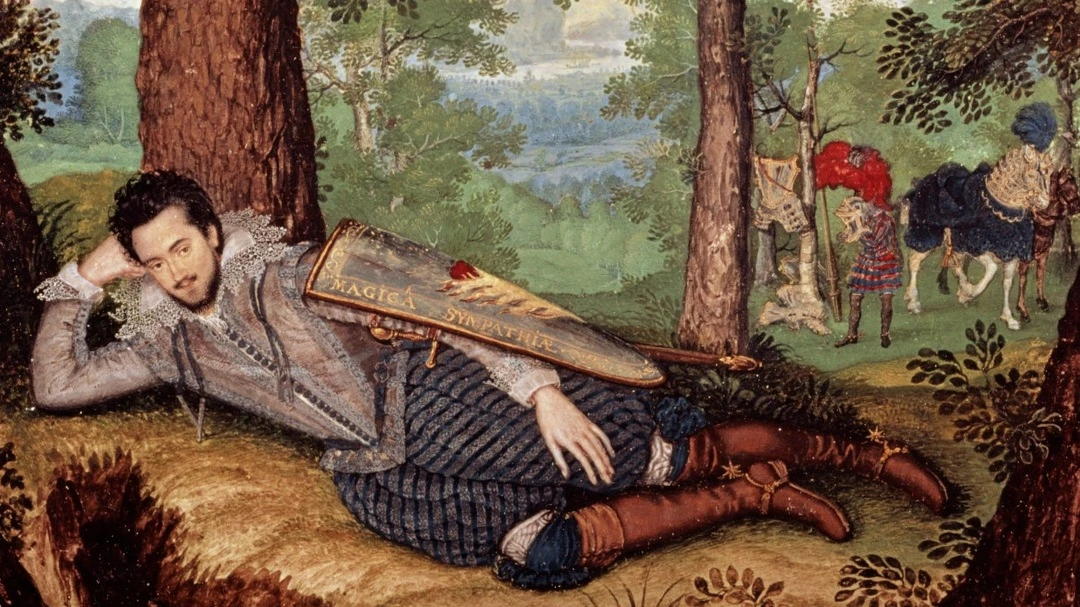
One of the most unusual stories comes from the English philosopher and diplomat Edward Herbert of Cherbury. In his autobiography, Herbert recounts an event from the early 17th century. After finishing his philosophical work, "On Truth, as It Is Distinguished from Revelation, the Probable, the Possible, and the False" (De Veritate, prout distinguitur a revelatione, a verisimili, a possibili, et a falso), he hesitated to publish his bold ideas. On a clear summer day, with the sun shining and the window open, Herbert knelt in prayer, manuscript in hand. He asked God for a clear sign: if publishing the book would do good and be pleasing to God, he wanted a sign from above; if not, he would keep the work to himself.
According to Herbert, as soon as he finished praying, he heard a "loud yet gentle voice from the sky" unlike any earthly sound he had ever known. He felt a profound sense of peace and took this as the answer he had sought. He went on to publish the book in 1624.
No one else witnessed the voice, and it could have been distant thunder or some natural phenomenon Herbert didn't recognize. Still, it's notable that Herbert was not a gullible man chasing after superstition—he was a rational philosopher and a pioneer of English deism. Yet he remained convinced that his prayer had received a direct answer.
A Prayer in the Storm
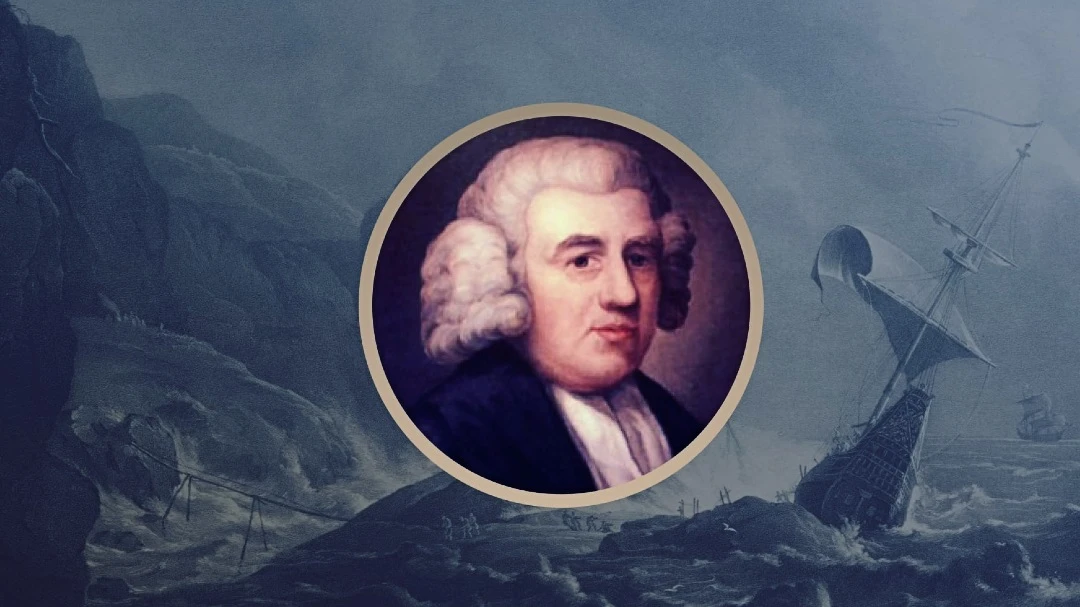
On March 10, 1748, the ship Greyhound was crossing the North Atlantic when it was struck by a violent storm. Parts of the vessel were destroyed, water flooded in, and one sailor was swept overboard.
Among those on board was John Newton, a sailor then known for his disregard for religion and involvement in the slave trade. As the crew struggled to bail out water, Newton heard himself say, "Lord, have mercy on us."
Newton was surprised by his own words; prayer was not something he was used to. The storm did not miraculously subside, nor did the ship immediately reach safety. The crew fought for days before finally making it to the Irish coast. Even so, Newton saw his survival as an act of divine mercy and marked that day as the beginning of his transformation.
His change was gradual, and contrary to some simplified accounts, he did not immediately leave the slave trade. Later, however, he became a clergyman and an abolitionist, writing the hymn "Amazing Grace," inspired by his experiences of being lost and then saved.
A natural explanation might say the ship survived thanks to the crew's efforts and a change in the weather. But for Newton, the prayer he uttered in a moment of mortal danger opened the door to a new life.
"If there is a God, let Him reveal Himself"
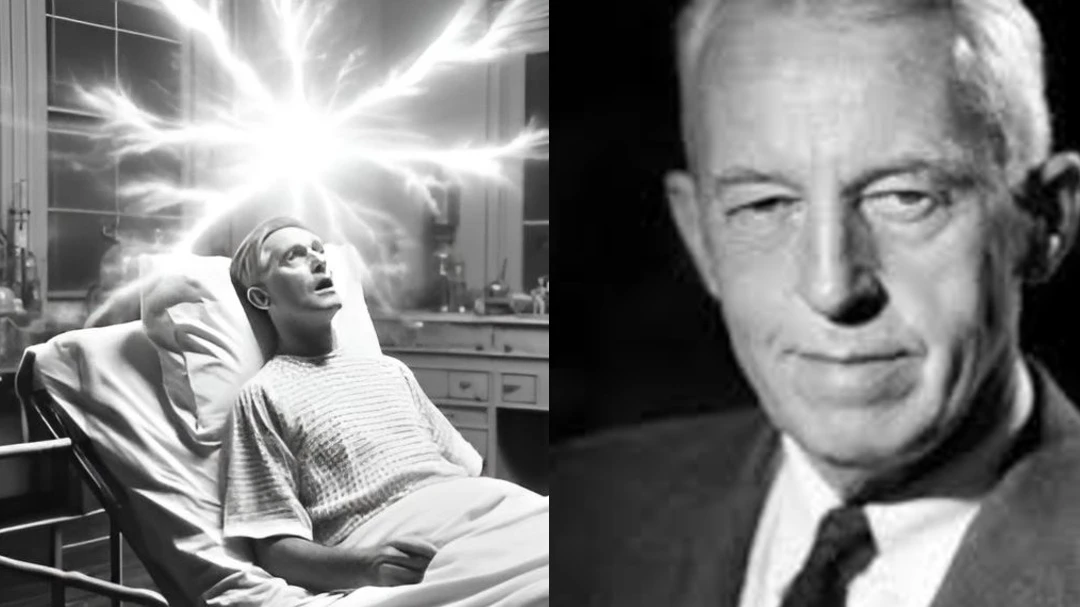
In December 1934, Bill Wilson was lying in Towns Hospital in New York City, broken by severe alcoholism. All his previous attempts to quit had failed, and he was overwhelmed by despair. A friend had once told him about surrendering his life to a higher power, but Wilson, a skeptic, wasn't ready to accept the idea. One night, at the height of his desperation, he cried out:
"I'll do anything! If there is a God, let Him show Himself !"
Wilson later described how the room was suddenly filled with a brilliant white light. He felt as if he were standing on a mountaintop, swept by a wind that wasn't of this world. In that moment, he was overcome with a sense of freedom and certainty. From that day on, he never drank again. He went on to co-found Alcoholics Anonymous and the Twelve Steps program.
But there's a strong medical explanation for his experience. Wilson was going through withdrawal and was being treated with belladonna, a substance known to cause hallucinations and altered perception. So, did he witness a spiritual light, or was it a hallucination that triggered a positive psychological shock?
There's no definitive answer, but the outcome is well documented: the experience happened right after he called out to God, and it led to a lifelong sobriety and a movement that helped millions.
The Wave That Answered Cat Stevens

In 1976, the famous British singer Cat Stevens was swimming off the coast of Malibu, California, when he was swept far from shore. He tried to fight the current, but soon realized he was running out of strength and was close to drowning.
He looked up at the sky and prayed, "God, if you save me, I'll work for you."
According to his account, a wave then lifted him and carried him back toward the shore, allowing him to reach safety. Stevens believed that God was present in that moment and that his rescue was not a coincidence.
He didn't convert to Islam immediately after leaving the water. The incident was just one stage in a long spiritual search. Later, his brother gave him a copy of the Quran, where he found the answers he had been seeking. He eventually embraced Islam and took the name Yusuf Islam.
It's natural for waves to push a swimmer toward the shore or pull them away. But for Yusuf Islam, the combination of his desperate prayer and the saving wave at that exact moment made him see the event as a sign that changed the course of his life.
Signs That Weren't Asked For
Some historical experiences didn't begin with a direct plea to God, but came during moments of searching or crisis, as if answering an unspoken question.
In 1926, Austrian Jewish journalist Leopold Weiss who would later become known as Muhammad Asad—was riding the Berlin subway. He looked at the faces of the wealthy passengers and noticed that, despite their comfort, they seemed anxious and unhappy.
When he returned home, he found an open copy of the Quran. His eyes fell on the chapter Al-Takathur, which speaks about people being distracted by competition for worldly goods until death surprises them. He felt the words perfectly described what he had just seen, and later wrote that it felt like a decisive answer to his questions. It was one of the final steps on his path to Islam.

In the Nazi concentration camps, psychiatrist Viktor Frankl was forced to give up a coat in which he had hidden the manuscript of his book. He was given another coat, which had belonged to a prisoner who had been killed. In its pocket, he found a torn page from a Jewish prayer book, containing the words of the Shema: "Hear, O Israel."
Frankl wrote that he could only interpret this 'coincidence' as a challenge to live out the ideas he had written, rather than just putting them on paper. The scrap of paper didn't save him in any miraculous way, but it gave him a sense of meaning to hold onto in a place designed to strip all meaning away.
Meaningful Coincidence

Swiss psychologist Carl Jung called this phenomenon 'meaningful synchronicity'—the meeting of an inner psychological state with an external event that shares the same meaning, without any clear causal connection between them.
One of the most famous examples involves a highly rational patient who was resistant to therapy. She told Jung about a dream in which she received a golden scarab (beetle). As she was recounting the dream, there was a tapping at the window. Jung opened it, and a shiny insect, closely resembling a golden scarab, flew in. He caught it and handed it to her, saying, 'Here is your scarab.'
The incident had a profound effect on the patient, breaking through her psychological defenses. Jung didn’t claim that her dream summoned the insect; rather, he saw the striking alignment between the dream and the real event as creating a meaning that ordinary cause-and-effect explanations couldn’t provide.
Why do we see coincidences as messages?
The human mind is remarkably good at spotting patterns and connections. When someone is afraid, depressed, or seeking guidance, they become especially alert to any event that seems to answer their question. If you ask to see a particular bird and then spot it, you’ll remember the moment—but you might forget all the times you asked for something and nothing happened.
This is sometimes called 'confirmation bias': we notice events that support our beliefs more than those that contradict them. There’s also the mistake of calculating odds after the fact—a deer appearing five seconds after you wish for a sign seems incredibly unlikely, but in reality, countless different things could have been interpreted as a sign if they had happened at that moment.
Still, a psychological explanation doesn’t necessarily rule out a faith-based interpretation. Believers don’t expect God’s answers to always break the laws of nature; they may come through natural means. The wave is just a wave, the deer an ordinary animal, the voice from a real child—but the timing and the way these events meet an inner need give them special meaning.
Objectively, we can’t prove that a specific event was a personal message from God. It’s important to be cautious about turning every repeated number or passing animal into a prophecy or divine command. Personal signs aren’t enough to serve as universal evidence, and major decisions or judgments that go against reason or faith shouldn’t be based on them alone.
When life changes after a sign
What these stories have in common isn’t the occurrence of impossible events, but rather that possible events happen at the most sensitive moments. Maybe they’re all coincidences that the mind gives meaning to, or perhaps some are what Jung called meaningful synchronicity, while those who experience them see them as divine intervention through natural causes.
A historian can’t prove that God sent the deer, the wave, or the voice, but they can trace what happened afterward. This is the undeniable truth, regardless of supernatural explanations: people who reached the brink of despair asked for an answer, then experienced a moment that restored their faith or sense of purpose and changed the course of their lives.
Perhaps that’s why such signs remain so hard to pin down. They don’t force belief on everyone, but for those who experience them, they feel so personal and precise that it’s hard to go back to life as it was before.
About the Author