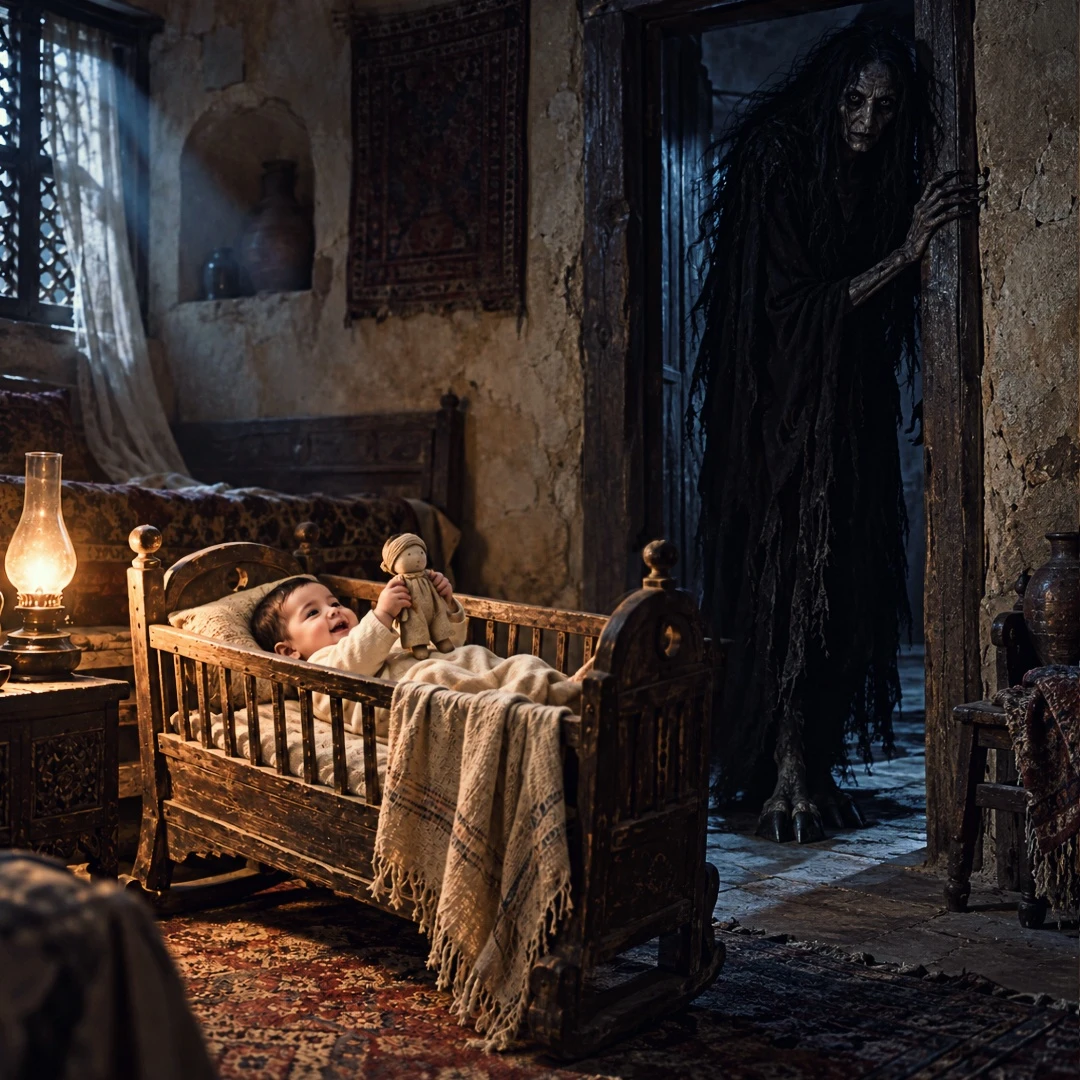
In a dimly lit room, a mother leans over her baby's cradle. Just hours ago, he was crying, but now he's unusually quiet. She touches his face, leans in to listen for his breath, and calls for the rest of the family. When no one can explain what happened, fear takes on a name that spreads through the community: Umm al-Subyan.
This imagined scene captures a tragedy that countless families have faced throughout history: a pregnancy ending too soon, a mother collapsing after childbirth, a baby falling suddenly ill, or a child fading away for no clear reason. In the space between disaster and understanding, stories emerged of beings said to enter homes at night, stalking pregnant women and stealing or draining the lives of children.
The names and forms differ: a female jinn in Arab folklore, a demoness in Mesopotamia, a bird-headed spirit in Southeast Asia, fairies who swap children in Europe, and a weeping woman by the rivers of Latin America. Their stories all tap into a deep human fear: losing a child and never knowing why.
Still, similarity alone doesn’t mean these are all the same figure traveling the world under different names. Some traditions do overlap, while others simply share roles or imagery without any clear link between them. What unites these tales is the history of anxieties surrounding motherhood and childhood, preserved in stories, manuscripts, and protective charms.
Umm al-Subyan holds a unique place in this history, straddling the line between a disease and the supernatural being blamed for it. In some accounts, she appears as a harmful jinniyah, sometimes called 'al-Tabi’ah,' with stories ranging from attacking children to harming adults. Other descriptions show her with cow’s legs or disguised as a beautiful woman hiding her terrifying nature.
This character isn’t confined to oral tradition. The Hill Manuscript Library features a manuscript preserved at the Oriental Library of Saint Joseph University in Beirut (catalogued as USJ 00277), which includes a chapter for protection against Umm al-Subyan and an illustration of her. The page reveals how people tried to confront their fears with writing and symbols, documenting belief in the being though not its existence outside the manuscript.
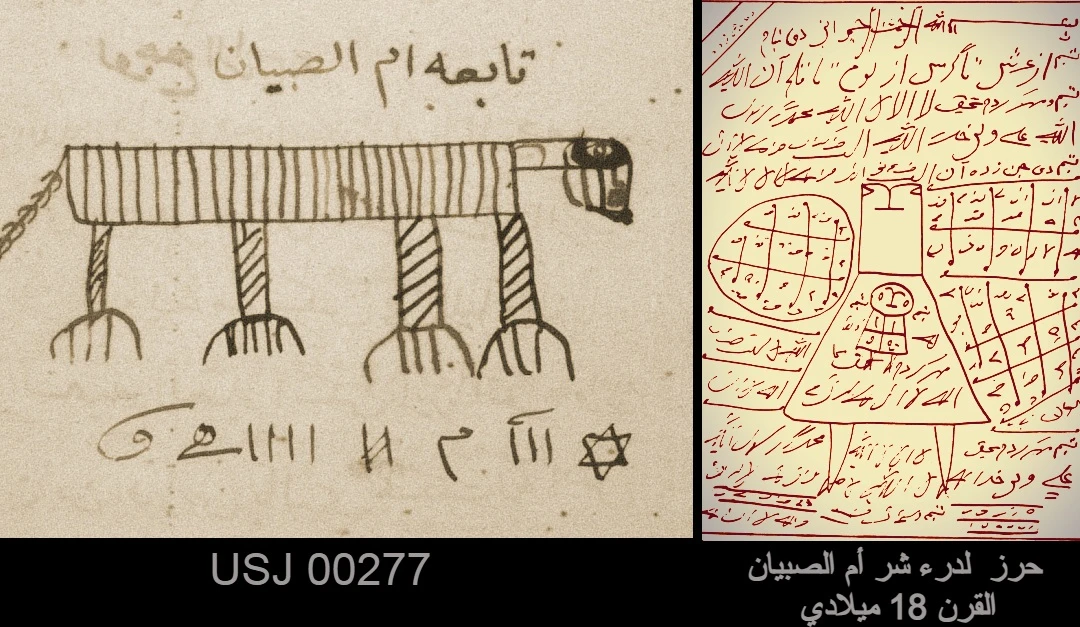
The name also appears in reference to childhood illnesses. The newspaper Al-Khaleej quotes Faleh Hanzal, author of the 'Dictionary of Colloquial Terms in the UAE,' noting that Umm al-Subyan is associated with epilepsy, with the popular belief that a jinniyah causes the condition from a young age. This raises a complex question: were families talking about a frighteningly named illness, or a supernatural being they believed caused it? In everyday language, the two meanings often blur together.
This overlap calls for caution when reading traditional sources. Mentioning Umm al-Subyan in an old text doesn’t automatically mean the author meant the same figure described in modern stories. Similarly, the presence of a prophet’s name or a prayer in a folk amulet doesn’t prove its religious authenticity. Magical manuscripts tell us what people wrote and believed, but verifying their religious or historical accuracy is a separate matter.
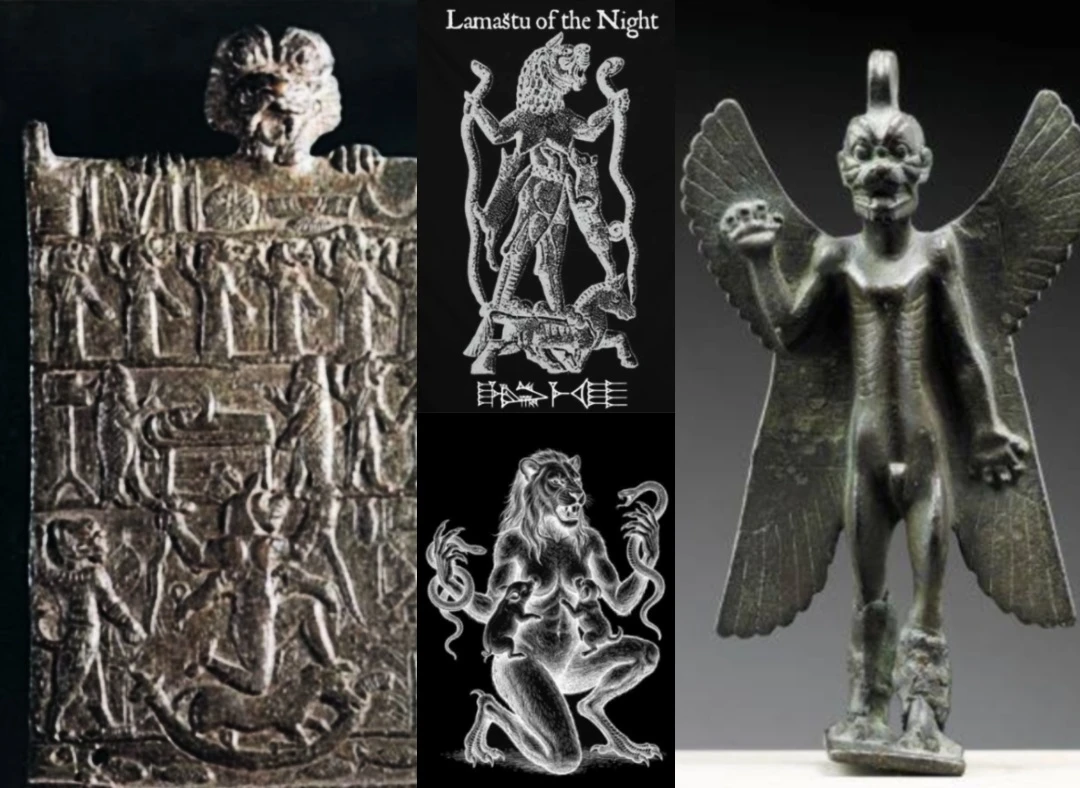
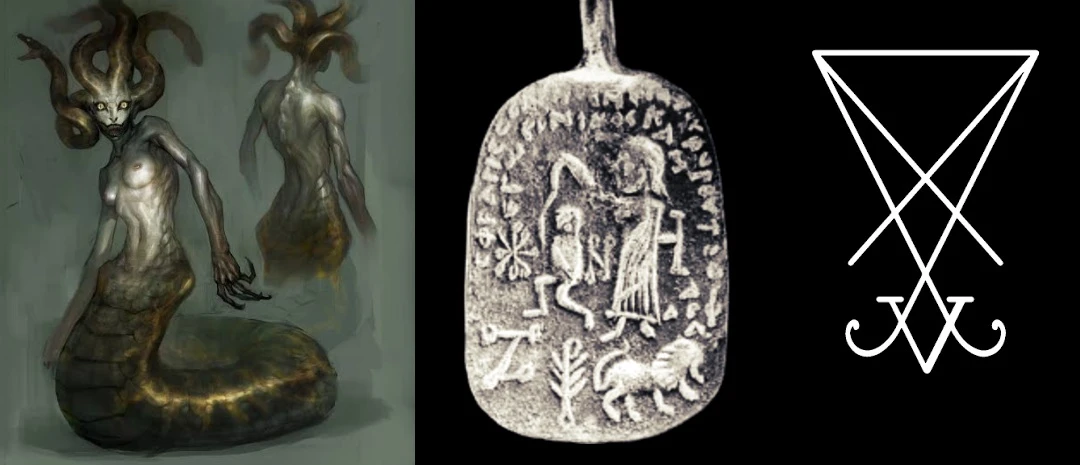
Looking back to ancient Mesopotamia, we find a much clearer example of a being targeting pregnant women and newborns: Lamashtu. The Metropolitan Museum of Art describes her as the daughter of the sky god Anu, cast out of heaven according to some accounts after she asked to feed on the flesh of children. From then on, she was said to roam the earth, with pregnant women and newborns among her imagined victims.
Amulets bearing her image are lasting evidence of this fear, including a Babylonian piece dating to the 7th or 6th century BCE. Beside her appears Pazuzu, the demonic figure whose image was used to ward her off. In that world of beliefs, one terrifying force could serve as a protector against an even greater threat. The cradle, then, was guarded not just by human care, but by an imagined battle between unseen beings.
In Jewish folklore, part of the image of Lilith is tied to the danger facing women after childbirth and their babies. Long before she became a modern symbol of rebellion or independence, Lilith was a name some families feared, prompting them to use various means for protection. The National Library of Israel displays birth amulets linked to her story and to angels believed to keep her at bay.
These small pieces of paper offer a tangible history of fear: a family awaiting or welcoming a child, placing words and names between the baby and the unknown. The story of Lilith as Adam’s first wife comes from later Jewish traditions and shouldn’t be presented as a shared religious narrative or historical fact. Likewise, similarities between her role and those of Lamashtu or Umm al-Subyan don’t mean they are the same figure.
The connection to Umm al-Subyan is even more direct in Persian folklore, where a being called Āl appears. The Encyclopaedia Iranica describes Āl as a folkloric embodiment of postpartum fever, with the belief extending into the Caucasus and Central Asia under names like Albastı. In Persian beliefs about children, Āl is said to steal a woman’s liver during childbirth and harm her baby. The encyclopedia notes that in this context, Āl is also referred to as 'Umm al-Subyan.'
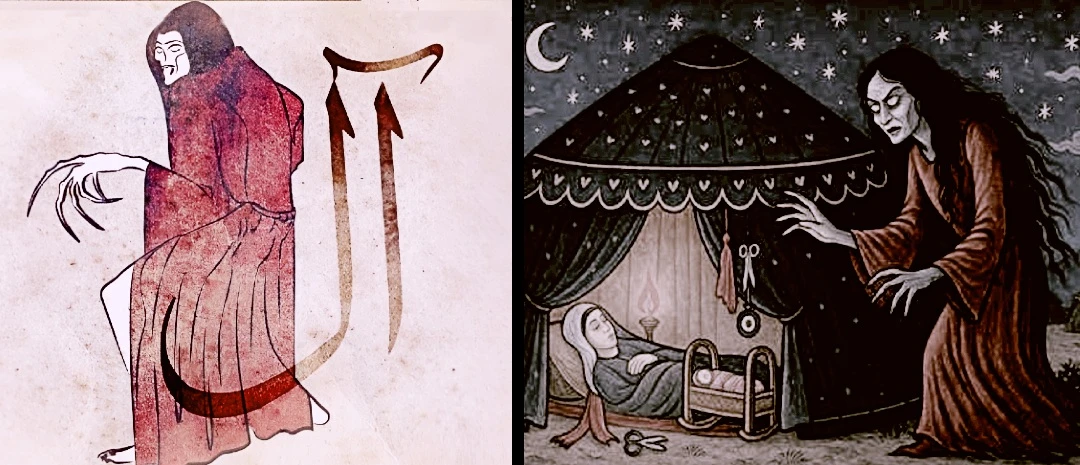
Here, the fear is directed at the mother’s body as well. A birth may seem successful, only for the mother’s health to suddenly decline, and imagination gives this collapse the form of an organ being stolen from within. This can be seen as an attempt to explain invisible harm, though not every story necessarily describes the same medical condition.
From the same birthing room emerges the figure of Abyzou, known as Obizuth in the translation of the text called the 'Testament of Solomon.' In her interrogation scene, she claims to roam the world at night, stalking women in labor and, if given the chance, strangling the newborn. If she fails, she moves on to another place.
The scene is strikingly clear: danger has a will of its own, chooses its moment, and relentlessly seeks a victim. This idea appears in apocryphal literature attributed to Solomon, but it isn't a historical account of his actions. Its value lies in how it reveals the authors' attempt to portray death near childbirth as an enemy—one that can be confronted, questioned, and restrained.
In Greek and Byzantine traditions, Gello (or Gyllou) is associated with harm to children. Some stories describe her as the spirit of a girl who died before her life could fully begin. Over time, the name came to refer to a whole class of malevolent beings. Nearby in this folklore stands Lamia, whose legend links her to the loss of her own children and her transformation into a predator of others' children.
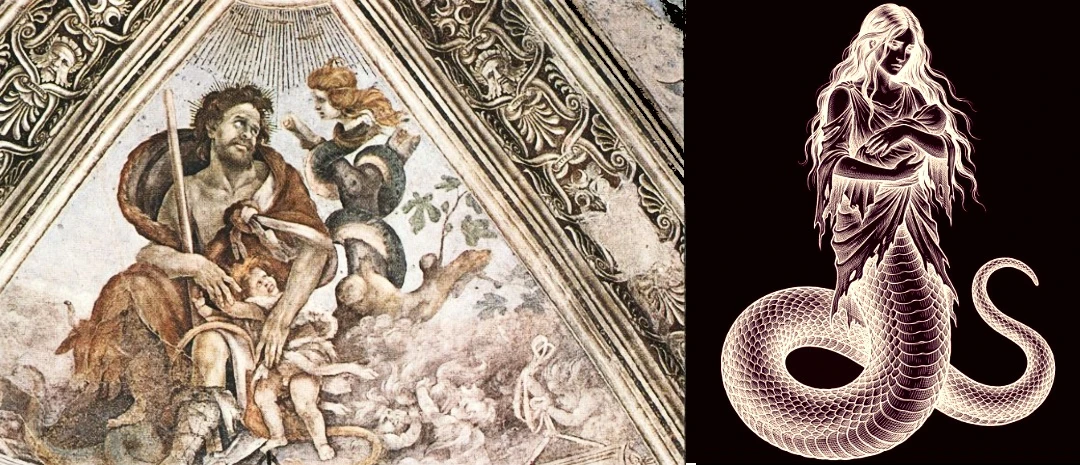
These two figures offer a poignant literary reading: a life cut short, or motherhood stolen, returns as hostility toward the living. Imagination turns deprivation into supernatural jealousy, casting the bereaved woman as the source of new tragedies. This is an interpretation of the story’s meaning, not a judgment on women who have lost children, nor a psychological explanation to be applied to them.
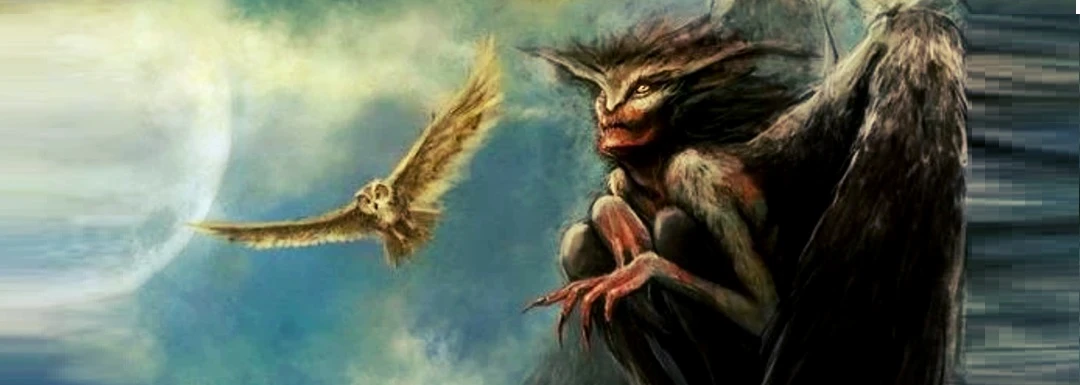
Danger was not always imagined as female. In Book Six of Ovid’s 'Fasti,' predatory night birds called Striges (singular: Strix) attack infants and drink their blood. The poem recounts their assault on the child Proca and the intervention of a protective force to save him. Here, fear takes the form of wings, beaks, and eerie sounds in the darkness, turning the infant’s vulnerability into a scene of nocturnal predation.
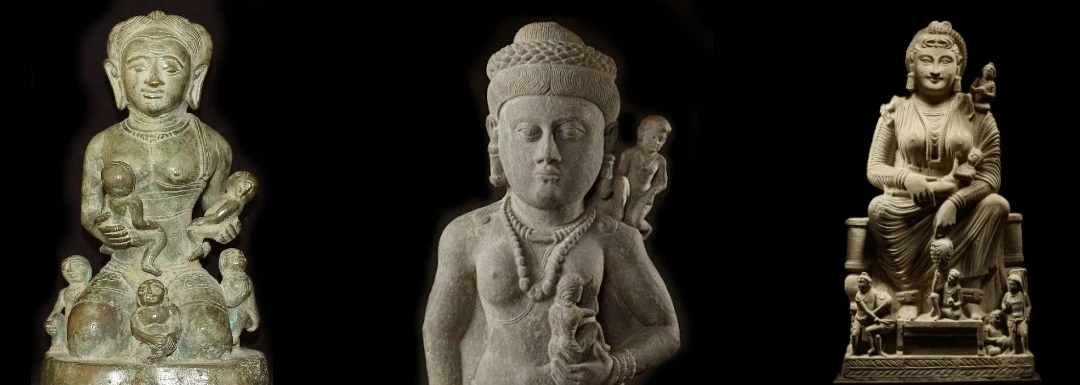
Buddhist tradition offers a different ending with Hārītī, a figure who, according to legend, once devoured children despite being a mother herself. When Buddha hid one of her own children, she experienced the pain she had inflicted on others. This led her to become a protector of children, often depicted surrounded by them or holding a child in her arms.
In this story, redemption comes from understanding another's pain. Hārītī's gentle image, following her frightening past, invites reflection on how stories can transform fear into compassion.
In the Malay Peninsula, the dangers of childbirth take on terrifying physical forms. Walter William Skeat's 1900 book 'Malay Magic' describes the Penanggalan, a flying, disembodied head trailing organs, searching for children's blood. He also recounts the Langsuir, a woman transformed into a fearsome creature after learning her child was stillborn.
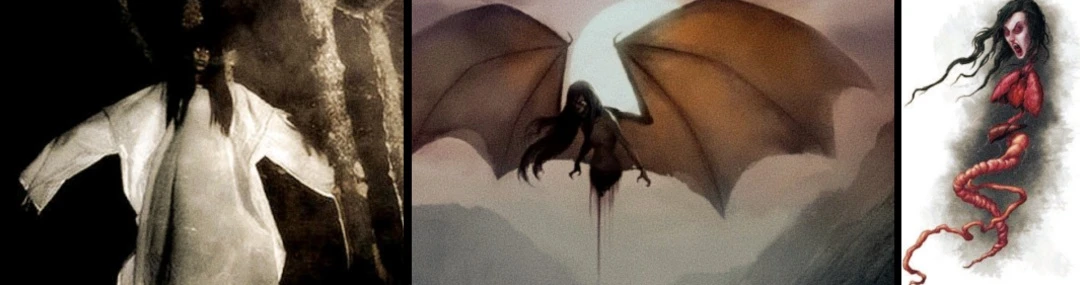
The book also mentions the Bajang, considered a threat to children and believed to be kept by certain individuals. Unexplained illness, seizures, or loss of consciousness in a child could arouse suspicion that they had fallen victim to the Bajang, leading to accusations against those thought to possess its spirit. Here, the stories clearly point to human agency behind the supernatural, and should be read as historical records that vary from place to place.
In the Philippines, the Manananggal appears, a creature whose upper body detaches and flies at night. In popular tales, she targets sleeping pregnant women, using a long tongue to reach the unborn child or its blood. This image makes the child vulnerable even before birth. While similar to the Malay flying head, each figure has its own distinct appearance and traditions.
Arriving in Europe, the question shifts: What if the child is still in the cradle, but the family believes it is no longer their own?
In changeling tales, fairies steal a child and leave a substitute in its place. Signs like illness, weakness, or unusual behavior can arouse suspicion. These stories offer an explanation for changes that families struggle to understand: the real child is gone, and an imposter remains.
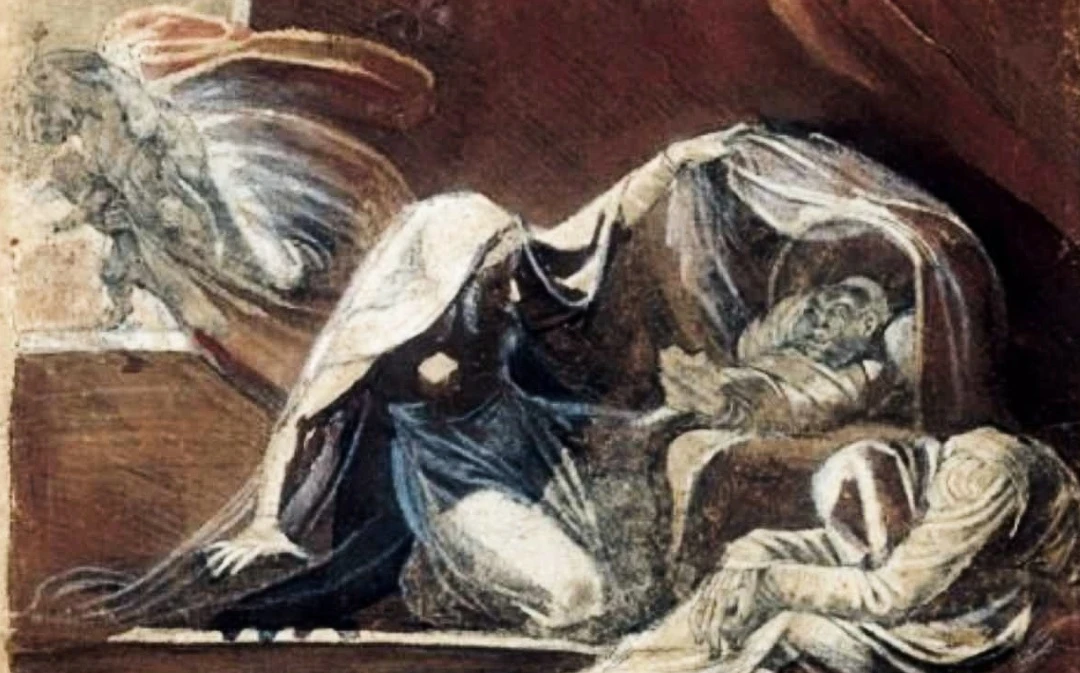
Some researchers have linked these stories to attempts to explain disability or developmental differences. However, historical studies caution against directly equating folklore characters with modern diagnoses. Not every 'changeling' was a child with autism or a specific illness. The most painful aspect is when such beliefs turn a sick child into a source of fear and hostility, at a time when they most need care.
Across the Atlantic, a mournful legend echoes, La Llorona, the weeping woman of Mexican and Latin American folklore. In well-known versions, she drowns her children and then wanders in search of them. In some stories, she becomes a threat to other children. Her tale varies, but the combination of motherhood, loss, water, and her haunting nighttime cries make her unforgettable.
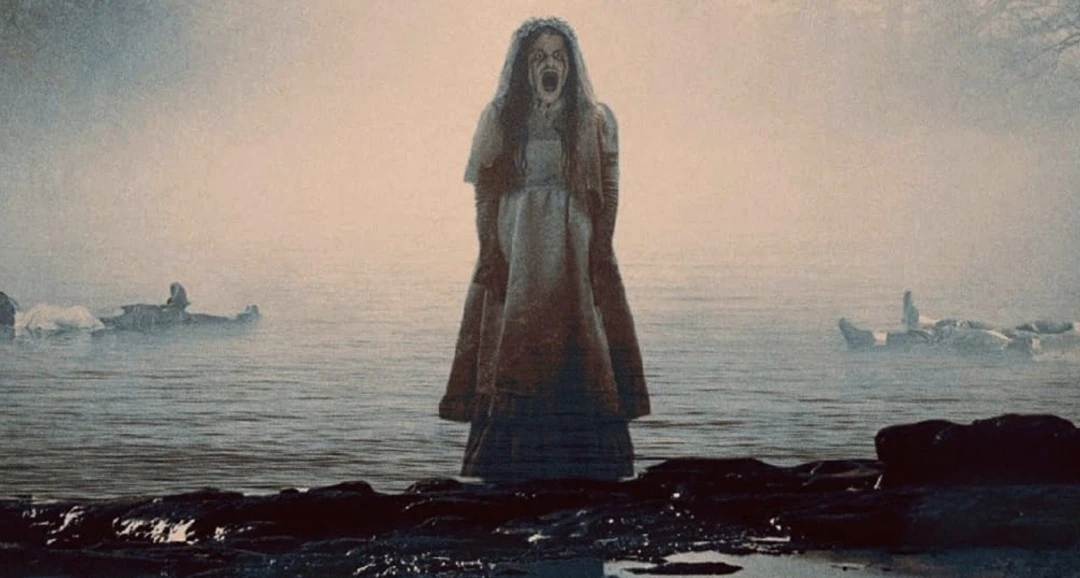
Her connection to the archetype of the child-snatching mother is strongest in themes of abduction and loss, rather than pregnancy or nursing. She expands the realm of fear from the cradle to the road and riverbank places where a child can slip away from family protection and disappear.
In Nigeria, the journey takes another turn. Among the Igbo, the Ogbanje belief and its Yoruba counterpart, Abiku explains repeated child loss as the same spirit returning to the family, only to die and depart again. Here, the child is seen as linked to a world that the family blames for taking them away.
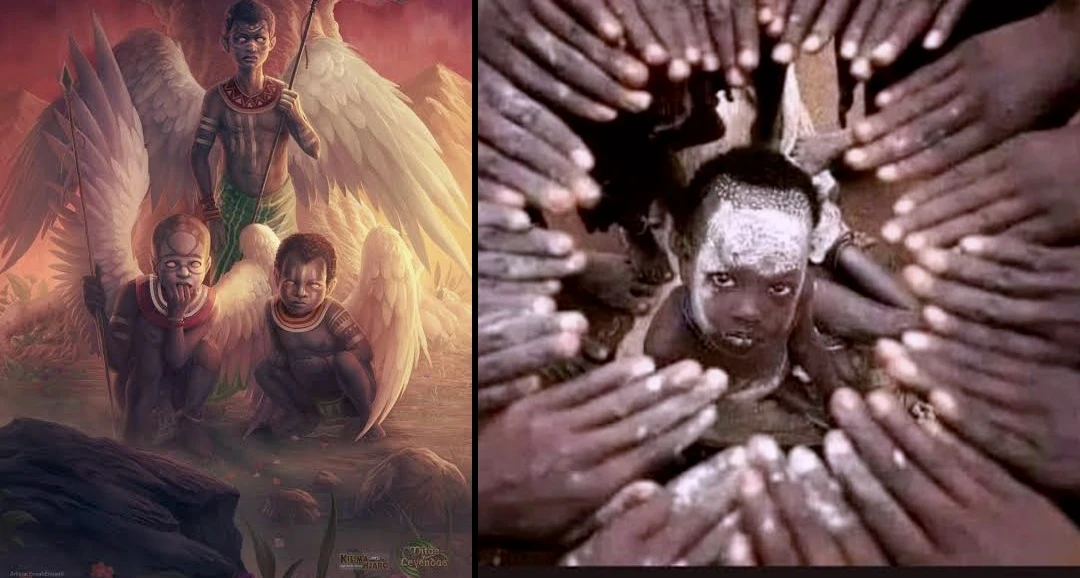
This example allows for a closer look. In a 2001 study by E. Nzewi, one hundred children popularly identified as 'malevolent Ogbanje' were examined. Hemoglobin data was available for eighty of them, and seventy were found to have sickle cell anemia , 87.5 percent of those tested.
The findings show how a hereditary disease, with its recurring pain and risk of early death, can be woven into spiritual explanations for family loss. However, these results apply only to the studied group and don't mean all Ogbanje beliefs are tied to a single illness, nor do they explain every child-related myth worldwide.
What connects these stories?
There is no single answer, but limited understanding of disease and treatment is a key part of the picture. Today, we know that complications from prematurity, birth, infections, and congenital defects are major causes of infant death, and many miscarriages result from chromosomal problems. Families saw the outcomes of these dangers, but the causes often remained mysterious and untreatable.
Still, ancient life was not devoid of care. There were midwives, inherited knowledge, and attempts at healing, coexisting with supernatural beliefs. Reducing these stories to mere 'ignorance' overlooks their human dimension , they were also ways to cope with grief, assign meaning to tragedy, and regain a sense of control in protecting the next child.
But this sense of fear can come at a heavy price. When loss is blamed on a supernatural being supposedly sent by someone, a neighbor might become a suspect. If a child's illness is seen as a sign of something inhuman, the one who needs care may instead be shunned. And when miscarriage is interpreted as a sign of mystical targeting, a mother's grief can be compounded by fear and guilt she doesn't deserve.
That's why it's important to keep the differences between these forms of harm clear: Lamashu wanders the world according to her own legend, Langsuir is born from tragedy, and Bajang may be linked to someone who possesses it. The presence of magic in some stories doesn't mean every creature is a summoned spirit, just as a protective amulet against a being doesn't prove it can be controlled or that such charms are truly effective.
Across these cultures, imagination gave fear names, faces, wings, and claws. But behind those images, there was often a home that had lost a child, a mother afraid of losing another, and people trying to make sense of what they couldn't bear.
When we look today at an illustration of Umm al-Subyan in a manuscript, or at an amulet hung near a cradle, we're seeing traces of an ancient human attempt to protect life. Perhaps the deeper question these stories leave us with is: How many children had their illness named after a monster, before that illness had a name we could understand and treat?
About the Author