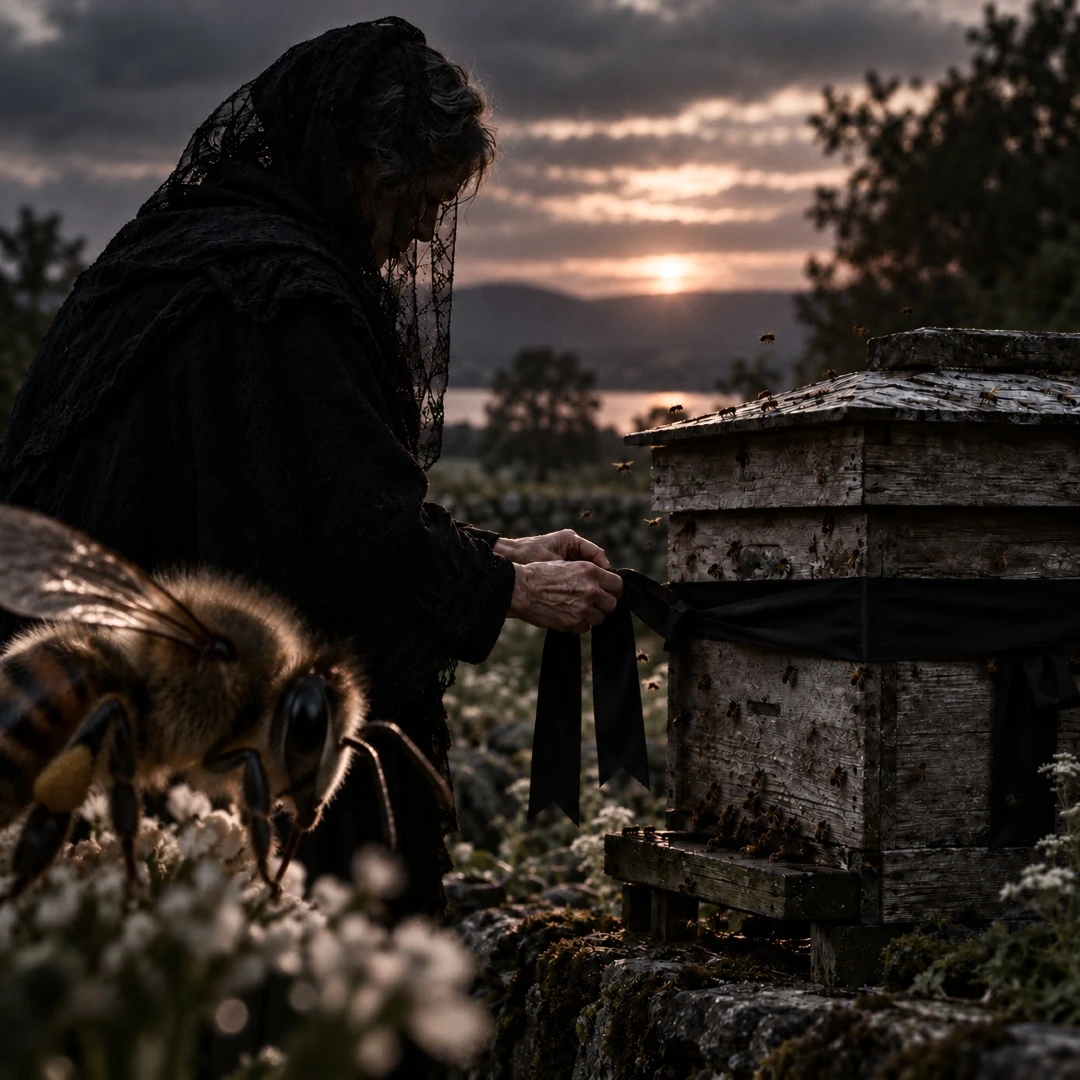
In September 2025, Irish writer and director Manchán Magan knew that cancer was bringing his life to an end. In a radio interview, he shared a strange story that took place far from doctors and hospitals: one of his neighbors had gone out to the beehives to tell the bees that Magan was ill and would not be with them much longer.
The neighbor wasn’t joking, nor was he inventing a new ritual. He was reviving an old tradition known in Ireland and other parts of Europe as "Telling the Bees."
A few weeks later, Magan passed away. But why should the bees be told about a person’s death? Why did people believe that keeping the news from them could cause the bees to abandon the hive, stop making honey, or even die themselves?
This unusual custom spanned from rural cottages to royal palaces even the bees belonging to Queen Elizabeth II were formally informed of her death in 2022.
When a House Enters Mourning
A recent study by Irish researcher Máirtín Mac Con Iomaire, published in the journal Folklore in 2026, shed new light on Irish death and funeral rituals over the past fifty years, from 1975 to 2025.
The study reveals a world where death was not just about the body, it transformed the entire household.
When someone died, clocks were stopped, mirrors were covered, and the body was washed and prepared at home. Then came the wake, where family and neighbors gathered to pray, talk, eat, drink, and mourn together.
Some of these customs still survive. The researcher recalls that when his sister died in Connemara in 2010, the clock was stopped, the mirrors were covered, and her wake was held at home.
But among these rituals, there was something else that couldn’t be forgotten: if there were bees in the house, they too had to be told that death had entered the home.
Your Master Has Died
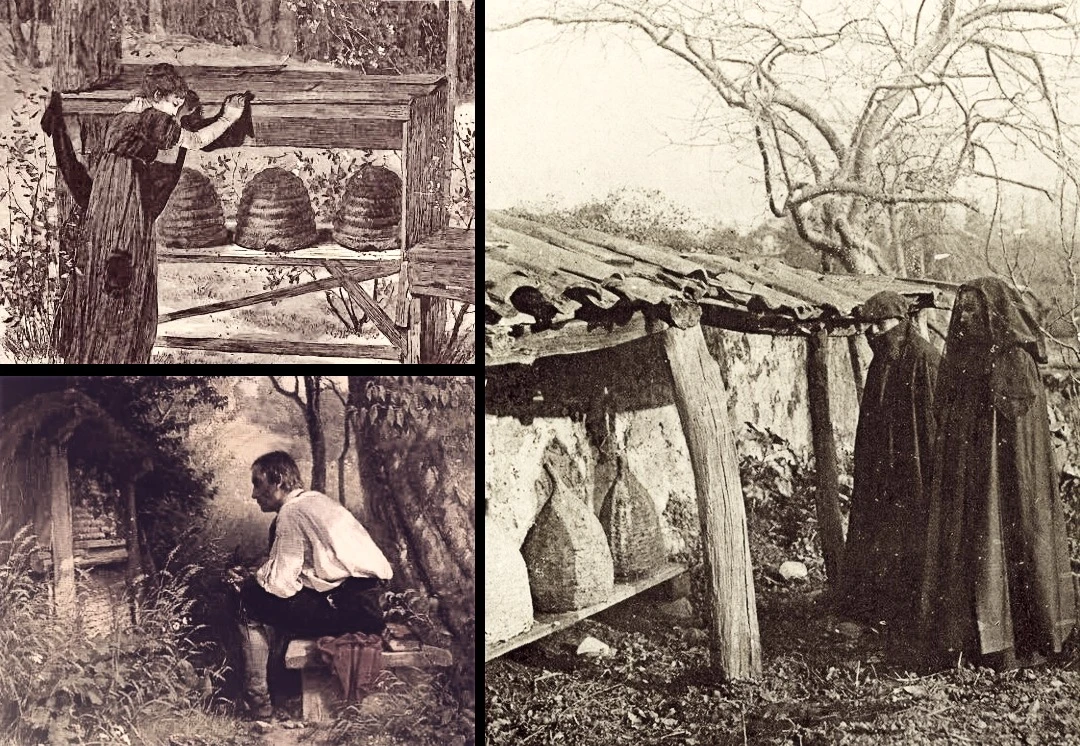
When the beekeeper or a family member died, someone would go to the bees and break the news. The method varied by region, but often involved approaching the hive and speaking to it directly, sometimes gently tapping on it or tying a black ribbon or cloth to the hive. The National Folklore Collection in Ireland holds clear records of this tradition.
A recording from County Limerick notes that when someone died in the house, clocks were stopped, mirrors were covered, and if there were beehives, each one was draped with black cloth.
The reason was even stranger: if this wasn’t done, the bees would die.
The same belief appears in records from County Clare, where people thought the bees had to be told of their keeper’s death, or else they might die or abandon the hive.
Bees, then, weren’t just honey producers, they were considered members of the household who needed to be included in news of a death.
He put on his best suit to tell the bees
One of the most captivating stories preserved in Irish folklore is that of a man named Jimmy Bann, which was recorded in County Antrim in 1954.
Bann was known for his close bond with his bees—he would talk to them and share news of his life. When his mother passed away, he didn’t rush to the hives in his work clothes. Instead, he washed up, shaved, polished his Sunday shoes, put on his best suit, and then went to the bees to tell them his mother had died. This detail stands out, as it makes the visit feel like a formal act of mourning.
Jimmy Bann wasn’t unique in this. Irish folklore researcher Eimear Chaomhánach recounted how her own father did something similar when her mother died: he went to his hives, placed his hands on them, and quietly spoke to the bees.
When asked why, he didn’t offer any mystical explanation. He simply said it was 'the right thing to do.'
He didn’t tell the bees... and they died
But beneath the intimate side of this tradition lies an old fear. In County Galway, a story recorded in 1944 tells of a beekeeper who neglected the custom after a death in his family. What people feared soon happened: the bees grew weak and died in their hives.
For the beekeeper, the reason was clear: he had failed to inform the bees of the death, and this was the result.
Of course, the story doesn’t prove a connection between the two events. Bee colonies can collapse for many reasons—disease, parasites, lack of food, cold weather, or queen problems.
But for a community that already believed bees should be told about a death, the loss of a colony after neglecting the ritual seemed like confirmation.
And so, coincidence becomes a story, the story becomes evidence, and the evidence turns into a tradition passed down through generations.
The bees that followed their owner’s funeral
Some stories are even stranger. In a testimony recorded in Galway in 1959, a man named McCormack kept seventeen hives and was said to be so close to his bees that he could hold them in his hand without being stung.
When he died, his family forgot to tell the bees. According to the story, as the mourners began carrying his coffin up to the cemetery, something unexpected happened.
The bees swarmed out of their hives and followed the funeral procession. According to the tale, they never returned.
A more recent story from County Cork tells of a man who saw the bees of a deceased beekeeper moving like a cloud over the road during the funeral. In another account from Ballydehob, Cork, a beekeeper’s widow visited her husband’s grave days after his burial to find the area covered with bees and butterflies. Of course, there’s a simple natural explanation: funeral flowers may have attracted the insects. But for the widow, the scene meant something else—the bees had come to say goodbye.
Bees sharing in the funeral meal
In some Irish traditions, informing the bees wasn’t enough—they were also to be included in the mourning. Chaomhánach notes the custom of leaving some funeral food near the hives, such as cakes, honey, or mead. In modern times, this might be as simple as leaving a bit of food or drink by the bees.
It’s as if the hive became an extension of the gathering place for the bereaved. The bees hear the news, join in mourning, and even receive their share of the funeral meal.
Why bees, specifically?
There’s no single, definitive answer to where this tradition began. However, bees have held a special place in European imagination for centuries. Their highly organized societies have fascinated people, and their production of honey and wax, along with their seasonal disappearance and return, made them important both economically and spiritually.
Folklore studies reveal that bees, butterflies, and birds have often been linked to the soul and to journeys between the world of the living and the afterlife. In European tales, the soul of a person or animal sometimes appears as a bee or a small creature leaving the body.
Within this symbolic world, the custom of telling the bees about a death becomes much more understandable.
Still, it’s a mistake to claim, as some modern stories do, that this ritual is an unbroken 'ancient Celtic tradition' stretching back thousands of years. While there’s strong documentation of the practice in recent centuries, its earliest origins and the exact path it took through history are much less clear.
There's also a simpler social explanation: bees were a real asset for rural families, and beekeepers would tend to their hives for years. Over time, this practical, economic relationship often took on emotional and symbolic meaning.
When the beekeeper died, it wasn't just the loss of a person—the responsibility for caring for the bees would also pass to someone new.
Not just an Irish tradition
Interestingly, the custom of 'telling the bees' wasn't limited to Ireland. Variations of it appeared in Britain, France, Germany, Switzerland, the Netherlands, and other parts of Europe. The tradition even crossed the Atlantic to North America. In some places, bees were informed not just of deaths, but also of weddings, births, and other major family events.
In England, it was common to tap on the hive with the house keys before sharing the news. In other regions, people would gently move the hives as the coffin was carried out of the house.
In some German traditions, when a beekeeper (known as the Bienenvater) died, the hives would be gently moved. If this wasn't done, people feared the bees might abandon the hive or die.
Make wax... your master has died
In the Basque Country, the tradition took on a different meaning closely tied to death. The bees would be told of their owner's passing, but they were also asked to keep working and produce the wax needed to light the deceased's grave in the church.
Traditional phrases used to address the bees included:
"Little bees, make wax; your master has died, and we need light in the church."
The hives would be draped in black, and in some places, local expressions even referred to 'dressing the bees in mourning.'
It wasn't always just about the bees. In some communities, other farm animals were also informed when the head of the household died, as if the death required redefining the relationship between the home and all the creatures living around it.
The bees cross to America
The tradition made its way to the New World, especially New England, and gained literary fame when American poet John Greenleaf Whittier published his poem 'Telling the Bees' in 1858.
In the poem, the narrator returns to a familiar home and senses that something is wrong. He sees a girl dressed in black, heading to the beehives, covering them with mourning cloth, and telling the bees that their mistress has died.
Decades later, the same belief appeared again in American literature.
In Mark Twain's 'Adventures of Huckleberry Finn,' published in 1885, the character Jim mentions the belief that if a beekeeper dies, the bees must be told before sunrise the next day, or else they'll weaken, stop working, and die.
And so, an old rural custom made its way from oral tradition into literature.
A painting that preserves the ritual
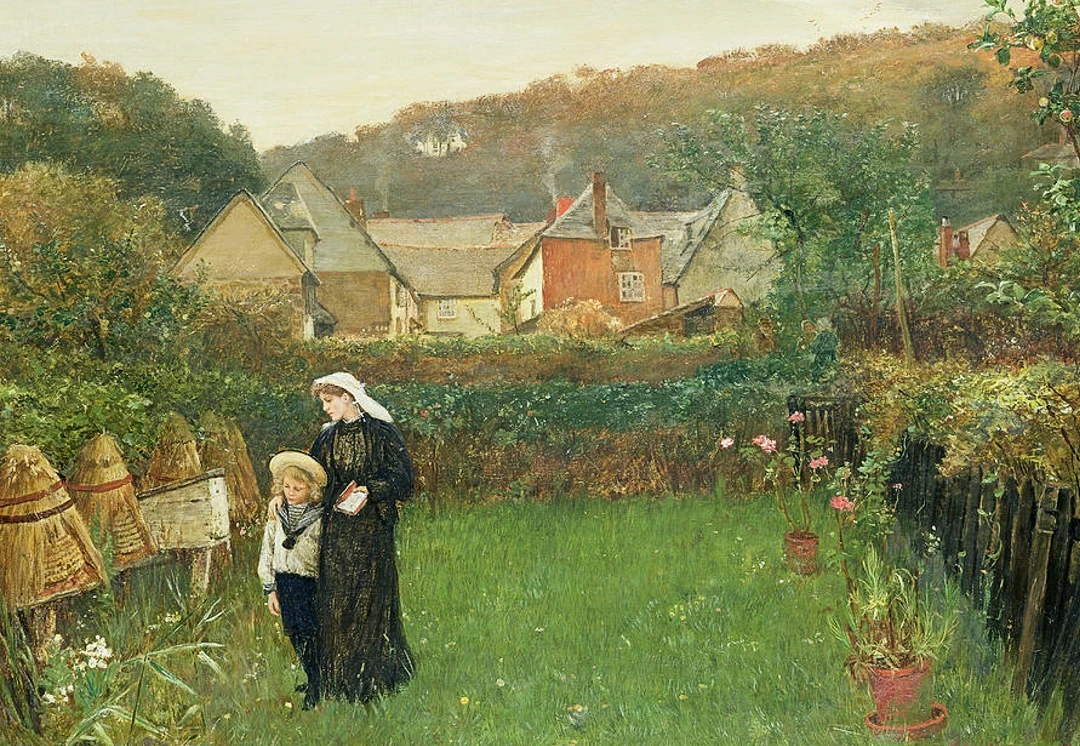
Art has also captured this tradition. In 1895, British artist Charles Napier Hemy painted 'The Widow,' depicting a grieving woman and a child by beehives—a scene tied to the custom of informing bees of their owner's death. Here, the ritual isn't just a written account in folklore archives; it's a visual representation of rural mourning: someone loses a loved one, then steps outside to share the news with the bees.
As the twentieth and then the twenty-first century arrived, it seemed only natural to expect such customs to fade away.
But the tradition hasn't disappeared entirely.
When the Queen died
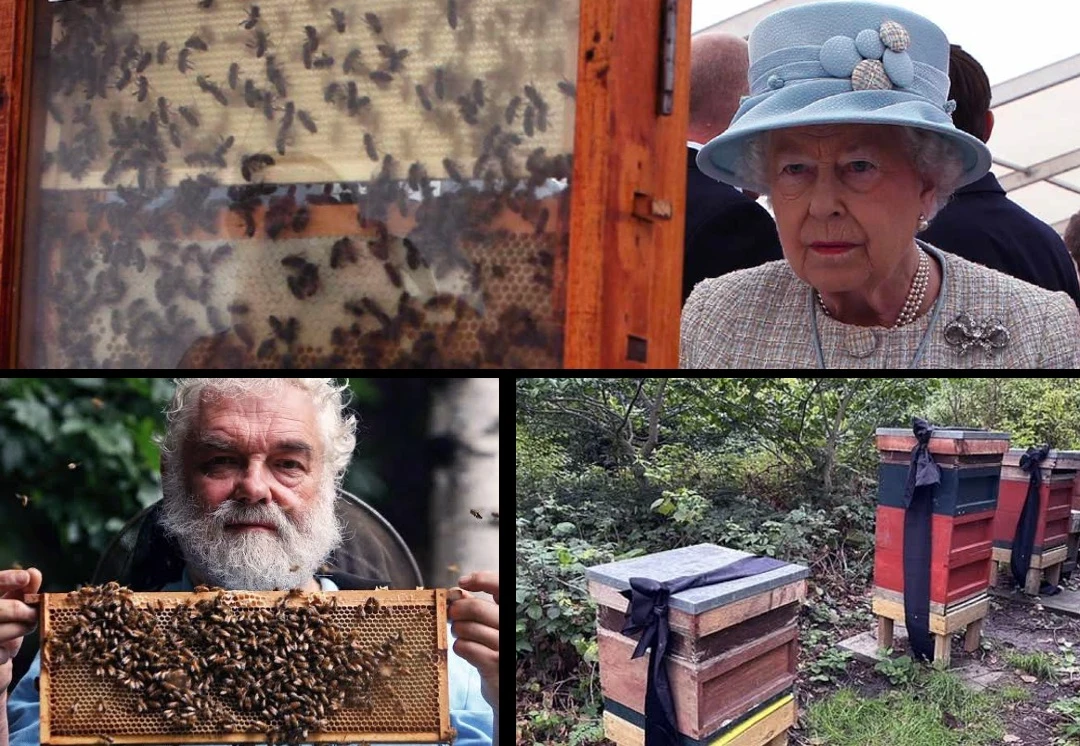
On September 8, 2022, Queen Elizabeth II passed away. The next day, a man named John Chapple had an unusual task. Chapple, the royal beekeeper, was responsible for the hives at Buckingham Palace and Clarence House.
At 79 years old, Chapple went to the hives, tied black ribbons on them, and gently tapped each one. He told the bees their mistress had died. He went further—asking them not to leave and letting them know a new master, King Charles III, would now care for them. According to reports, there were seven hives at the time.
So, after centuries of stories about farmers informing their bees of family deaths, the same ritual was repeated for one of the world's most famous figures, inside the British royal palaces.
Of course, this wasn't an official state procedure, nor did it suggest that bees understand death. It was a symbolic continuation of an old tradition that the royal beekeeper chose to uphold.
Still, the moment was remarkable:
A queen had died, and millions learned the news within minutes—yet someone still believed the bees needed to be told.
Do bees know when their keeper has died?
This is where folklore and science part ways. There's no scientific evidence that bees grasp the concept of their owner's death as humans imagine it, nor that a colony will perish or abandon its hive if not informed.
Stories of swarms appearing at funerals or gravesides may have natural explanations, bee behavior, scents, flowers, weather, or hive locations. Oral accounts themselves often change as they're passed down through generations.
But that doesn't make the tradition meaningless. Its significance may lie somewhere else entirely.
Between spirit and memory
When someone tells their bees that a person has died, they're really acknowledging that death has changed an entire world, not just a single life. The family is different, the home is different, and the person who tends the hives and cares for the colony is changed too.
In this way, the ritual becomes a way for people to give their grief a tangible form: stopping the clock, covering the mirror, sitting beside the deceased, and then stepping into the garden to tell the creatures that were part of their life that their owner will not return.
Still, the choice of bees is especially intriguing. Out of all the animals found on a farm, bees have long been surrounded by human symbolism—representing order, life, death, the soul, and the afterlife.
Perhaps that's why the ritual has survived, even after the original reasons for it faded away.
From an Irish beekeeper who dressed in his finest suit to inform his hives of his mother's passing, to a widow who believed her late husband's bees visited his grave to say goodbye, and even to a man standing in the gardens of Buckingham Palace, quietly telling the hives that the Queen had died...
The world has changed a great deal.
But the old question remains:
When the beekeeper dies... who will tell the bees?
About the Author