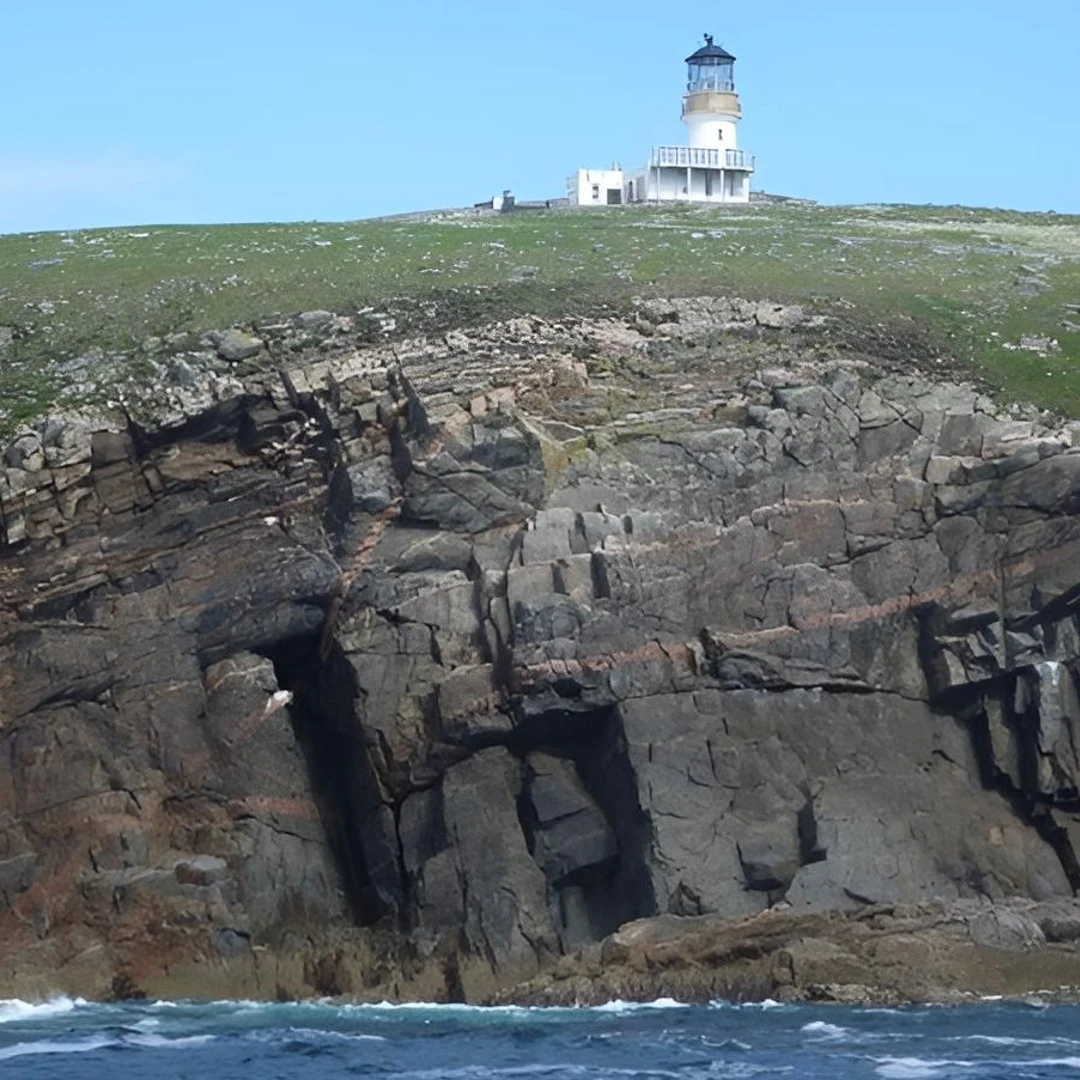
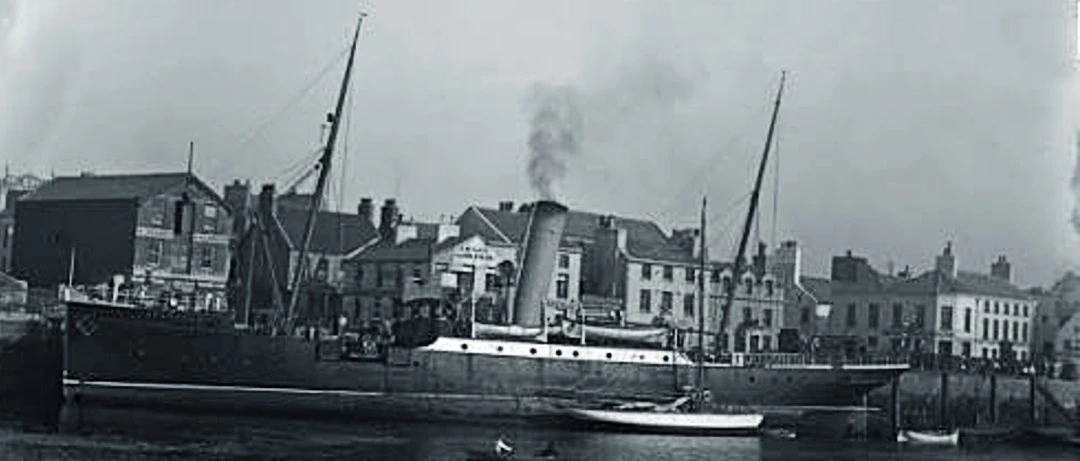
On the afternoon of December 26, 1900, the service ship Hesperus approached Eilean Mòr, the largest of the remote Flannan Isles off Scotland’s west coast. The three lighthouse keepers were expected to be waiting for its arrival, but something was wrong. No welcome flag was raised, and no one appeared at the dock. The captain sounded the ship’s horn and signaled toward the island, but there was no response.
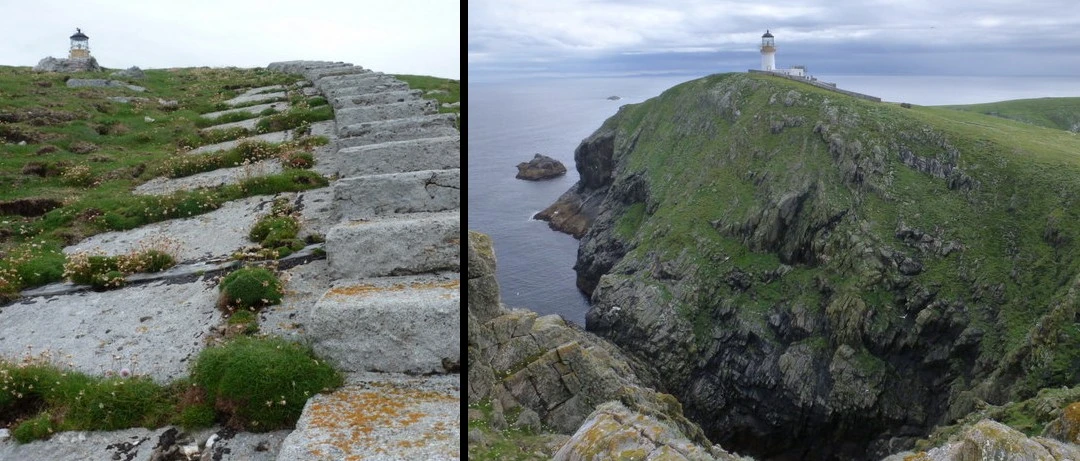
Relief keeper Joseph Moore went ashore and made his way up the path to the lighthouse. He reached the building, opened the doors, and called out for his colleagues.
No answer. The lighthouse was completely deserted.
The lamp was clean and ready, fuel was prepared, and the kitchen was tidy with the dishes washed. But the three men, James Ducat, Thomas Marshall, and Donald McArthur had vanished from the island.
There were no bodies, no farewell note, and no clear evidence explaining what had happened. Even more troubling, the clues suggested they hadn’t disappeared on the day Hesperus arrived, but eleven days earlier.

A Lighthouse in Complete Isolation
The Flannan Isles, sometimes called the Seven Hunters, lie in the harsh Atlantic waters west of the Isle of Lewis in the Outer Hebrides.
The lighthouse was built on Eilean Mòr and began operating in December 1899, about a year before the incident. Its white tower stands around 23 meters tall, with the light positioned over 100 meters above sea level, visible from nearly 20 nautical miles away.
The light system emitted two white flashes every thirty seconds. At that time, there was no direct wireless communication between the island and the mainland. The keepers spent long stretches in total isolation, surrounded by rocks, wind, and sea.
In December 1900, the lighthouse was manned by three men. James Ducat was the principal keeper, an experienced lighthouse man. Thomas Marshall was his assistant, and Donald McArthur was a temporary replacement for a crew member on medical leave. These weren’t tourists or men unfamiliar with the sea, they knew the dangers of the place well.
A Night Without Light
The first sign of trouble came on the night of December 15, 1900. The steamer Archtor passed near the Flannan Isles on its way to the port of Leith. The crew should have seen the lighthouse beam clearly, but the light was out. The incident went unreported at the time, and no immediate action was taken. By the time Hesperus arrived eleven days later, the keepers had already been missing for some time.
But exactly when did they disappear?
The Final Hours
The lighthouse log offers some clues. The last regular entries were made on December 13. Weather notes and routine tasks for December 14 and 15 were temporarily recorded on a slate inside the lighthouse, waiting to be copied into the logbook.
The last known entry was around 9 a.m. on December 15. The men had completed their daily chores, cleaned the lamp, and prepared it for use. The state of the kitchen suggested they had eaten, washed up, and tidied the area.
Whatever happened likely took place in the afternoon. By nightfall, no one was left to light the beacon.
The clothes they left behind
As Joseph Moore began searching the building, he noticed a crucial detail: two of the men had taken their outdoor work gear, the kind used when heading down to the landing sites. Ducat took his sea boots and waterproof coat, while Marshall grabbed his heavy-duty outerwear for harsh weather. MacArthur, on the other hand, left his coat inside the lighthouse. This suggests that Ducat and Marshall went outside expecting to work, while MacArthur may have followed them out in a hurry.
But where did they go?
The west landing
The search led to the island’s western side, where things started to look unusual. One of the equipment boxes, which had been secured among the rocks, was missing. Some ropes and tools had been moved, and barriers and iron railings showed clear signs of damage. Some of this equipment had originally been placed high above sea level, yet it looked like a tremendous force had reached it. Even a heavy boulder, estimated to weigh over a ton, had been shifted. For the investigators, the only plausible explanation was the sea.
Were the men swept away by a wave?
Supervisor Robert Muirhead arrived on the island to investigate and filed his official report in January 1901. After examining the lighthouse, the clothing, and the landing site, he concluded that the most likely scenario was:
Ducat and Marshall went out to the west landing to check on equipment or ropes that were at risk. At some point, MacArthur followed them. Then, a massive wave struck unexpectedly.
According to this theory, the three men were swept off the rocks and into the sea before any of them could make it back.
In an area surrounded by steep cliffs and the Atlantic’s powerful waves, a body falling into the water could disappear without a trace in moments.
The bodies of the three men were never found.

Was the storm enough to explain it?
The problem is that some details prevent the case from being fully closed. The most severe storm recorded in the area during that period actually occurred on December 20, five days after the men disappeared. This means that some of the damage investigators later observed may have been caused by the storm on the 20th, not necessarily by the weather on the 15th. Still, the crew of the Archtor described the weather on the night of the disappearance as less than calm.
Waves around the rocky islands can be dangerous even without a major storm. A single large wave—sometimes called a rogue wave , can suddenly rise above the coastal rocks. So while the official explanation remains plausible, it never became a certainty.
The Story That Never Happened
Over the years, the Flannan incident has become stranger than the original records suggest. Stories have emerged claiming that the lighthouse log contained terrifying entries in its final days: that Ducat became nervous, that MacArthur—known for his strength—was seen crying, and that all three men prayed together during a violent storm. The most famous version ends with a supposed log entry from December 15, which reads:
"Storm ended, sea calm, God is over all."
However, a historical review of the original documents does not support the existence of these entries. The known logbook contains none of these details. The last notes left by the men on the morning of the 15th were simply weather readings and routine tasks. In other words, one of the most famous elements of the Flannan mystery was probably never part of the original incident at all.
An Abandoned Meal and an Overturned Chair?
Books and websites often describe a dramatic scene: a meal left on the table and a chair knocked over, as if the men had been eating and suddenly rushed outside. But contemporary records tell a different story.
The dishes were washed and the kitchen was tidy. The image of an abandoned meal and overturned chair seems to have emerged and evolved in later literary accounts. Wilfrid Wilson Gibson’s 1912 poem "Flannan Isle" helped cement the story’s ghostly atmosphere. Over time, these literary details began to be treated as documented facts, and so much of the Flannan legend was born.
Did One Man Kill the Others?
Another theory suggests that one of the keepers suffered a mental breakdown, killed his colleagues, and then threw himself into the sea. But there were no signs of a struggle inside the lighthouse—no blood, no damage indicating a violent confrontation. The way the men’s clothing was left behind also doesn’t fit this theory: two of the men left wearing their outdoor work gear, while the third seems to have followed quickly without his coat. All of this makes an accident outside the lighthouse more likely than a crime inside.
A Ship in Distress?
Another idea is that the men saw a boat or ship in trouble near the island and went out to help. But there are no reliable records of a vessel in distress near Flannan at that time, and the conditions around the island would have made any rescue attempt extremely difficult. So this theory remains just a possibility, with no supporting evidence.
Ghosts and Mysterious Forces
As the story became legend, tales of ghosts, mysterious creatures, and even supernatural forces abducting the men began to circulate. Later accounts claimed that strange black birds or unusual phenomena were seen when the rescue team arrived, but the original reports by Joseph Moore and Robert Muirhead mention none of this. Notably, the lighthouse continued to operate for decades after the incident, with other keepers stationed there and no similar disappearances. There is simply no historical evidence to support a paranormal explanation.
Still, the lack of evidence doesn’t change the fact that the final moments in the lives of the three men remain a mystery.
Reconstructing the Final Moments
Based on the remaining evidence, the following scenario seems closest to what actually happened:
After finishing their meal on December 15, Ducat and Marshall noticed a problem with the equipment at the west landing, perhaps a box or some ropes had become exposed to the sea.
They put on their work clothes and headed down to the area, while MacArthur stayed behind in the lighthouse. Then, something happened outside maybe he saw a wave hit his colleagues from above, heard them calling for help, or noticed one of them was in danger. He rushed out without grabbing his coat, and at that moment, another wave hit, bigger than any of them expected. Three experienced keepers, all in one place, on the edge of a remote island.
And then, nothing. When night fell, the lighthouse remained dark.
The real mystery
The Flannan Lighthouse mystery doesn’t need fabricated logs, ghosts, or overturned chairs to be chilling. What makes it so compelling is that most evidence points to a simple maritime accident at its core, one that happened at just the right time and place to leave behind an unsolvable question.
We know the men were alive on the morning of December 15. We know they ate, did their work, and that two of them went out prepared for outdoor tasks, while the third likely left in a hurry. We know the sea caused severe damage near the landing.
But we don’t know what brought all three men to the same spot at exactly the wrong moment.
Did one of them fall and the others tried to save him? Were they caught off guard by a massive wave?
Or was there a completely different accident, its traces erased by later storms?
More than a century has passed since that day, and the sea still keeps the final piece of the story.
Perhaps that’s why the Flannan case endures: it’s not a mystery without explanation, but one with a strong theory, missing only that single moment no investigation can ever recover.
The moment when three men vanished from a tiny island, leaving the lighthouse behind, silent and dark.
About the Author