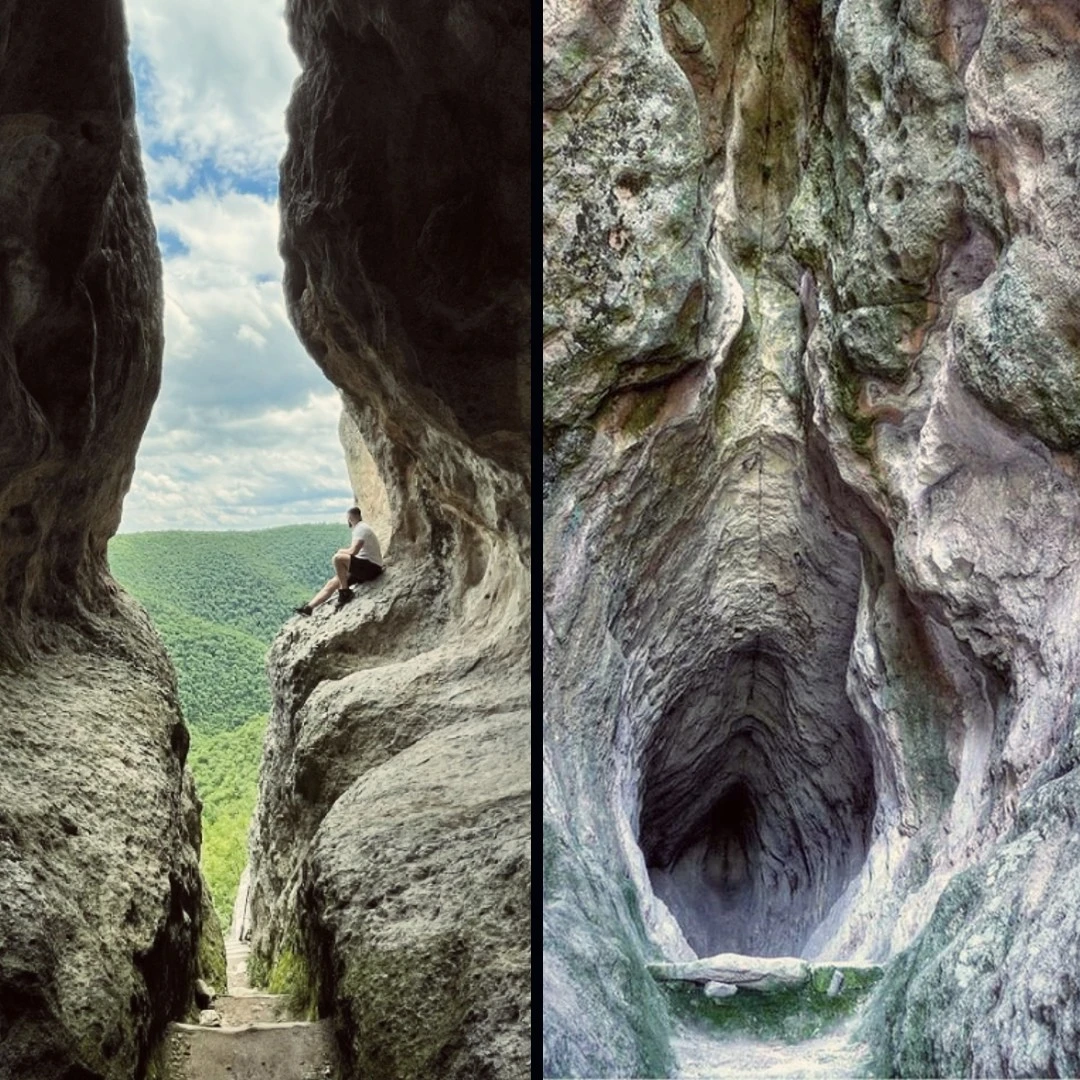
Deep within the eastern Rhodope Mountains of Bulgaria lies a peculiar rock opening, unlike any typical cave entrance. It strikingly resembles the vulva of a giant woman carved into the mountainside. From this opening, a narrow passage winds into the rock, ending in a chamber shaped like a womb. The most remarkable sight occurs when sunlight slips inside, casting an elongated, glowing spot that looks like a phallus. This beam slowly moves toward the end of the cave, as if the mountain itself is preparing for a mysterious fertility ritual.
This is Utroba Cave, also known as the "Womb Cave" or "The Goddess's Vagina." The site is closely linked to interpretations of ancient Thracian mother goddess worship, as well as rituals of fertility, death, and rebirth.
The legends surrounding the cave didn’t end with the Thracian civilization. To this day, the cave attracts visitors seeking healing or hoping to conceive, and local stories speak of its hidden powers. A Russian man who regularly meditated inside even claimed the cave possesses energy that can rejuvenate people and awaken extraordinary abilities. Is this an ancient temple designed to embody the mystery of creation, or simply a natural wonder that inspired enduring myths?
A Cave in the Heart of the Mountain
Utroba Cave is perched in the rocks near the villages of Nenkovo and Elnitsa, about 20 kilometers from the Bulgarian city of Kardzhali. Locally, it’s called Tangardak Kaya, meaning "the roaring rock" or "the booming rock."
The cave stretches about 22 meters deep. Its entrance is a relatively wide vertical slit, strongly resembling a female vulva, and the passage narrows as you move deeper, ending in a rocky chamber that some researchers interpret as symbolizing a womb. Moisture seeps down the cave walls, and the surrounding area is dotted with rock carvings and hollows linked to ancient places of worship.
Although locals have known about the cave for generations, it only came to the attention of archaeologists in the early 21st century. According to Bulgarian accounts, caver Mincho Gumarov learned of its location in 1994 from local women herding goats nearby. He kept the information quiet for years, worried the site might be disturbed by treasure hunters.
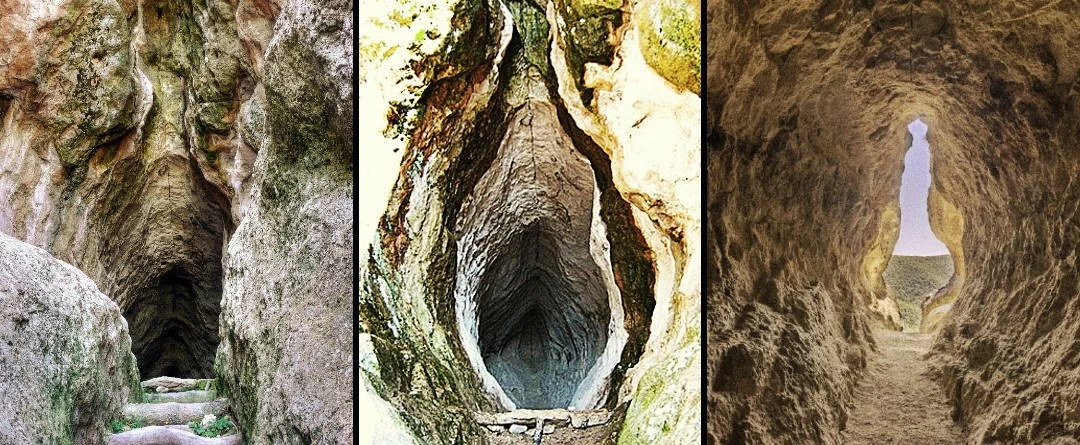
In 2002, Gumarov persuaded Bulgarian archaeologist Nikolay Ovcharov to visit. Ovcharov was struck by the shape of the rocky chamber and the signs of human modification, but it was the unusual light phenomenon he witnessed that later became central to the cave’s spiritual interpretation.
Ovcharov believes the cave served as a sacred site during the 11th and 10th centuries BCE, at the end of the Bronze Age and the start of the Iron Age, though this dating is not universally agreed upon.
The Solar Phallus
The cave’s most famous feature is the way sunlight enters its depths. When the sun nears its highest point in the sky, its rays stream through the rock openings, creating a beam of light on the cave floor that changes in length and position depending on the sun’s angle.
At certain times, this beam looks remarkably like a giant phallus, earning it the name "Solar Phallus."
In winter, as the sun sits lower in the sky, the rays enter the cave at a steeper angle, allowing the light to reach further inside. According to popular archaeological accounts, at a specific time each year, the beam reaches the innermost chamber, symbolizing a sexual union between the sun and the rock.
In this moment, according to myth, the sun god fertilizes the mother goddess, whose womb is represented by the cave. From this union, life is renewed.
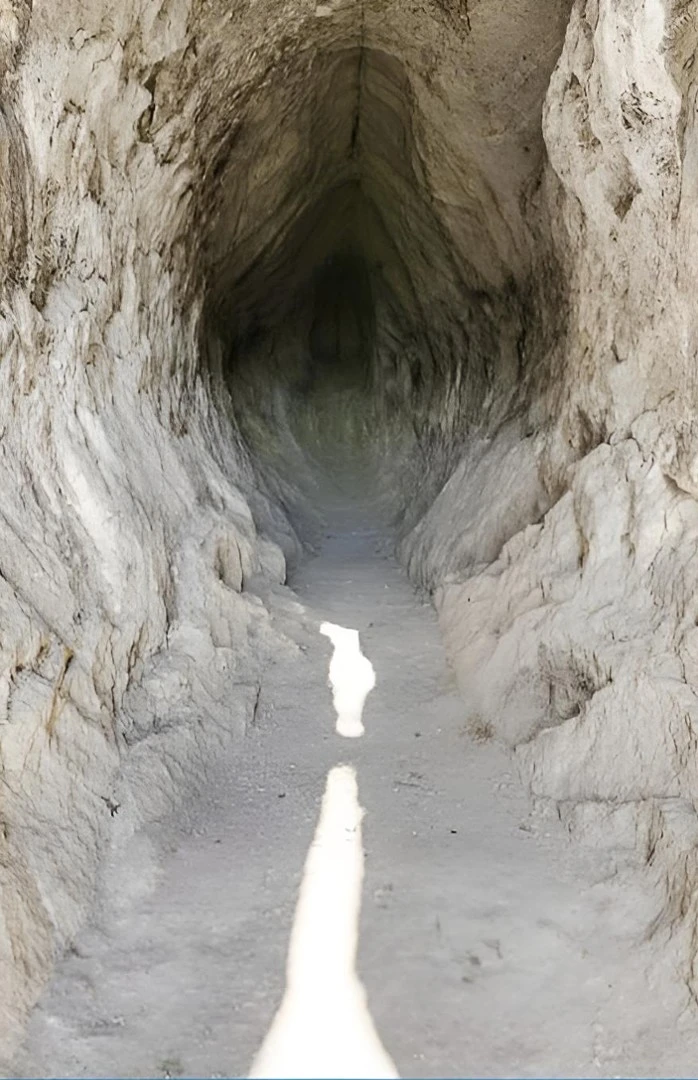
The Bulgarian Astronomical Union notes that the cave’s north-south orientation allows sunlight to penetrate to its deepest point around noon on the winter solstice, typically December 21 or 22.
However, sources differ on the exact timing of this phenomenon. Some mention February or early March, while others link it directly to the winter solstice. More importantly, not all researchers agree that the beam of light actually reaches the very end of the cave.
Despite these disagreements, the light phenomenon itself is real. The lingering question remains: did ancient people deliberately modify the cave to create this recurring spectacle, or did they simply choose a natural formation that they saw as sacred?
The Mother Goddess and the Sacred Marriage
To understand the symbolism of the cave, we need to look back at ancient beliefs that connected the earth with motherhood and fertility. Across many religions and myths, the earth was seen as a Great Mother—receiving seeds, nurturing crops, giving life to all creatures, and finally reclaiming bodies after death. From this perspective, the cave became a symbol of the cosmic womb, the place from which life emerges and to which it returns, ready for a new beginning.
Some researchers link the Otroba Cave to the worship of the Great Mother Goddess and to what is known in religious history as the Hieros Gamos, or Sacred Marriage, a symbolic union of divine forces representing creation and the renewal of the world.
In this view, light is not just a visual phenomenon, and the cave is more than a hollow in the rock; together, they represent two complementary cosmic principles: the sun, which gives life, and the earth, which receives and nurtures it.
Experts in Thracian religion connect this symbolism to the Orphic Mysteries, a set of beliefs and rituals associated with Orpheus, the legendary figure famed for his power to move people and nature through music.
Some interpretations suggest that the Mother Goddess gives birth to the sun, which then unites with her in a symbolic cycle that ensures the continuation of creation. This is not meant to describe a human relationship, but rather to explain the cycles of life, death, and rebirth through myth.
Caves and rock-cut tombs have also been associated with the idea of transition to the afterlife, where returning to the earth’s womb marks the beginning of a new transformation, not just the end of life.
This has led to another interpretation of Otroba’s purpose: perhaps priests or kings used the cave in rituals of initiation or symbolic passage, enacting death and rebirth from the goddess’s womb in order to gain sacred status or secure immortality in the next world.
However, while there is general religious and archaeological evidence supporting these ideas, there is no documented record of a specific ritual having taken place inside the cave.
The Fertility Legend
The symbolism of fertility is not just a relic of the past; in modern times, it has become a popular belief that attracts couples struggling to conceive.
According to local guides and Bulgarian travel reports, couples from the United States, Canada, and Italy have visited the cave, hoping that being there would help them fulfill their dream of parenthood. There are also stories of people consulting fortune tellers or self-proclaimed spiritual healers, who advise them to visit the site.
One story reported in the Bulgarian press tells of an American couple who made the long journey to visit the cave. The steep mountain path prevented the husband from reaching the entrance, but his wife managed to continue the climb on her own.
The woman entered the cave and spent hours inside, meditating and hoping to benefit from the power she believed resided in this sacred place. The news report does not mention any confirmed outcome from her visit, but Bulgarian travel websites recount a similar story about a woman who reportedly discovered she was pregnant months after visiting the cave. However, there are no names, medical records, or details to independently verify the story or confirm if it refers to the same person.
As a result, the tale remains part of the cave’s contemporary folklore, not proof of any miraculous healing power.
Interestingly, local beliefs have not always been optimistic about the cave’s influence. Some stories tell the opposite: that entering such sacred caves could bring infertility as a punishment for violating the sanctity of the priests or disturbing the forces guarding the place.
So, in different stories, the site has shifted from a place people feared would rob them of fertility to a destination sought out by those hoping for children. This contradiction highlights the ever-changing nature of popular belief and how a single place can inspire both fear and hope at the same time.
The Roaring Rock: Strange Sounds from the Goddess’s Depths
Another phenomenon associated with the cave is the unusual way sounds echo inside it. In the middle of the ceiling, there's a dome-shaped hollow. Local stories say that if you stand beneath it and make a deep, low sound, the echo reverberates powerfully through the rocky passage, resembling thunder rumbling from deep within the mountain. This is how the cave earned the nickname 'the Roaring Rock.'
According to local descriptions, this effect is most pronounced with deep male voices and doesn't occur in the same way with women's voices. This has led to a symbolic association between the echo and masculine energy in the cave's rituals: just as sunlight penetrates the goddess's womb, a deep voice can shake its walls, creating another scene of divine presence.
Supporters of the ritual interpretation believe these acoustic properties may have been useful to priests who wanted to create an atmosphere of awe during ceremonies or make their voices seem to come from a supernatural source.
The most plausible scientific explanation involves sound resonance and the reflection of waves within the rock cavity. The claim that the effect only responds to male voices hasn't been substantiated by any published acoustic studies, and some visitors who tried it themselves have questioned the accuracy of these stories. Still, the phenomenon helps explain how the site gained its mysterious reputation and how unusual natural features can become the basis for religious symbols and local legends.
The man who claimed to discover the cave's hidden energy
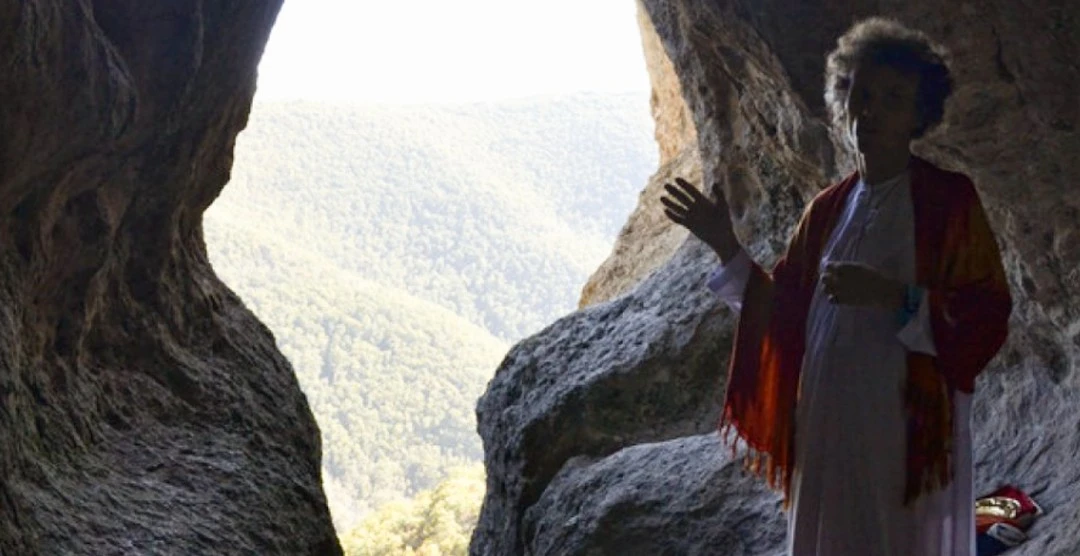
One of the strangest modern stories centers on a Russian man named Vladimir Ovsyannikov, who presented himself as a researcher of paranormal phenomena and places with unusual energy. He claimed to have received spiritual teachings and monastic rituals in Tibet.
In November 2013, the Bulgarian newspaper Standart published a detailed report about him, after some visitors began seeing him meditating inside the cave, dressed in orange robes.
Ovsyannikov said he first visited Utroba Cave in the summer of 2012. According to him, his first experience was extraordinary: after leaving the cave, he slept for twelve hours straight and woke up feeling a new kind of energy, as if all his fatigue had vanished.
This prompted him to return repeatedly. He claims to have climbed to the cave more than forty times in a single year, conducting personal experiments with meditation, sound, and breathing.
He claimed to have discovered an unusual electromagnetic field in the cave, which he said could affect what spiritual practitioners call 'chakras'—energy centers in the body according to some Eastern traditions.
His claims went beyond mental relaxation or physical vitality. He spoke of the possibility of cellular rejuvenation and developing abilities such as telepathy, clairvoyance, and perception beyond the ordinary senses.
One of his strangest stories involved a wooden staff he said he received from Tibetan monks. When he reached a small hollow at the end of the cave, he claimed the staff fit perfectly, like a key in a lock.
He took this as a sign that the cave was not just an ancient temple, but part of a larger spiritual system. He claimed there are four sacred womb caves connected to the origins of creation, located in Bulgaria, the Himalayas, the Altai region, and South America.
These claims were not supported by published measurements or independent tests proving the existence of energy capable of healing, cell regeneration, or supernatural abilities. The supposed match between the staff and the hollow does not prove any historical connection between the cave and Tibetan traditions.
More controversially, in a newspaper interview published in February 2020, archaeologist Ovcharov accused him of exploiting the site by offering fertility rituals for money, based on information he said he received from the area. These were journalistic allegations attributed to Ovcharov, not proven in court.
Ovsyannikov's story reveals a modern twist on the legend of Utroba: how an archaeological site surrounded by fertility symbols can attract followers of new spiritual beliefs, and sometimes become a stage for commercial and healing claims.
From Thracian secrets to Christian beliefs
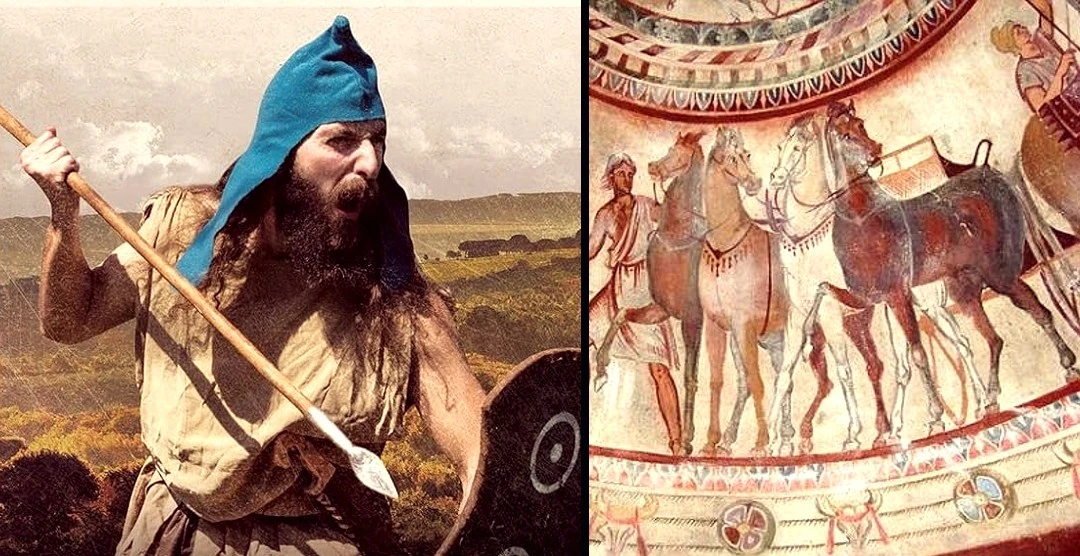
Utroba is not unique in its symbolism of the cave as a sacred womb. Bulgarian researcher Valeria Fol has studied the persistence of this symbolism in popular culture. In a 2014 study, she noted that some caves once associated with the Mother Goddess later took on Christian meanings related to healing and fertility.
One example is the Cave of Saint Marina near the village of Slivarovo in Bulgaria’s Strandzha region. Water dripping inside the cave has long been associated with beliefs about healing and helping women conceive. According to local legend, Saint Marina’s mother prayed to the sun for help when she fell ill, linking the story to a miraculous pregnancy inside a cave where water flows.
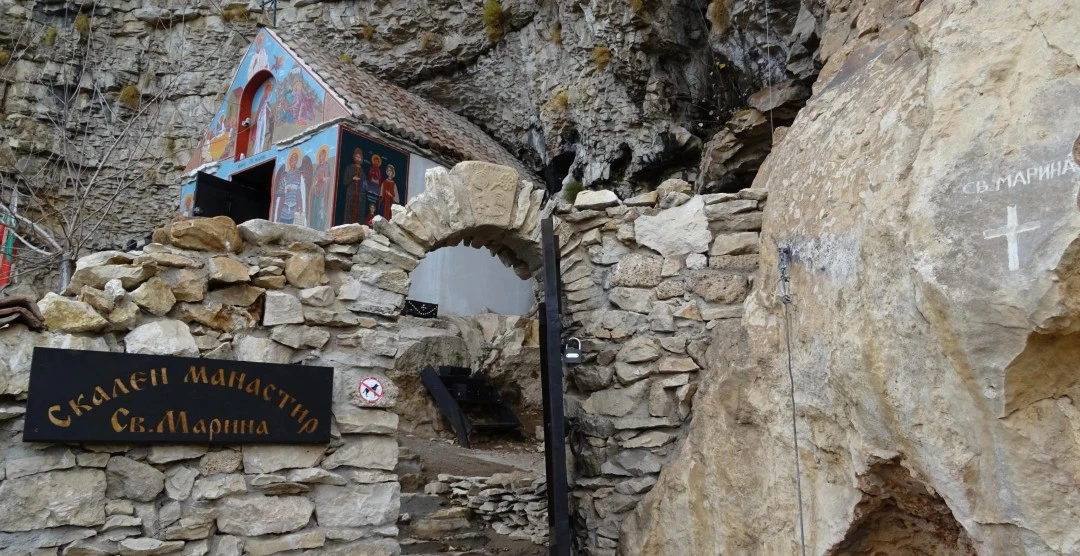
While this legend isn’t set in the Utroba Cave itself, it highlights a striking similarity between ancient and later beliefs: the cave as a symbol of the earth’s womb, water as a source of life, and a celestial power enabling fertility. These elements have appeared in various forms, even as dominant religions changed.
However, similarities in symbolism alone aren’t enough to prove that a specific ritual was continuously passed down from the Thracians to Christianity. Instead, they suggest a cultural possibility worth exploring.
Did people carve the cave to resemble a woman’s vagina?
Although it’s widely claimed that the Thracians carved an entire cave to mimic female genitalia, the geological reality is more complex. Studies and cave descriptions indicate that vertical cracks in the rock can widen over time due to tectonic movement, weathering, and erosion, creating cavities that resemble the shapes people see at the entrance to Utroba.
Some researchers believe most of the cave is natural, with only certain parts—especially the inner section—being expanded or altered later. On the other hand, the specialized website ShowCaves questions how much human modification actually took place, noting that there are other caves in Bulgaria with similar shapes.
Artifacts attributed to ritual activity, including the rock cavities around the site, don’t provide a complete record of the ceremonies that might have taken place inside.
Still, this doesn’t necessarily mean the site wasn’t sacred to ancient people. They didn’t need to carve an entire mountain to worship it—perhaps they discovered a naturally symbolic fissure, noticed how light moved within it, and chose it for religious purposes, making only minor modifications.
Was the moon, not the sun, the true source of fertility?
There’s another, less well-known astronomical interpretation worth considering. In a study titled "The Birth of Time," Bulgarian researcher Nikolay Dermendzhiev examined the light phenomenon in the cave and discussed the theory that a sunbeam reaches the womb-shaped cavity at the winter solstice. According to his analysis, even at its furthest winter reach, sunlight doesn’t actually reach the spot believed to symbolize the goddess’s fertilization.
He proposed an alternative explanation involving moonlight, which shifts its rising and highest points in the sky over an 18.6-year cycle. He suggested that under special astronomical conditions, moonlight might reach the cavity, symbolizing the mother goddess’s self-fertilization rather than a direct union with a sun god.
It’s an intriguing hypothesis, but it requires further field measurements and archaeoastronomical testing. It shouldn’t be presented as a definitive explanation for the site. The light phenomenon is real, but the intentions of the cave’s creators and the nature of the rituals remain open to research and interpretation.
Between the Sacredness of Nature and Human Imagination
No independently verified accounts have been found of ghosts or supernatural beings appearing in Utroba Cave. The most well-known stories focus on fertility, healing, spiritual energy, and unusual sounds.
That doesn’t make its story any less fascinating. It shows how people can give deep religious meaning to a natural phenomenon, and how ancient symbols can continue to influence beliefs thousands of years later.
Perhaps the Thracians saw the cave as a divine womb receiving sunlight and recreating the world. Or maybe it was originally just a rocky fissure that gradually gained sacred status. Either way, the site became a stage where nature and myth, astronomy and religion, hope for fertility and fear of barrenness all intertwined.
While sunlight moves through the cave according to the laws of nature, the meanings people attach to its movement belong to a far more complex realm, the world of beliefs, where humanity has long sought answers about the origins of life, death, and the possibility of rebirth.
This is the true mystery of Utroba: not that the mountain is shaped like a womb, but that people have seen entering and leaving it as a reflection of their eternal journey between existence and oblivion.
About the Author