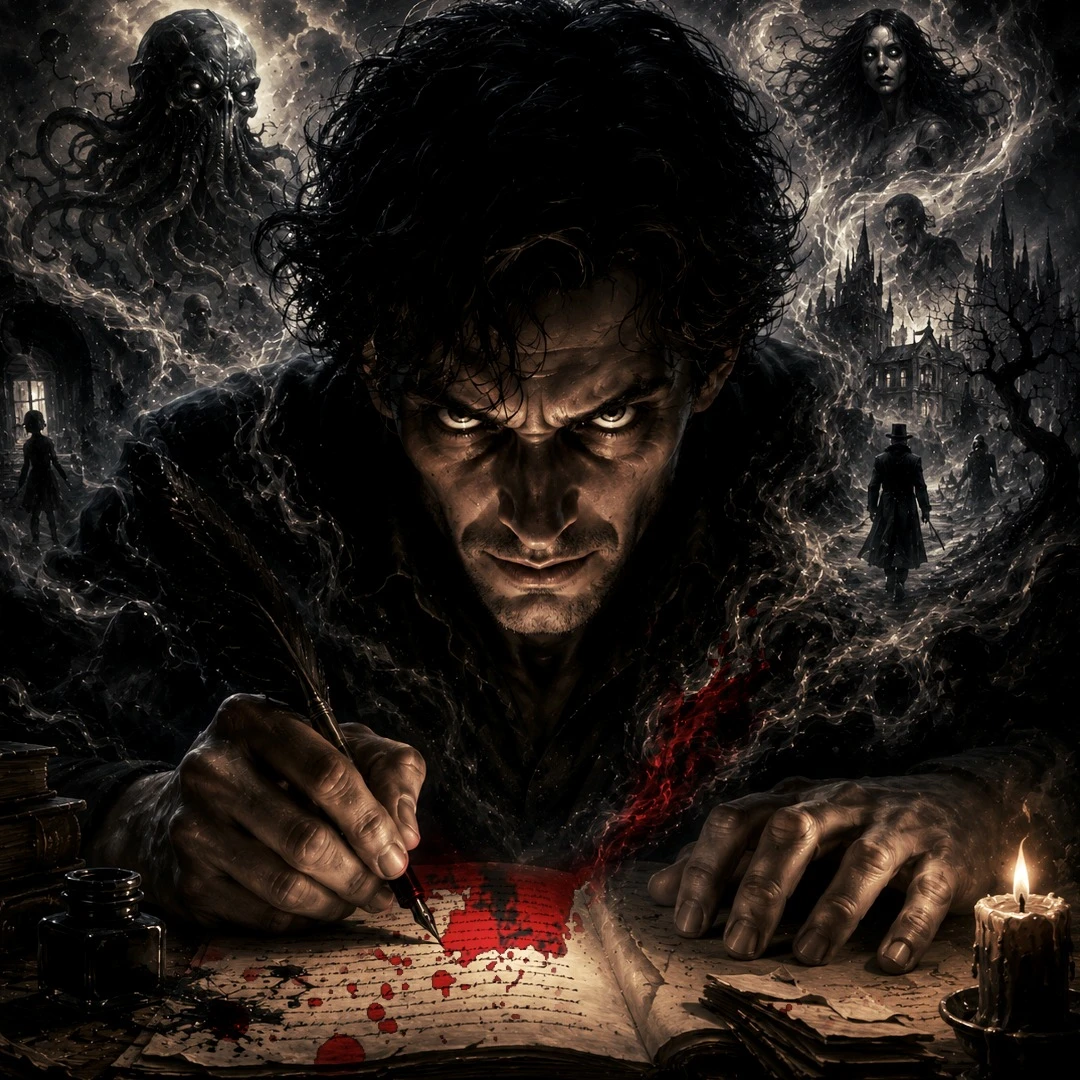
A writer imagines a clown who preys on children, an artist paints torn bodies and hybrid creatures, and a director creates a house that kills its residents one by one. When we encounter their work, we often react with admiration or disgust, saying: "This creator must have a twisted imagination."
But what does that phrase really mean? Do dark and disturbing ideas signal psychological problems? Does a horror writer need to be unbalanced to invent monsters? Or is what we call a "twisted imagination" often just a natural ability to venture into places others fear to go, and return with a story?
The issue starts with the phrase itself. It's common in everyday conversation and artistic criticism, but it's not a recognized medical diagnosis. There’s no psychological disorder officially called a "twisted imagination."
What does exist are specific disorders with known symptoms and criteria—like psychosis, obsessive-compulsive disorder, mood disorders, and certain personality disorders. Simply imagining violence, ghosts, or bodily distortions isn’t enough to prove any illness.
So the real question isn’t: How strange are a person’s thoughts? It’s: What is their relationship to these thoughts, how do they affect their life, and what do they do with them?
Imagination knows no boundaries
Imagination is the mind’s ability to create images, scenarios, people, and events that aren’t present to the senses. It’s not just a machine for producing beauty—it can build anything: the perfect lover, a utopian city, a monster, a crime, or the end of the world.
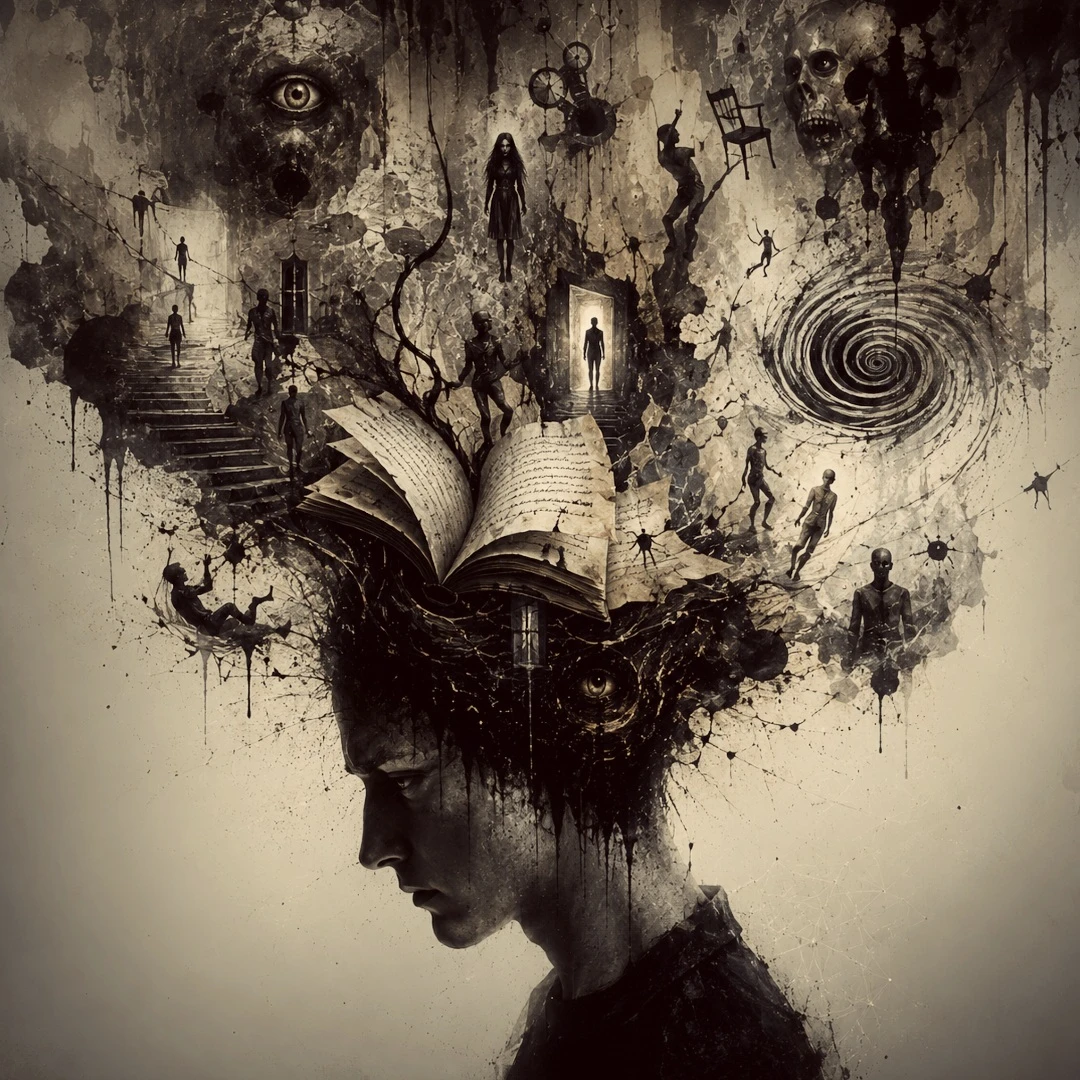
This flexibility is essential for humans. We imagine before we decide, simulate outcomes before we act, and anticipate danger before it happens. If someone walks alone at night and hears a sound behind them, their mind might instantly conjure up several scenarios, from a cat jumping between trash cans to someone preparing to attack. This doesn’t mean they want disaster to strike; it means their brain is preparing for possibilities.
The "threat simulation theory" suggests that some frightening dreams serve as a mental space where the brain practices recognizing and avoiding danger. However, this theory isn’t universally accepted and research results are mixed. So, it’s best seen as one possible explanation for some scary imaginings—not a definitive answer.
The mind’s ability to produce terrifying scenes doesn’t necessarily reveal a hidden desire to make them real. More than anything, it shows a brain capable of anticipating even the worst-case scenarios.
Where does dark imagination come from?
There’s no single reason why one person’s imagination is darker than another’s. Disturbing images can arise from a mix of personality, experiences, memories, fears, culture, and the media someone has been exposed to.
Some people are naturally more curious, thrill-seeking, or open to unusual ideas. They may be drawn to horror, crime, and dark legends—not because they enjoy harm, but because they want to explore dangerous things from a safe distance. Researchers use the term "morbid curiosity" to describe the drive to learn more about death, violence, disasters, and risks. This doesn’t mean someone is mentally ill; it just means they’re interested in topics related to death and danger.
Other factors can also fuel a dark imagination, such as:
Fear and anxiety
An anxious mind tends to generate "what if?" questions: What if there’s a fire? What if I lose control? What if someone I love dies? For a writer, these scenarios might become a story; for someone else, they might spiral into exhausting rumination.
Traumatic experiences
The effects of trauma can surface in dreams, recurring images, or repeated themes. Some creative individuals turn to art as a way to process and give shape to their experiences. However, trauma alone doesn't make someone a horror writer, and writing horror doesn't necessarily mean the author has experienced trauma.
Dreams and Nightmares
Many literary ideas begin with dreamlike images: a faceless figure, a room that changes size, a dead person returning home, or a shadow standing by the bed. Dreams don't simply replay reality—they rearrange memories and emotions into strange scenes, making them a rich source for the imagination.
Cultural Experience
People learn what to fear from their environment: jinn, demons, graveyards, witches, abandoned houses, secret labs, aliens. That's why each society has its own monsters and myths. Creators don't invent fear from nothing; they draw on inherited symbols and reshape them.
The Urge to Approach the Forbidden
Imagination lets us explore things that morals, customs, or the laws of nature would otherwise forbid. A novelist can step into the mind of a killer, imagine the collapse of civilization, or describe life inside a grave—without agreeing with or wishing for any of it. Literature isn't just confession; it can be an intellectual experiment or a moral question.
When We're Afraid of Our Own Thoughts
One important concept to distinguish from genuine desire is what's known as intrusive thoughts—sudden, unwanted mental images or impulses that can be violent, sexual, religious, or shocking.
A mother might suddenly picture her child falling from a balcony, or someone standing by train tracks might imagine jumping, or see a knife and panic: What if I stabbed someone?
Having such a thought doesn't mean someone wants to act on it. In fact, these thoughts can be terrifying precisely because they go against a person's values and character. Medical classifications note that obsessions can take the form of unwanted, recurring thoughts, images, or impulses.
With obsessive-compulsive disorder, a person may start monitoring their own mind, searching for certainty: Why did I think that? Does it mean I'm a bad person? Could I lose control? The more they try to force the thought away or constantly reassure themselves, the more persistent and significant it becomes.
That's why not every violent image should be seen as a sign of hidden intent. There's a crucial difference between:
A thought that intrudes and causes fear and rejection, and a thought someone deliberately nurtures because it brings desire or pleasure and turns into intent or a plan.
You can't judge this by the content of the thought alone, but by the person's attitude, behavior, and the context.
How Does Darkness Become Creativity?
A strange idea by itself doesn't make literature. Thousands of people dream of monsters, but only a few can turn them into meaningful characters, plots, rhythms, and impact.
Creativity begins when raw material is shaped through conscious effort: the writer chooses, edits, connects, creates rules for their world, and decides what the monster represents in the story. A vampire might symbolize desire and exploitation, a ghost could stand for an unburied past, and physical transformation might reflect fear of illness or loss of identity. Here, imagination moves from raw emotion to deliberate creation.
He wrote Edgar Allan Poe about being buried alive, murder, obsession, and guilt. But he never used shock value for its own sake, instead, he explored the human psyche through unreliable narrators and fractured inner voices.
H. P. Lovecraft created cosmic beings beyond human comprehension, turning monsters into symbols of humanity’s insignificance in an unfathomable universe.
As for Stephen King, he often uses supernatural horror as an extension of familiar fears—like isolation, domestic violence, bigotry, and the loss of childhood innocence.
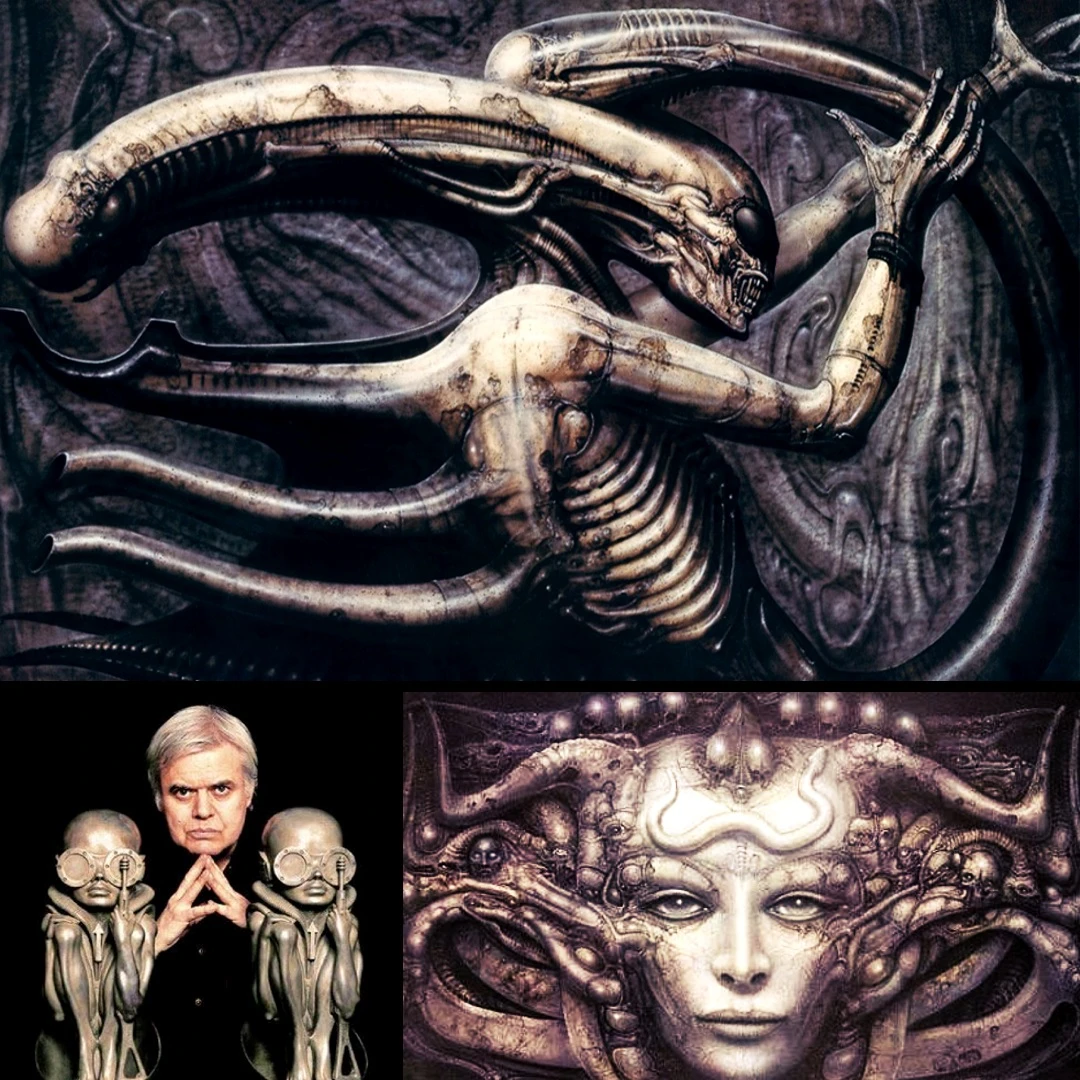
In the world of visual art, H.R. Giger created a universe where flesh and machine merge. His unique vision led to the iconic design of the creature in the film Alien. To the uninitiated, his artwork might look like the stuff of nightmares, but it also reveals a deep understanding of form, symbolism, texture, and the unsettling tension between the organic and the mechanical.
An idea doesn't become art simply because it's disturbing; it's the form, meaning, and control that matter. True creativity isn't about pouring out thoughts at random, it's about reshaping them to offer others a coherent experience, even when that experience is unsettling.
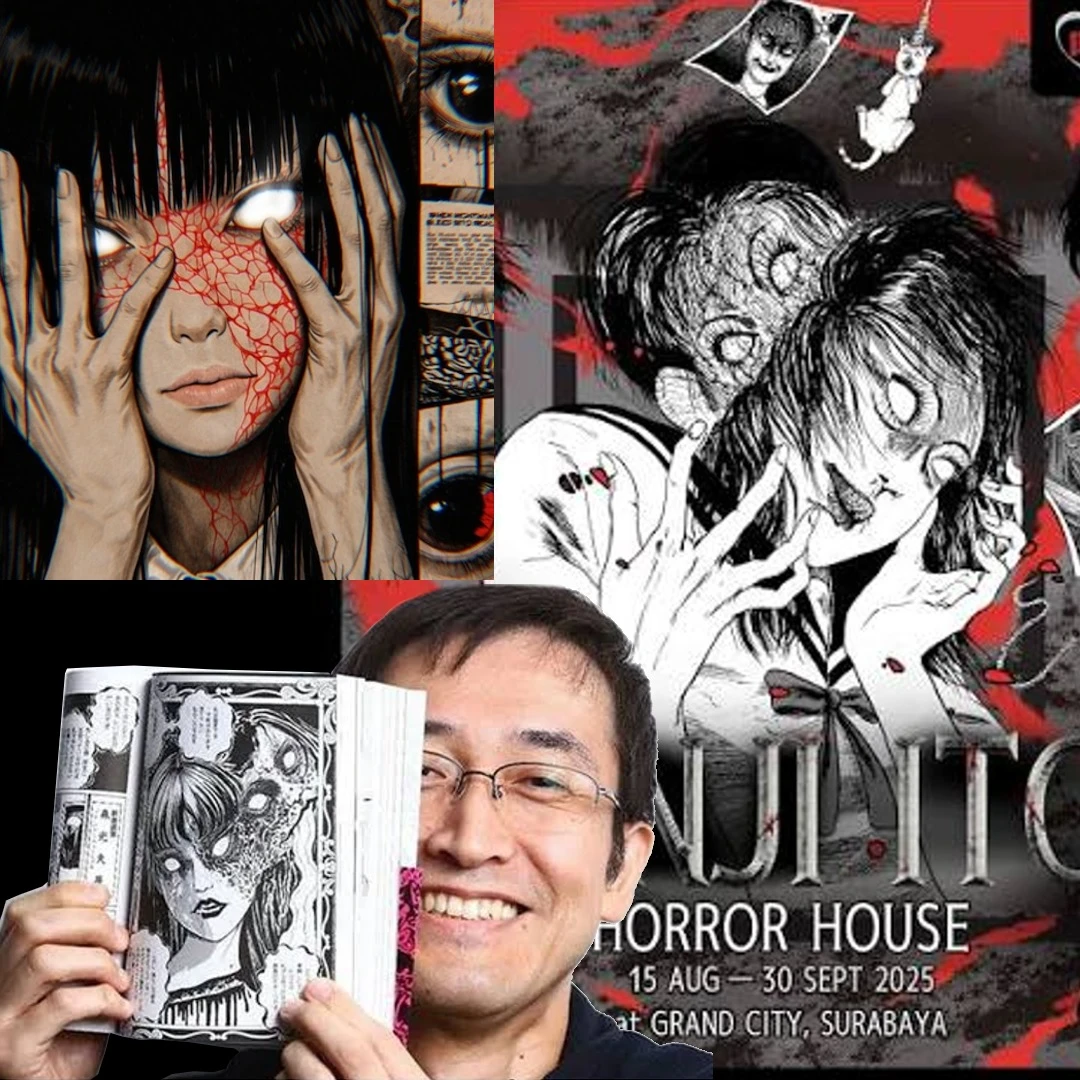
One of the most notable Japanese examples is manga artist Junji Ito, who crafts bizarre worlds where bodies, faces, and places morph into grotesque, unsettling images. His work might seem like the product of a 'twisted imagination,' but it actually showcases a rare talent for transforming disgust and fear of the unknown into innovative visual horror.
Why do we enjoy fear when we know it's not real?
It might seem contradictory: why would anyone pay to feel the fear they try to avoid in real life?
The answer is that artistic horror offers a sense of threat within a safe environment. Viewers know the monster on the screen can't reach them, but they still allow themselves to experience the emotions and physical reactions. This is sometimes called 'recreational' or 'safe' fear.
Horror also lets us explore questions that are hard to face directly: How would I react in danger? What makes someone evil? Would I still be myself if my body changed or I lost my memory? What lies beyond death?
In this sense, horror literature isn't just about scaring the reader; it's an imaginative laboratory for exploring human limits.
Does a horror writer have to be mentally ill?
No, there's no inherent link between creating dark fiction and having a mental illness.
A psychologically healthy writer can portray psychosis from inside a character's mind, just as a peaceful actor can play a killer, or a forensic doctor can study a gruesome crime without wanting to commit one. The ability to depict a mental state isn't proof of living in it.
In fact, good horror writing often requires a high level of self-control. The writer plans, withholds information, balances suggestion and revelation, and gauges the reader's response—these are organizational skills, not signs of losing control.
Some creative people do live with depression, anxiety, or other conditions, but these don't explain all of their talent, nor does it mean illness is a prerequisite for creativity. Romanticizing psychological suffering can be harmful; severe disorders don't grant magical powers and can disrupt focus, work, and relationships, they require treatment.
Artists don't always create because of their pain; sometimes they create in spite of it, or use art to give their struggles a voice and a form.
When should we worry about imagination?
Imagination isn't a problem just because it's dark. Concern arises when it's accompanied by other warning signs, most importantly:
Losing the ability to distinguish between imagination and reality
A ghost story writer knows their ghost is fictional, even if they describe it in vivid detail. In some cases of psychosis, however, the ability to check reality breaks down, making it hard to tell if certain beliefs or perceptions are real. But talking to oneself, having a vivid imagination, or picturing a scene in your mind isn't psychosis by itself, the key is being able to tell what's real.
Loss of control and inability to disengage
Images can become a problem when they dominate a person's time, disrupt sleep and work, or lead to repetitive rituals or extreme avoidance. The issue isn't whether the image is 'disturbing,' but how much distress and disruption it causes.
Presence of genuine intent to harm
There's a difference between describing a crime in a novel and actually wanting to commit it. It becomes dangerous when there's clear intent, a chosen victim, planning and preparation, specific threats, or a history of violent behavior.
It's also wrong to assume that everyone with a mental illness is violent. Most mental health conditions do not make people criminals, and automatically linking mental illness to violence only increases stigma and distorts reality.
Turning fantasy into moral justification
Some people use their imagination to dehumanize others or mentally replay acts of violence as their desire to act grows. The problem isn't vivid imagination, but when it merges with intent, lack of empathy, and real-life behavior.
Severe suffering
Even without posing a risk to others, a person deserves help if their thoughts or images become a constant source of torment, or if they lead to isolation, panic attacks, depression, or self-harm.
Did imagination create serial killers?
When particularly brutal crimes are discovered, people often blame a 'sick imagination,' but this phrase oversimplifies a complex phenomenon.
Criminal acts aren't caused by imagination alone. Someone might imagine horrific acts and never act on them, while another might commit a crime impulsively without any elaborate fantasy. Even when fantasies precede a crime, they're just one part of a web of factors—personality, experiences, environment, and repeated choices all play a role.
Similarly, it's not accurate to say that childhood abuse inevitably turns victims into abusers. The vast majority of people who experience trauma do not become killers. Understanding crime requires studying the individual, their behavior, and their circumstances—not relying on the myth that a dark idea inevitably grows into action.
Imagination doesn't pull the trigger—it's the person who decides what to do with their thoughts.
Training a 'sick imagination' to write a story
It's more accurate to call it a dark or shocking imagination, and then channel it into art. To do this, a writer needs more than just chasing monsters and gore.
First, ask: What human fear lies behind the image? A haunted house might represent family memories, a creature that mimics faces could be about losing one's identity, and a city whose residents vanish might symbolize loneliness.
Second, horror needs rules and boundaries. A monster that can do anything loses its impact, but one governed by specific rules gives characters, and readers,a chance to understand and confront the danger.
Third, don’t confuse brutality with depth. More blood doesn’t automatically make a story scarier. Sometimes, an open door in an empty house is far more terrifying than a violent scene, because suggestion lets the reader’s own fears fill in the blanks.
Fourth, a writer needs real characters, not just victims. Horror works best when readers care about someone they know and understand, not when anonymous bodies simply pile up without meaning.
Finally, darkness should serve a purpose. It might reveal a truth, raise a question, test a value, or expose social cruelty. Shock for its own sake quickly loses its impact.
Imagination as a Safe Room for Darkness
We all carry fears inside us of death, illness, loss, change, loneliness, and the unknown. These fears don’t disappear just because we avoid talking about them. Art gives them a temporary home: a novel, a painting, a screen, or a story told around a fire.
Within that space, we can approach the monster, study its features, and then close the book.
That’s why dark imagination can be a sign of curiosity, sensitivity, and the ability to use symbols—not necessarily illness. Sometimes it reflects anxiety or a painful experience. In other cases, it may be a symptom that needs help. The content alone doesn’t determine which it is.
Illness doesn’t begin when someone imagines something frightening. It starts when they lose control over those thoughts: when they can’t tell reality from imagination, can’t manage their ideas, or can’t stop them from taking over their actions and relationships. The creative person does the opposite: they venture into the darkest corners of the mind, then return with a thread of narrative, turning the monster into a metaphor, the nightmare into a story, and fear into art.
About the Author