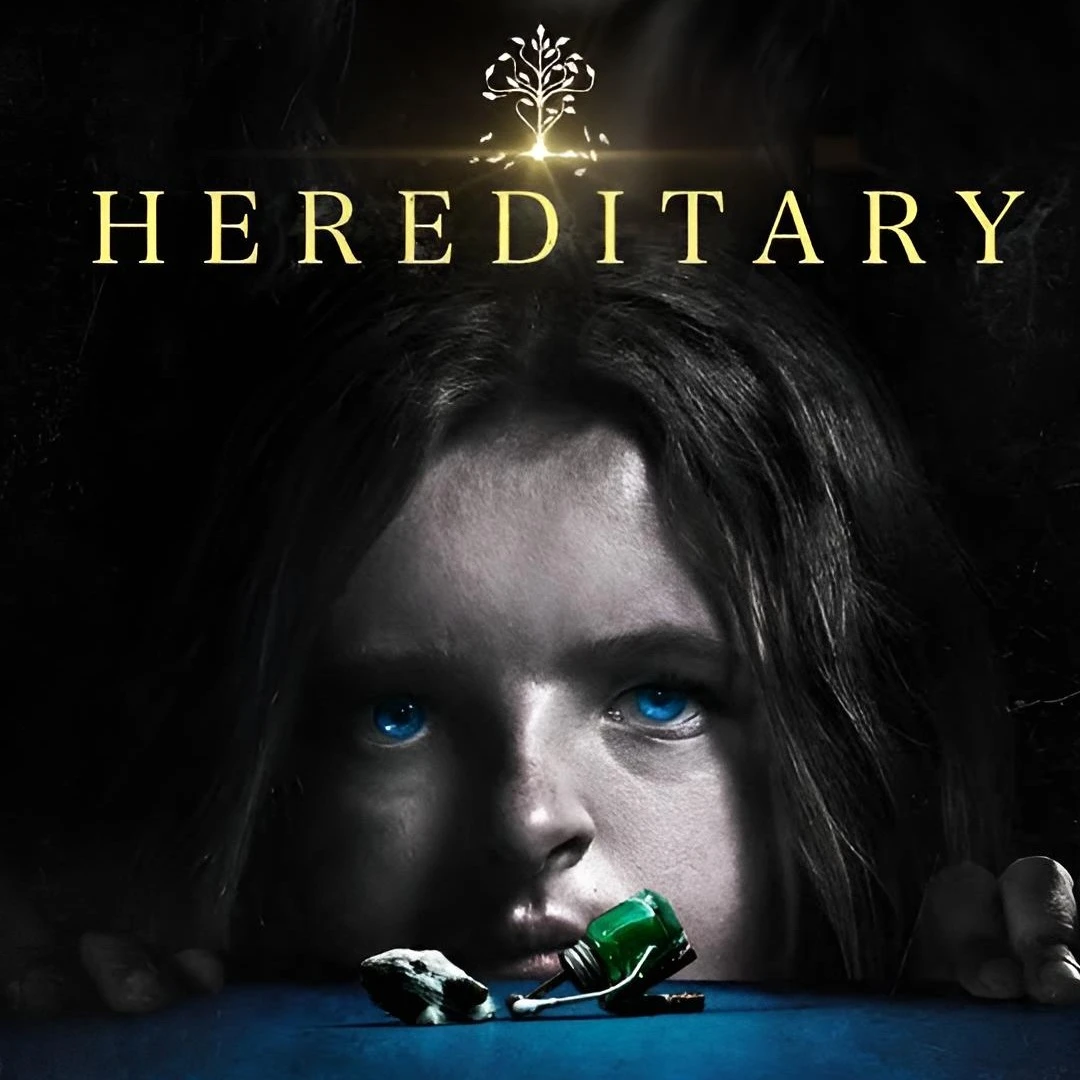
What if the tragedies haunting your family aren't just coincidences, but part of a plan set in motion before you were even born?
Director Ari Aster built his 2018 film Hereditary around this idea. The movie begins as a dark family drama about loss and trauma, but gradually transforms into a supernatural horror story involving séances, possession, secret cults, and a mysterious entity called Paimon.
Interestingly, unlike the fictional family and events in the film, Paimon isn't a cinematic invention. The name is well-known in old Western books on demonology and magic.
A Family Inheriting More Than Illness
The story begins with the death of Ellen Leigh, Annie Graham's mother, whose relationship with her daughter was complicated and full of secrets. Annie lives with her husband Steve, their son Peter, and young daughter Charlie. She creates miniature models, recreating scenes from her life as if trying to artistically control a world slipping out of her grasp.
From the funeral onward, unsettling signs appear: strangers attend the service, mysterious symbols show up, and there's an unusual bond between the grandmother and her granddaughter Charlie.
Annie also discovers a family history marked by turmoil and suicide. Her late brother once accused their mother of "trying to put people inside him", a phrase that initially sounds like the product of mental illness, but later takes on a much more chilling meaning.
This leads to the film's central question: does the family inherit only psychological trauma and mental illness, or is there something else at play?
Charlie's Death
The story's most shocking moment comes when Charlie suffers a severe allergic reaction at a party. Peter rushes her to the hospital, but as she sticks her head out the car window to breathe, Peter swerves to avoid an animal and Charlie is decapitated by a telephone pole.
The accident devastates the family, especially the relationship between Annie and Peter. Later, the film reveals that the same pole bears a symbol linked to Paimon, raising doubts about whether the tragedy was truly accidental.
A Séance
Annie later meets a woman named Joan, who claims she can communicate with the dead. After witnessing a séance, Annie tries to contact Charlie herself at home. Strange phenomena begin to occur, and for a moment, the family believes Charlie's spirit has returned.
But the truth is more sinister. According to the film's narrative, Annie wasn't really summoning her daughter, she was opening the door to the next phase of a plan set in motion years earlier.
The Grandmother's Secret
Searching through her mother's belongings, Annie finds photos and books linking her to Joan and to a cult that performs rituals centered around one name: Paimon.
She discovers that her mother was part of a group trying to give Paimon a human body. Suddenly, so many things make sense: the grandmother's intense attachment to Charlie, the strange symbols everywhere, the unfamiliar faces at the funeral, and even the family's history of members seemingly losing control of themselves.
The film doesn't show the beginning of the ritual, but rather its final stage, a project that began long ago.
Who was Charlie?
Ari Aster confirmed that Charlie was actually Paimon's first host from a very young age, which explains her odd personality, fascination with heads and strange figurines, and her special bond with her grandmother. However, the group ultimately wanted a male body for Paimon, making Peter their final target.
It's important to distinguish between the film and older sources: the idea of Paimon moving between family members or needing a series of decapitations isn't found in the Ars Goetia, but is instead a part of the mythology created by the film.
The Ritual's Conclusion
On the final night, the family unravels: Annie discovers her mother's body in the attic, her husband Steve is burned alive, and Annie herself falls under the control of a mysterious force. Peter is terrorized throughout the house, ultimately witnessing his mother decapitate herself.
He leaps out the window, and something seems to enter his body. He rises and heads to the treehouse, where the cult members are waiting, bowed before an altar adorned with severed heads.
Joan approaches him and addresses him as Paimon, announcing that the ritual is complete.
It becomes clear that the family was never truly escaping a curse, they were following a plan set in motion long before.
Paimon: The Real Name Behind the Film
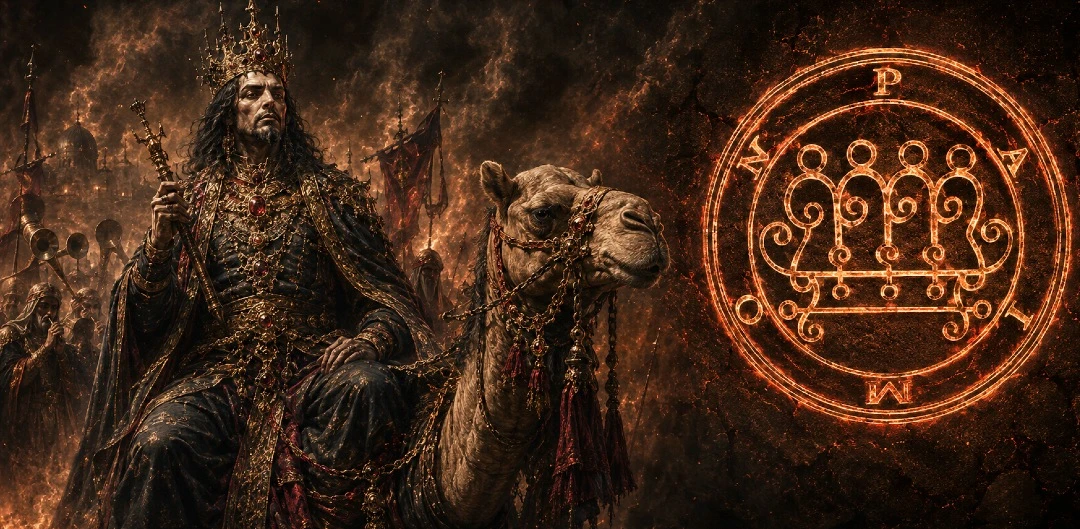
While Hereditary is a work of fiction, Paimon is an ancient name in Western demonology. He appears in the 'Pseudomonarchia Daemonum,' a well-known 16th-century European text on demonology by Johann Weyer, and is also featured in the 'Ars Goetia,' which lists 72 demonic spirits in 'The Lesser Key of Solomon', a famous grimoire not actually written by King Solomon, despite its attribution.
These sources describe Paimon as a great king among spirits, appearing as a crowned man riding a camel, heralded by trumpets and musical instruments. He is said to possess knowledge of arts, sciences, and secrets, and to grant status and influence. The film features his sigil, based on the symbol attributed to him in Goetic tradition. Director Ari Aster has explained that he researched occult sources and chose Paimon to avoid the overused cinematic trope of Satan himself. However, the film takes creative liberties, introducing the idea of hereditary possession and a cult preparing a human host for Paimon across generations.
A Greek Tragedy in Horror Form
Hereditary is more than just a film about a demon. Ari Aster also built the story around the concept of Greek tragedy, where characters are driven toward an inescapable fate no matter how hard they try to avoid it. This is why Annie’s miniatures are so significant: just as she controls the tiny figures in her models, larger forces are at play, controlling her and her family.
Even the title, Hereditary, carries multiple layers of meaning.
What do we inherit from our families? Genes? Mental illness? Trauma? Secrets? Or something even darker?
About the Author