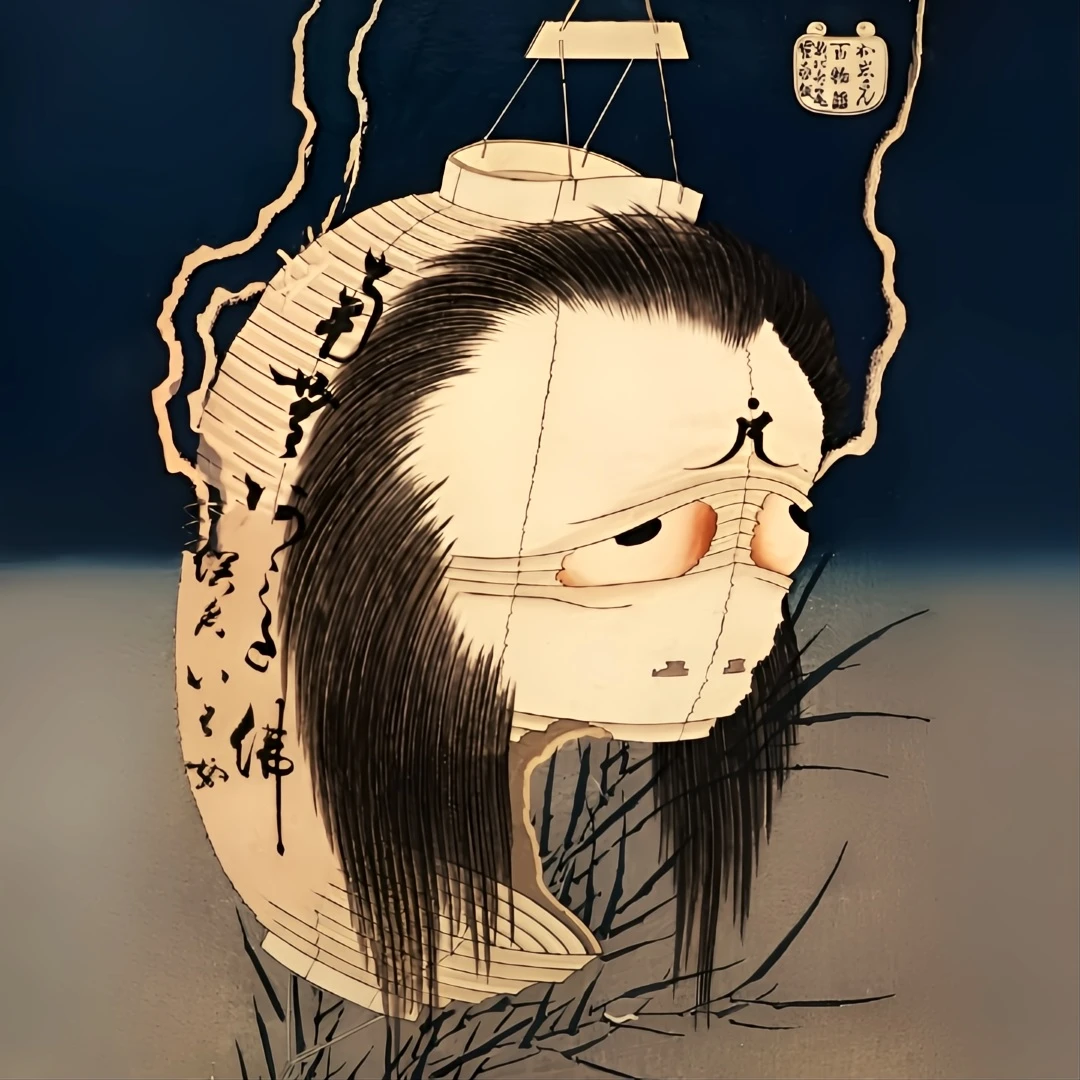
From within a torn paper lantern, the pale, disfigured face of a woman emerges, one eye hanging down, her smile twisted in a way that blurs the line between pain and anger. This haunting image, created by Japanese artist Katsushika Hokusai, is more than just a frightening fantasy. It depicts Oiwa, the central figure in Japan’s most famous ghost story, a woman whose betrayal and tragedy turned her into a symbol of vengeance from beyond the grave.
From Real Woman to Terrifying Legend
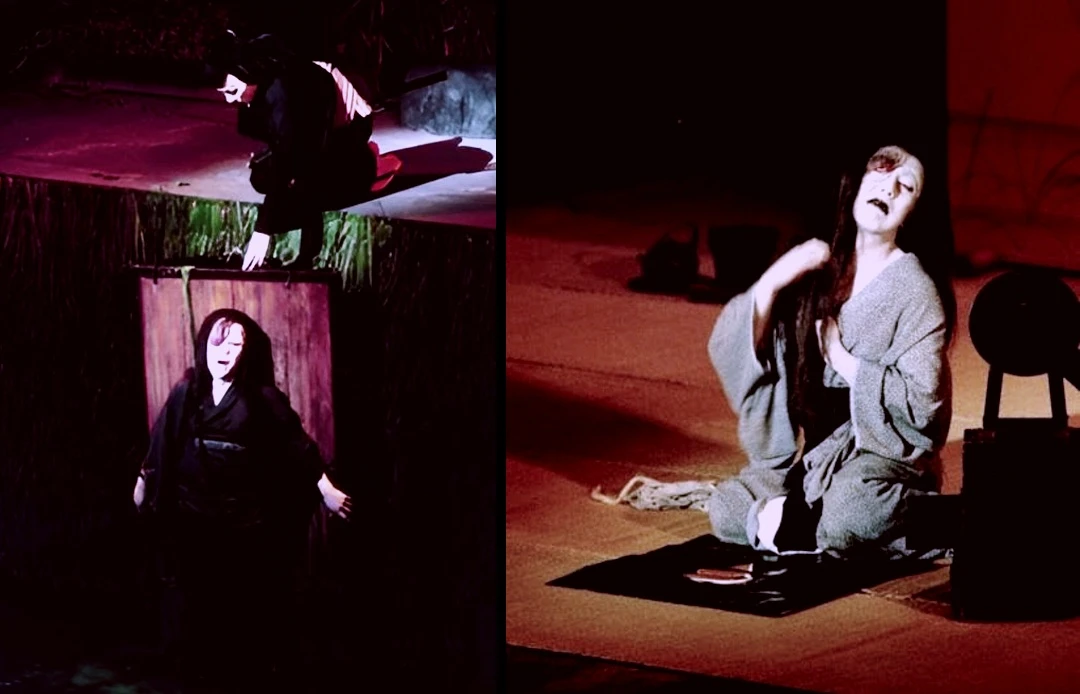
The story is known as Yotsuya Kaidan, or 'The Ghost Story of Yotsuya.' Some of its earliest written roots trace back to a secret manuscript from around 1727, which blended rumors and scandals about families living in the Yotsuya district of Edo, modern-day Tokyo. However, the version that captured the public’s imagination came with the kabuki play 'Tokaido Yotsuya Kaidan,' written by Tsuruya Nanboku IV and first performed in 1825 at the Nakamura-za Theater. It quickly became one of the most famous kabuki plays in Japan.
But the historical Oiwa was quite different from the vengeful ghost. According to stories linked to the Tamiya Inari Shrine in Shinjuku, she was the daughter of a shogunate official and a devoted, faithful wife. She was not murdered by her husband, nor did she return to haunt him. It seems the theater borrowed her name and local reputation, then wrapped them in a much darker tale that overshadowed her true story.
The Poison That Disfigured Her
In the play, Oiwa lives with her husband, Tamiya Iemon, a samurai who has lost his master and become cruel and opportunistic. Iemon no longer wants to be with Oiwa, especially after the young woman Oume falls in love with him and her family pushes for their marriage.
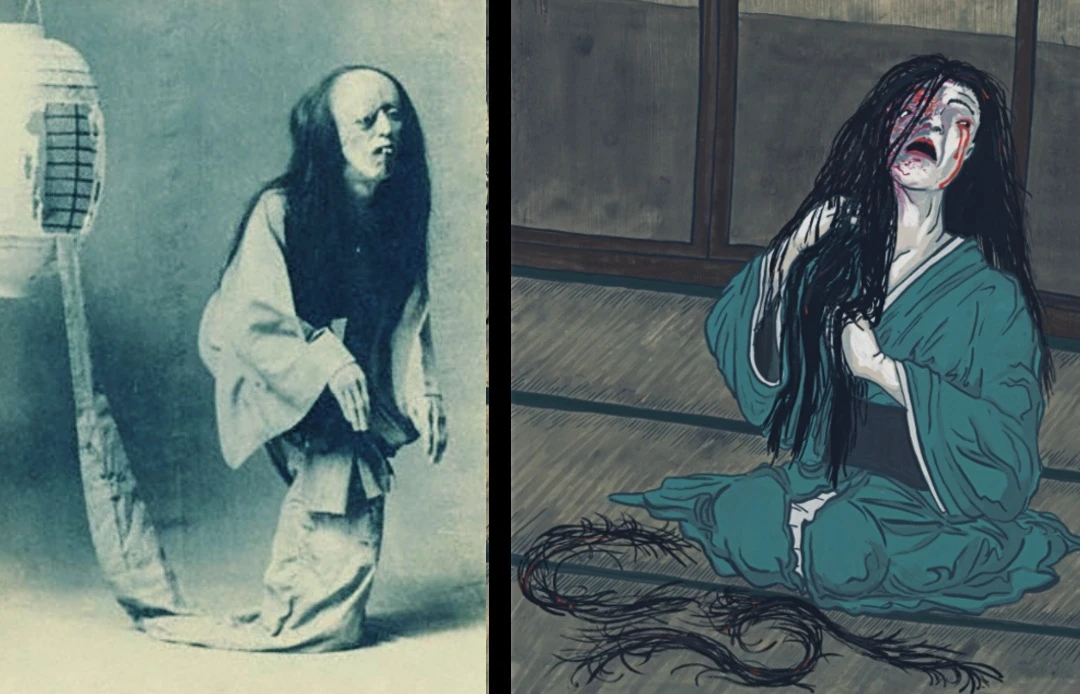
Oume’s grandfather sends Oiwa a supposed medicine, which is actually poison. It horribly disfigures half her face, causes one eye to swell, and her hair to fall out. Rather than protect her, Iemon uses her condition as an excuse to get rid of her and marry his new love. When Oiwa discovers the betrayal and sees her reflection in the mirror, she is consumed by rage and seeks revenge. In her frenzy, she accidentally kills herself with a sharp blade. In some modern adaptations, Iemon is portrayed as her direct murderer, but death is only the beginning of the story.
The Return of the Onryō
Oiwa returns as an onryō, a vengeful spirit in Japanese folklore, believed to be the ghost of someone who died bearing deep injustice and anger, their resentment lingering in the world of the living.
On the night of Iemon and Oume’s wedding, Oiwa’s face appears in place of the bride’s. Iemon draws his sword and strikes at the apparition, only to realize he has killed his new wife. Oiwa’s face then appears again, this time as Oume’s father, whom Iemon also kills. From that moment, his life unravels into a nightmare of hallucinations and hauntings, Oiwa appears on walls, in the darkness, over water, and inside lanterns until he finally loses his mind and meets his own violent end.
Oiwa was no longer the weak woman her husband once humiliated; death had given her the strength she was denied in life. She became a recurring symbol in Japanese folklore, a wronged woman who, unable to find justice among the living, returns to claim it for herself.
The Ghost Emerging from the Lantern
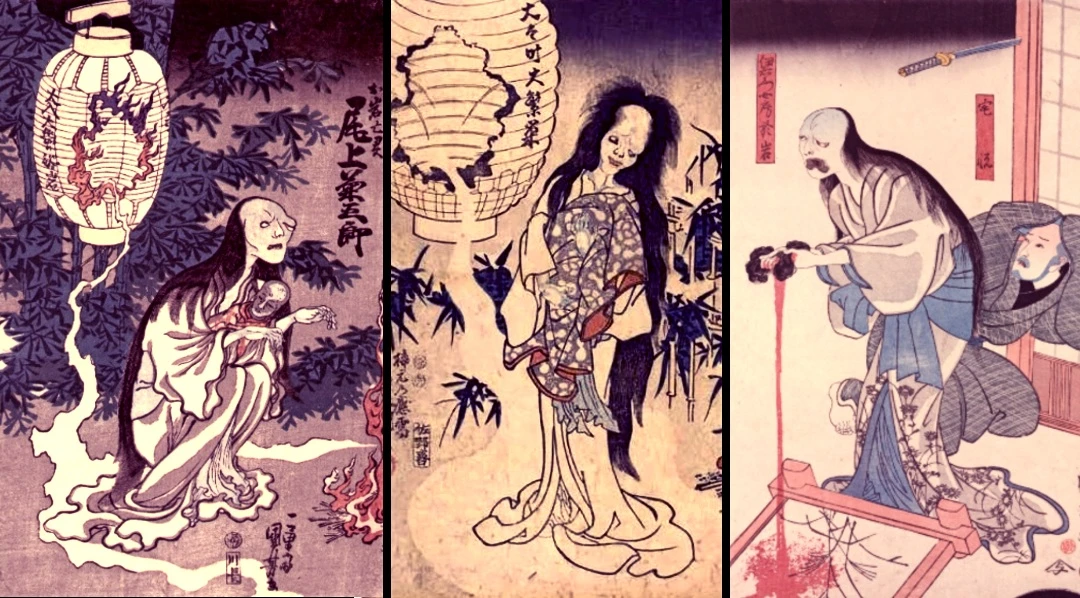
Kabuki theater played a major role in cementing the story’s horror, using effects that shocked 19th-century audiences. In one of the most famous scenes, Oiwa sits before a mirror, trying to comb her hair, only for it to fall out in large clumps as her facial disfigurement is gradually revealed. In another, her ghost suddenly appears, emerging from a burning paper lantern right before the audience’s eyes.
This haunting image was immortalized by Hokusai in his 1830s series 'One Hundred Ghost Stories.' He depicted Oiwa’s face fused with an old lantern, the torn paper resembling wrinkles and wounds, and the lantern’s opening transformed into a distorted eye. The ghost didn’t just inhabit the lantern, she became one with it, her face and body merging with its form.
Is the Story Cursed?
Over time, rumors spread that staging a play or film about Oiwa without showing respect for her spirit could bring accidents and illness to the cast and crew. As a result, some actors and directors began visiting the shrine associated with her name before filming or performing, seeking protection and hoping to avoid her wrath.
There’s no evidence that mishaps during productions were caused by a supernatural curse, but fear of Oiwa became part of the legend itself. Her story moved beyond the stage, and those retelling it often take steps to appease her spirit, if only as a precaution.
The Mother of Japanese Horror Ghosts
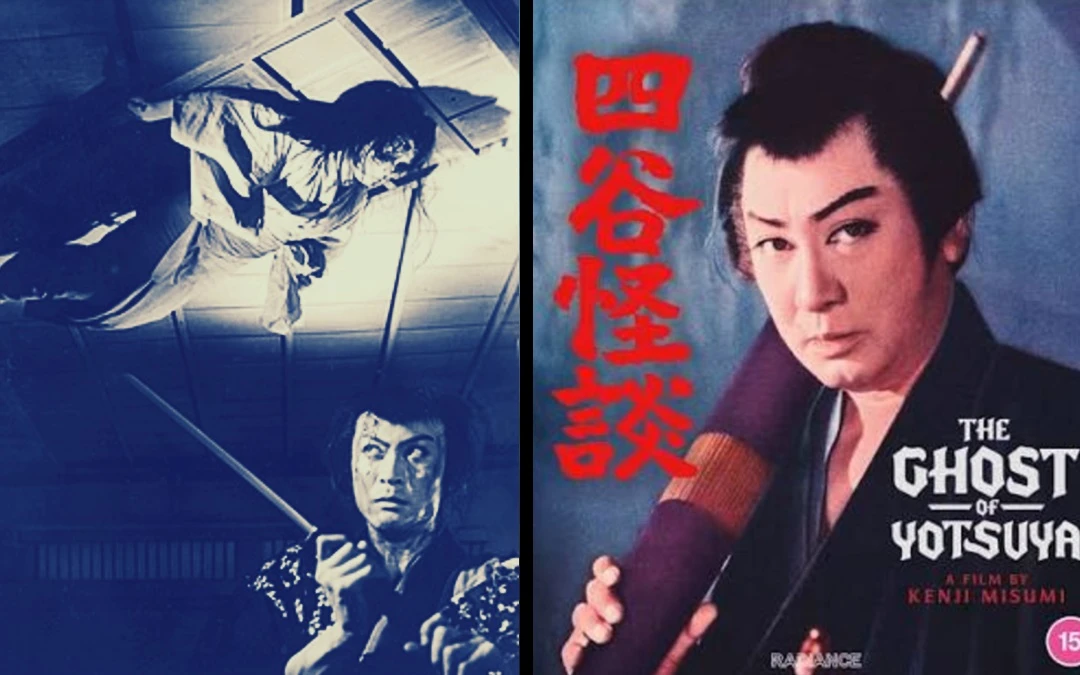
'Yotsuya Kaidan' made the leap from kabuki theater to film, with countless adaptations over the years. One of the most famous is Nobuo Nakagawa’s 1959 film 'The Ghost of Yotsuya.' Oiwa’s influence can be seen in the modern image of the Japanese female ghost: long black hair, white dress, disfigured face, and a woman returning after betrayal or murder.
From Sadako in the film 'Ring' to the vengeful spirits in the 'Ju-On' series, the same pattern continues: a victim who died unjustly, whose rage is unleashed rather than ended by death.
Perhaps that’s why Oiwa remains vivid in Japanese memory, not just as a malevolent ghost, but as a woman stripped of her face, dignity, and life, who returned from death to force her tormentor to see her face everywhere.
About the Author