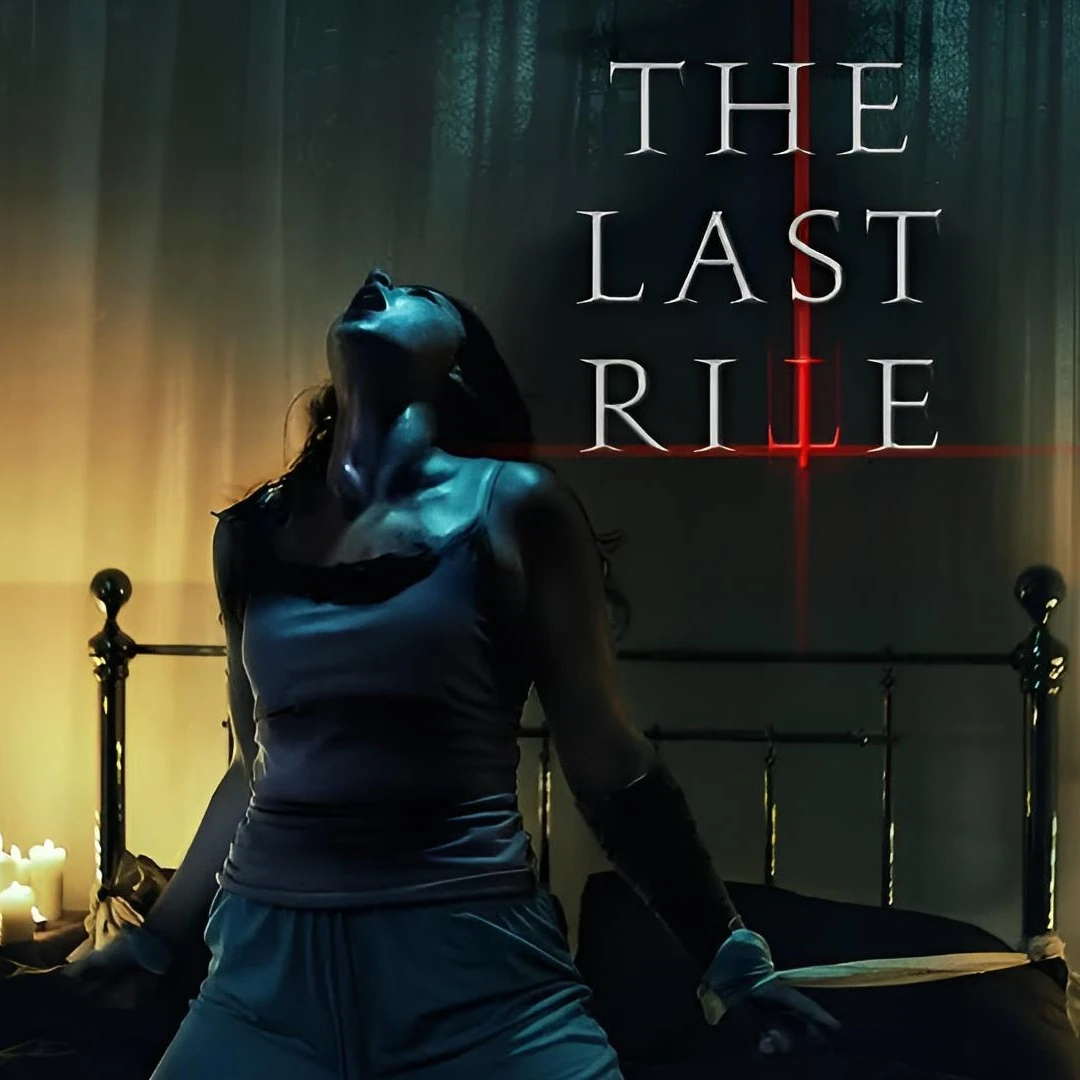
Many people who have experienced sleep paralysis know the terrifying moment: you wake up, fully aware of your surroundings, but your body won't move. You try to scream, but no sound comes out. Sometimes, it feels like someone is standing next to your bed, or a shadowy figure is watching you from the corner of the room.
Science has an explanation for this phenomenon, but long before the field of sleep medicine emerged, cultures around the world had already described the experience and given that 'visitor' many names: a witch sitting on the chest, an evil spirit, a jinn, a night demon, or a faceless dark figure.
Emerging from that space between sleep, folklore, and horror, the 2021 film The Last Rite doesn’t just turn sleep paralysis into a terrifying experience—it goes a step further, posing an even darker question: What if what appears during Sleep Paralysis Just Hallucination Transient?
Plot Summary
The story follows Lucy, a medical student living with her boyfriend and studying from home. She begins to experience terrifying episodes of sleep paralysis, waking up unable to move while sensing a strange presence nearby. During these episodes, a mysterious man appears—a shadowy figure in a hat, his features barely discernible.
At first, it seems like a simple sleep disorder especially since Lucy comes from a background where a medical explanation would be the logical first step. But soon, the experience begins to move beyond the confines of her bedroom. What started as strange occurrences between sleep and wakefulness begins to intrude on her waking life. The question shifts from 'Is Lucy imagining this?' to a far more terrifying possibility: that something is trying to take control of her.
As her condition worsens, she turns to Father Roberts, a priest who is initially reluctant to see her case as a possession. He hesitates to accept this explanation, but as events escalate, he faces a difficult choice: follow the church's official procedures or take matters into his own hands and perform an exorcism himself.
This is the point where the film shifts from sleep paralysis horror to demonic possession and exorcism, without needing to reveal what happens next.
Based on true events.
The film is sometimes marketed with the phrase "Based on True Events," which might suggest it's inspired by a well-known real-life possession case. However, that's not actually the case.
The film isn't a reenactment of any specific documented case; instead, British director and writer Leroy Kincaide drew significant inspiration from his own personal experiences.
Kincaid says he suffered from night terrors throughout his childhood and teenage years. Sleep paralysis As he approached his twenties, some of his experiences were accompanied by memories of mysterious shapes or shadows. At eighteen, after watching a documentary about sleep paralysis, old memories of these episodes suddenly resurfaced. He even went to a church seeking someone who could help him understand what had happened, but he couldn't find any satisfying answers.
Kincaid was also interested in investigating paranormal phenomena and said that while preparing the film, he researched accounts of Shadow People and the Hat Man phenomenon, as well as beliefs about possession and exorcism rituals. So, it's more accurate to describe the film as inspired by personal experiences and real-life paranormal stories, reimagined within a fictional narrative.
This is precisely where the film becomes more intriguing than a typical exorcism story.
The Hat Man
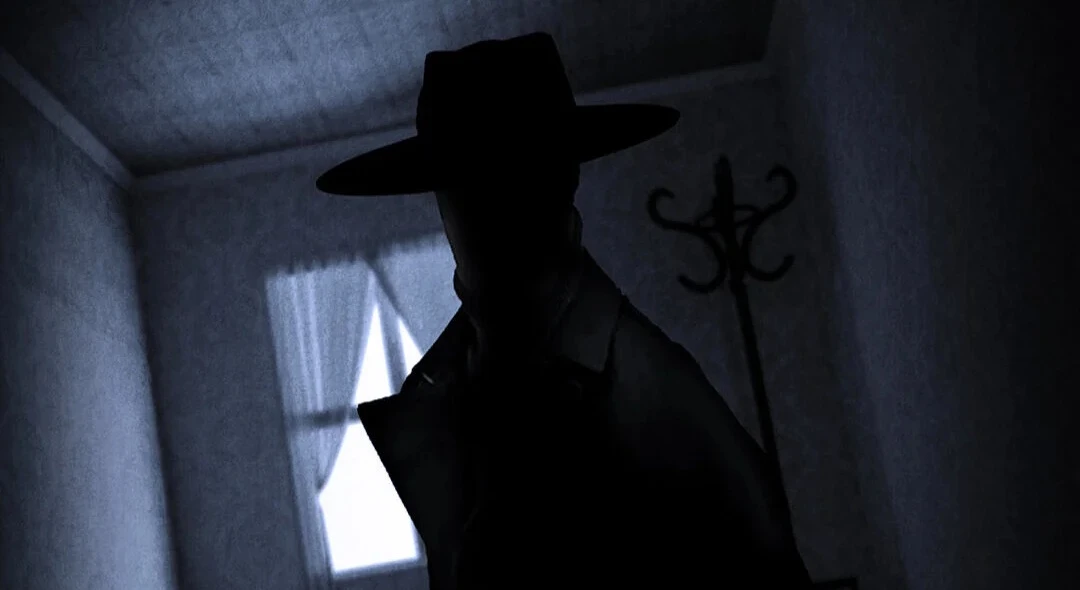
One of the film's most striking connections to contemporary folklore is the tall, dark figure wearing a hat who appears to Lucy. This character isn't purely a creation of the film; for years, people have shared online testimonies describing shadowy human figures seen during sleep paralysis. In some accounts, a tall, featureless man in a coat and wide-brimmed hat appears—now widely known as The Hat Man.
Kincaid himself said the idea began with an image that stuck in his mind: a man in the shadows wearing a hat, which later merged with his own memories of sleep paralysis. Interestingly, he didn't want to show the entity clearly, because what terrified him most wasn't the creature's appearance, but the overwhelming sense that someone else was in the room while he was unable to move.
Today, the Hat Man has become part of digital folklore, with similar descriptions appearing in forums and sleep paralysis accounts. There's no evidence that it's an independent entity, and from a scientific perspective, it fits within the 'intruder sensation' phenomenon that can accompany sleep paralysis—when someone feels a presence nearby or sees a vague human shape. What's fascinating is that the Hat Man is really just a modern version of a very old story.
The Night Hag: One Entity, Many Names
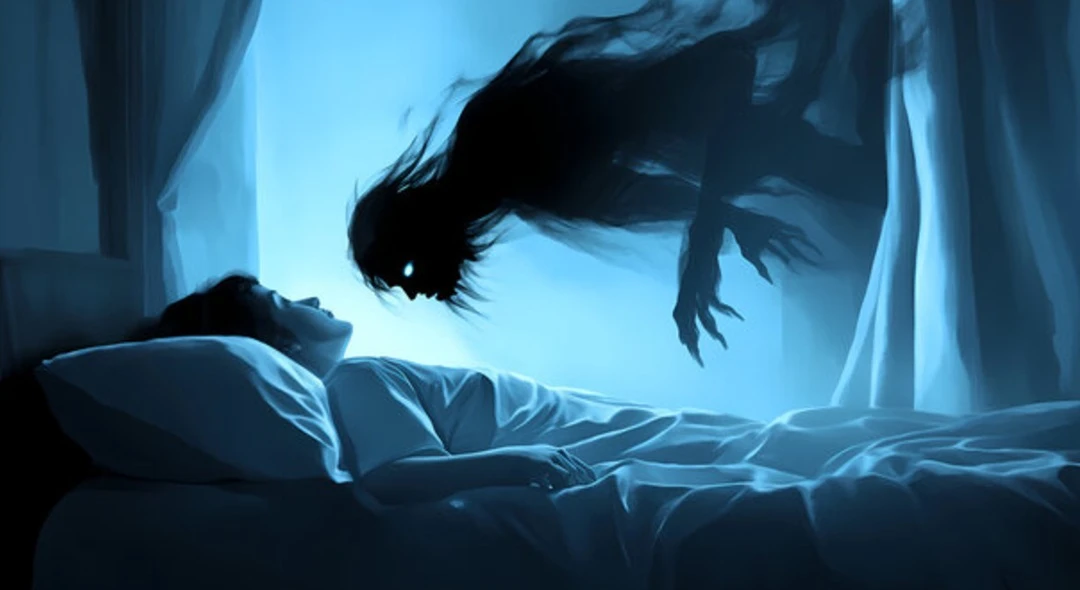
Long before people understood REM sleep or how the brain works during sleep, they needed an explanation for a deeply real experience: a conscious mind, a paralyzed body, pressure on the chest, and the sense that something unseen was in the room. Similar explanations emerged in remarkably different cultures.
In Newfoundland, Canada, the phenomenon is known as the Old Hag. Folklore held that a witch or spirit would come at night and sit on the sleeper's chest. In a classic 1978 field study, researcher Robert Ness found that descriptions of this experience closely matched what is now medically recognized as sleep paralysis.
In old Europe, the experience was linked to creatures like the Succubus and Incubus, night demons believed to visit sleepers. Chest pressure, suffocation, and the feeling of a creature sitting on the body became central to their image in folklore. Even the English word 'nightmare' traces back to the Mara—a nocturnal spirit in European tradition thought to press on and suffocate sleepers.
In Turkey, the term Karabasan refers to a dark force or entity that presses down on a sleeping person. Similar experiences are described in many Asian and African cultures, though the details may differ.
The names for these beings vary, but the scenario is familiar: waking up, feeling paralyzed, experiencing fear, sensing a strange presence, and sometimes feeling pressure on the chest.
Sleep Paralysis and Jinn in Arab and Islamic Culture
The film’s story isn’t far removed from local folklore in the Arab world. The phenomenon is widely known as al-Jathoom, and many people have long associated it with jinn or spirit possession.
A comparative study of people who experienced sleep paralysis in Egypt and Denmark clearly illustrates the influence of culture on how the experience is interpreted. Among the Egyptian participants, 48% believed jinn were responsible, while supernatural explanations were much less common among the Danish group.
This doesn’t prove that jinn cause sleep paralysis, nor does it dismiss religious beliefs about their existence. Instead, it highlights something important: the same physical experience can be understood in very different ways depending on a person’s cultural background.
Someone raised on stories about jinn might interpret the figure they see as a jinn, while someone familiar with tales of witches might see a witch. A modern person might describe the same shape as a Shadow Person or the Hat Man.
The Last Rite touches on an intriguing idea without directly addressing it: do we create the image of the entity we see during sleep paralysis, or are different cultures simply naming the same mysterious phenomenon?
Why do we feel like someone is in the room?
The scientific explanation is less frightening, but it doesn’t make the experience any less real for those who go through it. During REM sleep, dreams are vivid and the brain temporarily paralyzes most muscles to prevent us from acting out our dreams. In sleep paralysis, there’s a mismatch: a person becomes conscious while REM paralysis continues for a few seconds or minutes.
Some dream activity can also persist, leading to auditory, visual, or sensory hallucinations, footsteps, whispers, a moving shadow, someone standing by the bed, or a sensation of pressure on the chest.
Some of these experiences are described as 'Intruder hallucinations,' where the feeling that someone else is in the room is so strong that the person is convinced they weren’t alone. Out-of-body sensations or floating experiences can also occur during sleep paralysis.
Is it worth watching?
The Last Rite doesn’t reinvent the exorcism genre, Exorcism Some critics felt that the film’s final act falls back on very familiar tropes for this genre. On the other hand, its depiction of sleep paralysis and the sense of an unseen presence has been praised, especially when it relies on suggestion rather than showing the monster outright.
For those interested in the paranormal, the real value lies in the first half of the film’s concept: the link between sleep paralysis, shadow people, and the Hat Man, followed by a gradual shift from a well-known medical phenomenon to a religious interpretation involving possession.
Believers in the supernatural can watch this film as a story about an entity that takes advantage of a vulnerable moment to enter a woman's life, while skeptics might see it as a way of turning one of the strangest and most terrifying sleep disorders into a demonic tale.
About the Author