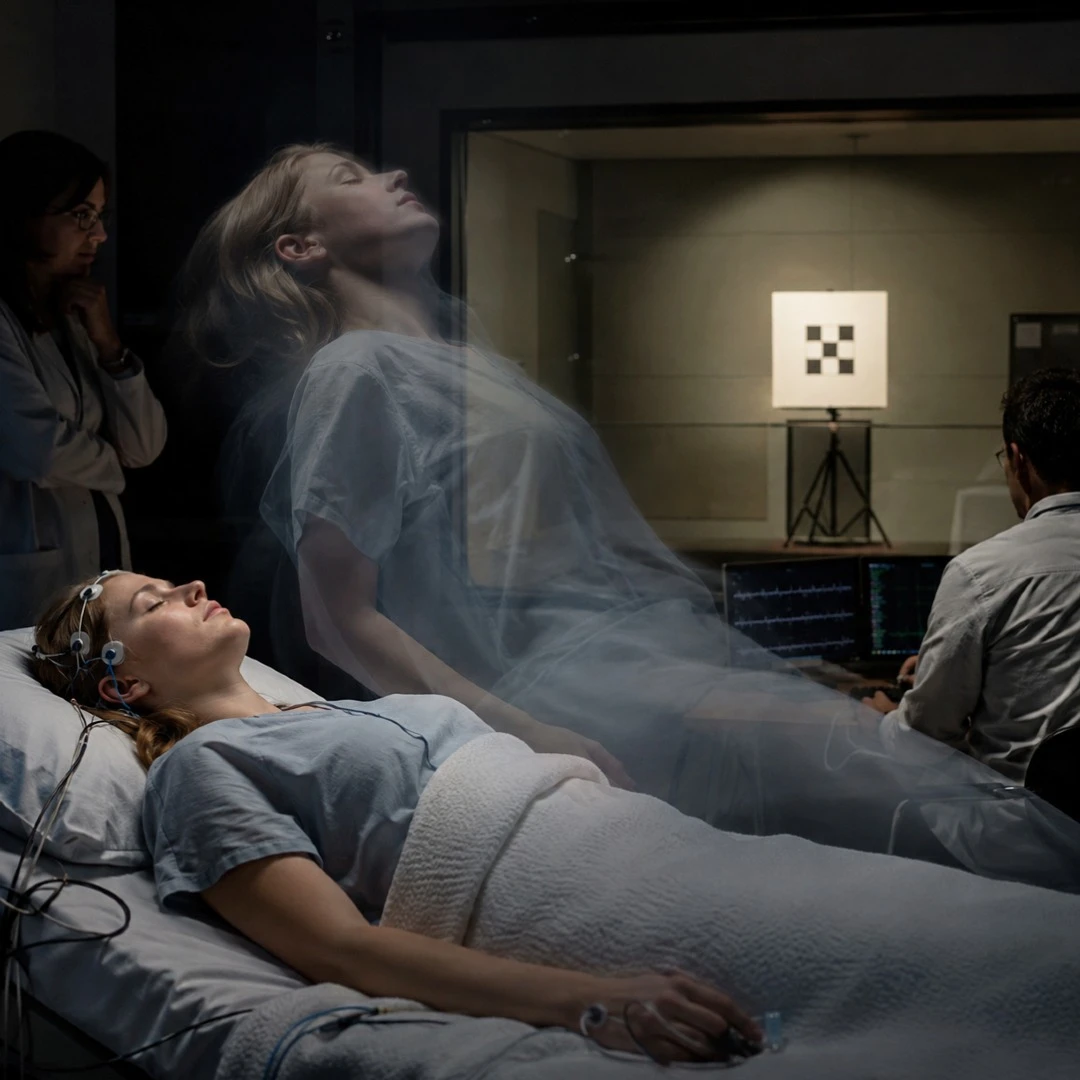
For decades, people who have experienced what’s known as an Out-of-Body Experience report feeling as if their consciousness separated from their bodies. Sometimes, they say, they could see their surroundings from a different perspective or even travel according to their accounts to other places. But these stories always run into a fundamental question: if consciousness can truly leave the body, is it possible to perceive something hidden that ordinary senses can’t detect?
A new study, published online on August 12, 2026 in EXPLORE magazine, set out to test this question under controlled conditions. The experiment involved participants with extensive experience in techniques designed to induce out-of-body experiences.
A hidden image in another room
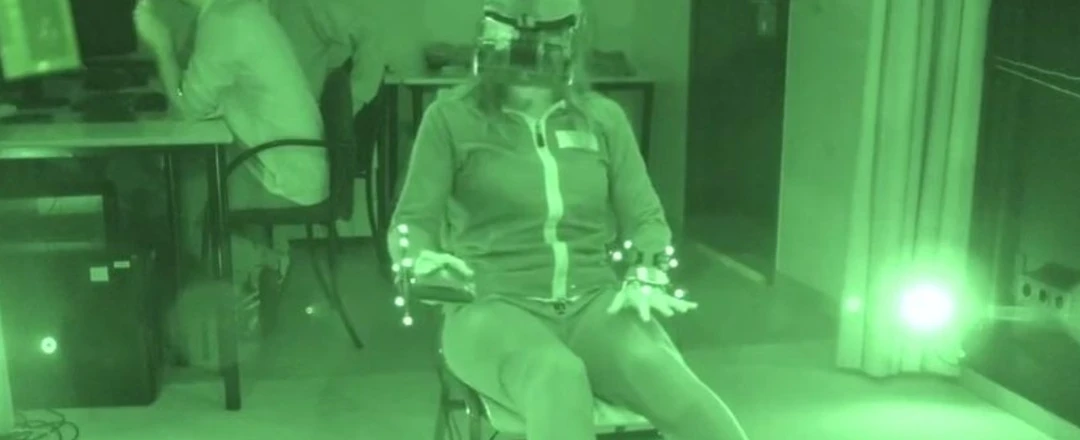
The study involved 21 participants affiliated with a Brazilian institute that offers training in out-of-body experience techniques. The premise was straightforward: each participant was asked to attempt an out-of-body state and, during their experience, try to visit a separate room that was inaccessible during the test. In that room, a computer had randomly selected an image from a predefined set.
To make the test more rigorous, the target image was unknown not only to the participant but also to the researchers present, minimizing the chance of any information being unintentionally conveyed.
After each attempt, participants described what they believed they had seen. Out of 21 participants, nine reported having an out-of-body experience during the session. Descriptions of the target image were collected from 13 sessions for statistical analysis.
Artificial intelligence joins the experiment
Instead of having researchers judge how closely a participant’s description matched the image, the study used a computer-based method. It analyzed semantic similarity using a pre-trained language model.
For each session, the system considered 100 possible images. It compared the meaning of the participant’s description with the descriptions associated with those images. Researchers then checked whether the actual hidden image ranked higher than would be expected by chance.
The main result was clear:
None of the thirteen experiments produced statistically significant results beyond what would be expected by chance, and the overall findings did not provide evidence that participants were able to identify the hidden images through out-of-body experiences.
In other words, the experiment failed to demonstrate what is sometimes called 'veridical perception'—the ability to obtain accurate information about a distant or concealed location without using the known senses.
However, the researchers did note an unusual observation that was not the main focus of the study: two participants spontaneously described accurate details about the researchers’ locations and activities in a nearby room during the experiment.
Since this information was not part of the hidden image identification task, the test was not designed to evaluate it in the same way. As a result, the researchers did not consider these reports as evidence of extraordinary perception, but cautiously suggested that such accounts might warrant future studies specifically designed to investigate them systematically.
This presents an irony: participants were unsuccessful in the task specifically designed to test them, yet, according to the researchers, some accurate information appeared in unrelated reports that were not intended to prove anything.
Why is it so difficult to test out-of-body experiences?
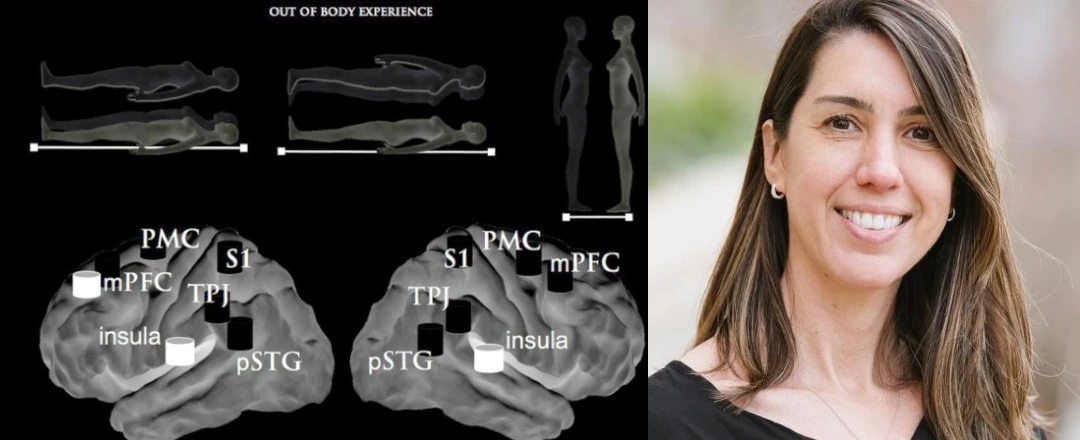
Researcher Marina Weiler from the University of Virginia, along with other scientists, has previously discussed a key challenge in studying this phenomenon: personal accounts of out-of-body experiences can feel vivid and convincing to those who have them, but consistently replicating claims of remote perception under laboratory conditions has remained elusive.
In another study published by Weiler and her colleagues in June 2026, they pointed out that 'hidden image' tests may not always reflect the nature of the experience as described by those who report it. They called for the development of more suitable testing methods for the phenomenon, while still ensuring scientific rigor and the ability to disprove the claim if it fails.
This discussion does not imply that consciousness actually leaves the body; rather, it highlights the difficulty of turning a highly complex subjective experience into a measurable and repeatable laboratory test.
Between Personal Experience and Evidence
Out-of-body experiences are well documented in the scientific literature as psychological and perceptual phenomena described by people. However, interpreting them as actual separation of consciousness from the brain, with the ability to travel to other locations, is a separate hypothesis that requires independent evidence.
The new study did not provide such evidence; in fact, its main test yielded negative results. Nevertheless, it shows that researchers are still trying to put one of the oldest claims about consciousness to a direct test: hiding information from the senses and then asking whether a person can access it by other means.
As for the participants’ descriptions of the neighboring room, these remain intriguing observations rather than proof. To gain real scientific value, such reports would need to be replicated in experiments specifically designed for this purpose, under conditions that rule out information leakage, chance, and post-hoc interpretation.
About the Author