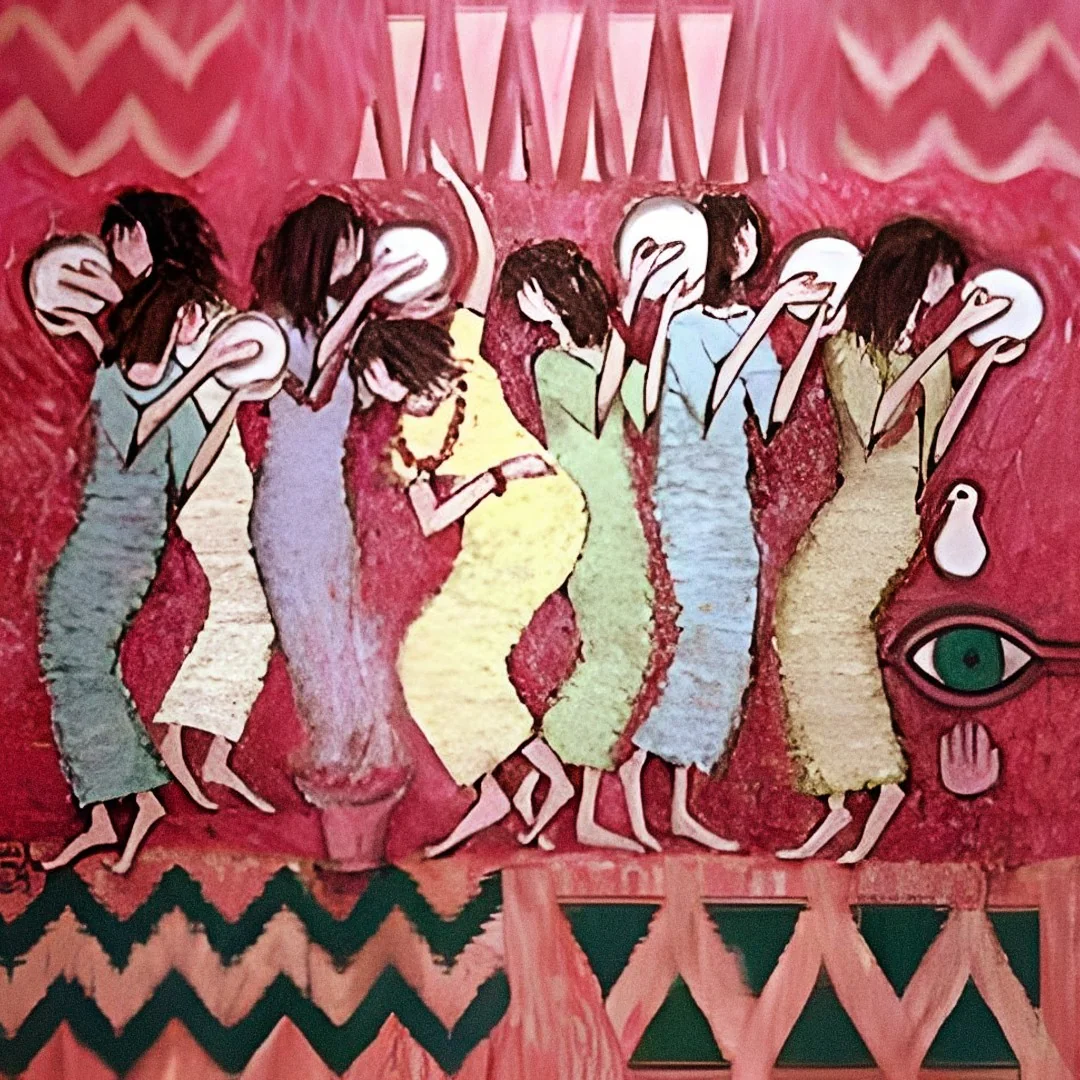
The Zar ceremony incorporates ancient pagan rituals that call upon powerful spirits or a group of influential jinn, referred to as 'the Masters,' to lift the affliction from the patient. Although the practice has declined in the Arab world due to increased awareness and religious prohibitions, it still persists in some circles, often in secret and away from the eyes of the law, which forbids it.
The origin of the word 'Zar'
There is no consensus on the linguistic origin of the word 'Zar.' The orientalist Zwemer believed it derived from the Arabic word for 'visit,' while many researchers trace it to Amharic (the language of Ethiopia), and others suggest Cushitic or other languages.
Some also claim that 'Zar' is a corruption of 'Jar,' the name of a pagan deity among the Cushites, which later became, in Ethiopia after the advent of Christianity, a demon, a vengeful or evil spirit.
Origins and spread of the practice

There are several theories about the origins of the Zar ritual. Some believe it began in Ethiopia, where it is still widely practiced, while others trace it back to Pharaonic Egypt. However, there is general agreement that it originated in the region along the Red Sea coast—including Ethiopia, Somalia, Yemen, and the Hijaz where travelers have documented its presence.
Zar entered Arab culture through Ethiopian slaves and underwent changes over time. In popular belief, it became a way to heal both psychological and physical ailments, such as depression, headaches, or the birth of deformed or stillborn children. Unlike its original form, the ritual in Arab culture does not involve asking the 'Masters' about the unseen or the future.
The practice saw a notable increase during the Ottoman era, reportedly after the daughter of a Pasha was cured through a Zar ceremony. Her gratitude and generosity toward the Zar practitioners led to the custom spreading throughout the cities.
Zar Rituals
Zar is considered a form of sorcery and involves gatherings where drums and tambourines are played, bodies sway to the rhythm, and participants may dance ecstatically or even disrobe. Men and women mix freely, and incense smoke fills the air in an effort to appease the 'Masters.'
During the Zar circle, participants burn incense, beat drums, and dance while chanting unintelligible phrases or invocations like 'Allah is alive... Allah is alive,' or 'O Sheikh, summon... O Sheikh, summon the one with the spirit, let it appear.' The evil spirit is believed to manifest and speak through the afflicted person in a different voice, making demands such as specific colored clothing, makeup, or gold, which the group quickly provides.
Offerings may be made to the spirit, such as slaughtering a sheep and placing some of its blood on the patient's clothes, or having the patient drink a little of the blood, sometimes from a bird like a chicken or pigeon. Candles are lit, and the group shares a meal. If the spirit's torment of the person subsides, even temporarily, participants see this as proof that the Zar ritual has worked.
-According to a woman experienced in these rituals, Zar ceremonies typically begin with the beating of drums and tambourines, accompanied by chants and unintelligible murmurs. This is followed by ritual movements and body shaking, as incense smoke fills the air and the atmosphere becomes charged with noise and activity.
She adds: "These rituals continue until the patient collapses to the ground. As soon as she falls, the 'kodia' begins the zar exorcism ceremony, shouting loudly at the spirits, demons, and jinn, demanding that they leave the patient's body."
The leader of the zar ceremony, known as the kodia, must promise the spirits possessing the patient that their demands will be met. These demands typically involve offering a rooster or a sheep with specific characteristics, which the patient's family is expected to provide as a condition for the spirits to depart.
The Kodia and the Brides
The kodia—also called the sheikha or 'arifa al-sikka is the woman who leads the summoning and exorcism rituals. She is usually a Black woman who inherits her role as a spiritual medium from her mother. If she has no daughter, she passes it on to one of her assistants, known as the 'brides.' The kodia interacts with all the spirits, which is why she wears many amulets—one for each spirit. In contrast, each bride carries only the amulet associated with the specific spirit possessing her.
Kodia Ceremonies
The kodia organizes three types of zar ceremonies: a major zar, a weekly gathering, and an annual zar ritual.
1. The Weekly Zar
This gathering is focused on showing respect to the spirit and seeking its favor. Regular attendees are often called 'zar addicts,' as they believe participating in these ceremonies brings them comfort and that they cannot live without them.
2. The Major Ceremony
This is the most elaborate ritual, featuring all elements of the zar: music, singing, dancing, special clothing, amulets, incense, and offerings. The main goal is to heal the patient by identifying the spirits involved, appeasing them, and presenting offerings.
3. The Annual Ceremony
Held every year during the month of Rajab, this ceremony is dedicated by the kodia to all the spirits she knows. All zar ceremonies are suspended during Ramadan, with no exceptions.
Zar Music Groups
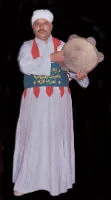
The kodia is assisted by musical groups who play various types of frame drums and percussion instruments. Each spirit is associated with a specific rhythm and group.
1. The Baladi Group
This group consists of five women: three play the mazhar (large tambourine), one plays the tabla (drum), and another plays the maracas.
2. The Tanbura or Sudanese Group
This group features musicians of African descent playing the tanbura (lyre), a mangour player, and two female tabla drummers.
3- Abu El-Gheit Troupe
The group features a dancer who also plays the manjūr, two flute players, and the dancer’s wife who plays the riq (a type of tambourine).
"The Masters" and Their Demands
Each so-called master has specific demands, some of which are requested by the afflicted or their families, while others involve particular amulets, clothing, or dances. Amulets come in many shapes, sizes, and meanings, and their use isn't limited to the zar ritual. Here are just a few examples of these "masters" and what they require:
1- The Sudanese Lady
She requires her "bride" to wear a full traditional outfit: a large Sudanese wrap decorated with black and white squares and a red border about 8 cm wide, along with an ornate cap embellished with colorful beads and tiny shells.
The outfit also includes a necklace made of shells woven into fabric, a belt about 12 cm wide, another necklace of beads and shells, anklets, and bracelets. Additional chains are worn around the neck, sometimes with one or more amulets sewn into small pouches as part of the necklace. The bride also carries a dagger with a handle made of wood or bone, its sheath decorated with colored charms, and a staff about 60 cm long, covered in beads. Sometimes, a tasseled fez is also worn.
2- The Bedouin Sultan
He asks for a white robe decorated with patterns, featuring an embroidered camel with a herder on the back, and blue fringes with circular designs on the sides. His bride wears a white silk scarf adorned with golden flowers and a traditional Arab headband. His sister, known as the Arab Lady, requests a white silk dress with long sleeves, embroidered edges, and a face veil decorated with gold-colored coins in the classic style. The outfit is further adorned with blue, white, and red beads and shells, along with a traditional Bedouin belt.
3- The Lady of the Sea
She appears as a woman from the waist up and a fish from the waist down. She doesn't require special clothing, but during songs dedicated to her, a large copper basin half-filled with water is placed nearby, with live fish swimming inside. The patient plays with the fish and dips her head in the water while the singing continues.
Categories of "Masters"
Anthropologists have classified the masters into the following groups:
1- Regional Group
The regional group includes several subgroups:
- The Sudanese group: featuring the Sudanese Tanbura.
- The Abyssinian group: led by the Sultan of Abyssinia, his brothers, the Abyssinian Ladies, and the "Great Lady" or "Grandmother of Grandmothers," considered the matriarch of Abyssinian spirits.
- The Upper Egyptian group: led by Abu Denfa, believed to appear in three stages, and his sister known as the Upper Egyptian Lady.
- The Arab group: led by the Arab and his companion, the Arab Lady, representing the Bedouins.
- The Moroccan group: led by the Moroccan Sultan, who is popularly identified with Abdul Qadir al-Jilani.
2- Natural Spirits
This group includes the spirits of fire, led by Sultan al-Jinn al-Ahmar (the Red Jinn Sultan) and his sisters, as well as the Lords of Water or Sea, headed by the Sea Sultan and his sisters. There are also female spirits known as Sitt Safina, and the mountain spirits, led by Sultan al-Jablawi and his sister Jandar. It's believed that the name Jandar comes from a city in Ethiopia.
3- The Coptic and Islamic Group
This group is led by the Christian Sultan (Sultan al-Nasrani or Sultan of the Monastery) and Sultana Mary. The Islamic group features names like "the Dervish" and several Muslim saints and Sufi leaders.
Among the notable female Islamic figures is Umm al-Ghulam. There has been much debate about who this refers to, with some suggesting it might mean the Qareen (spiritual companion) or Umm al-Subyan.).
4- The Professional Group
This group is led by spirits with military or warrior titles, such as Yawri Bek and his sister Sitt Rakash Hanem. In their higher form, they are called Sultan al-Liwa (Sultan of the Banner), and in their lower form, they are known as the Soldier or Hakim Pasha.
5- Other Groups
These include Sultan Rina and Sultan Roum al-Najdi.
Are the Demands of the Spirits Real, or Just a Scam?
During zar ceremonies, some participants may fall victim to fraud and deception by charlatans who are primarily interested in making money by convincing people to follow their advice and instructions.
One woman in her fifties shared her story: "When I heard about my sister's death, I was in the bathroom. I screamed so loudly that I became ill. Some people suggested I try a zar ceremony, so I went to Umm al-Jawhara. She told me that a demon had possessed me. I asked what it wanted, and she said it demanded a silver anklet and a pure agate heart. Then they drenched my head with cold water because, according to Umm al-Jawhara, I was possessed by Safina al-Bahr al-Awwama (the Floating Sea Spirit). They performed the zar for me, and I felt better for a while, but then the symptoms returned. This time, she said Sultan al-Jinn al-Ahmar had possessed me, so they held another zar and told me to wear red clothes. Later, a Sudanese female spirit possessed me, and since then, I've been visiting Umm al-Jawhara every week to fulfill the spirits' demands."
Religious Perspective
In Islam, Dr. Alaa al-Din al-Zaki states that the practice known as zar is considered a major sin and may even be seen as a form of polytheism. Seeking help from or communicating with jinn is considered associating partners with God. The practice also involves elements of magic, which is strictly forbidden, as well as claims of knowing the unseen. Zar ceremonies often include other prohibited acts such as drinking alcohol, smoking, and mixed-gender dancing.
There is also a strict prohibition against the ritual of animal sacrifice to anyone other than God, which is commonly practiced during zar ceremonies. This is mentioned in several sayings of the Prophet Muhammad, including the following:
Narrated by Zuhair bin Harb and Suraij bin Yunus, both from Marwan, Zuhair said: Marwan bin Muawiyah al-Fazari told us, Mansur bin Hayyan told us, Abu al-Tufail Amir bin Wathila said: I was with Ali bin Abi Talib when a man came to him and asked, 'Did the Prophet confide anything to you?' Ali became angry and said, 'The Prophet did not confide anything to me that he kept from the people, except for four things.' The man asked, 'What are they, O Commander of the Faithful?' Ali replied: 'The Prophet said: May God curse those who curse their parents, may God curse those who offer sacrifices to anyone other than God, may God curse those who shelter an evildoer, and may God curse those who alter boundary markers on the land.'
-The church also considers zar ceremonies to be a form of devil worship.
"Daqat Zar" (Zar Beat) Film
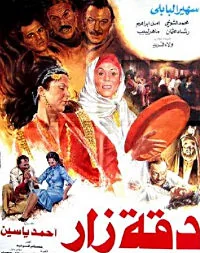
Arab cinema has explored the topic of Zar rituals, often criticizing them as symbols of ignorance and social backwardness, and portraying them as forms of exploitation that prey on popular and religious beliefs to take advantage of vulnerable people. One of the most notable films on this subject is the Egyptian movie "Daqat Zar," directed by Ahmed Yassin and starring Soheir El Bably, Farid Shawqi, and Ezzat El Alaili. Despite this criticism, some people still view Zar as a cultural heritage worth preserving, and its influence can still be seen today in certain forms of traditional Eastern dance.
About the Author