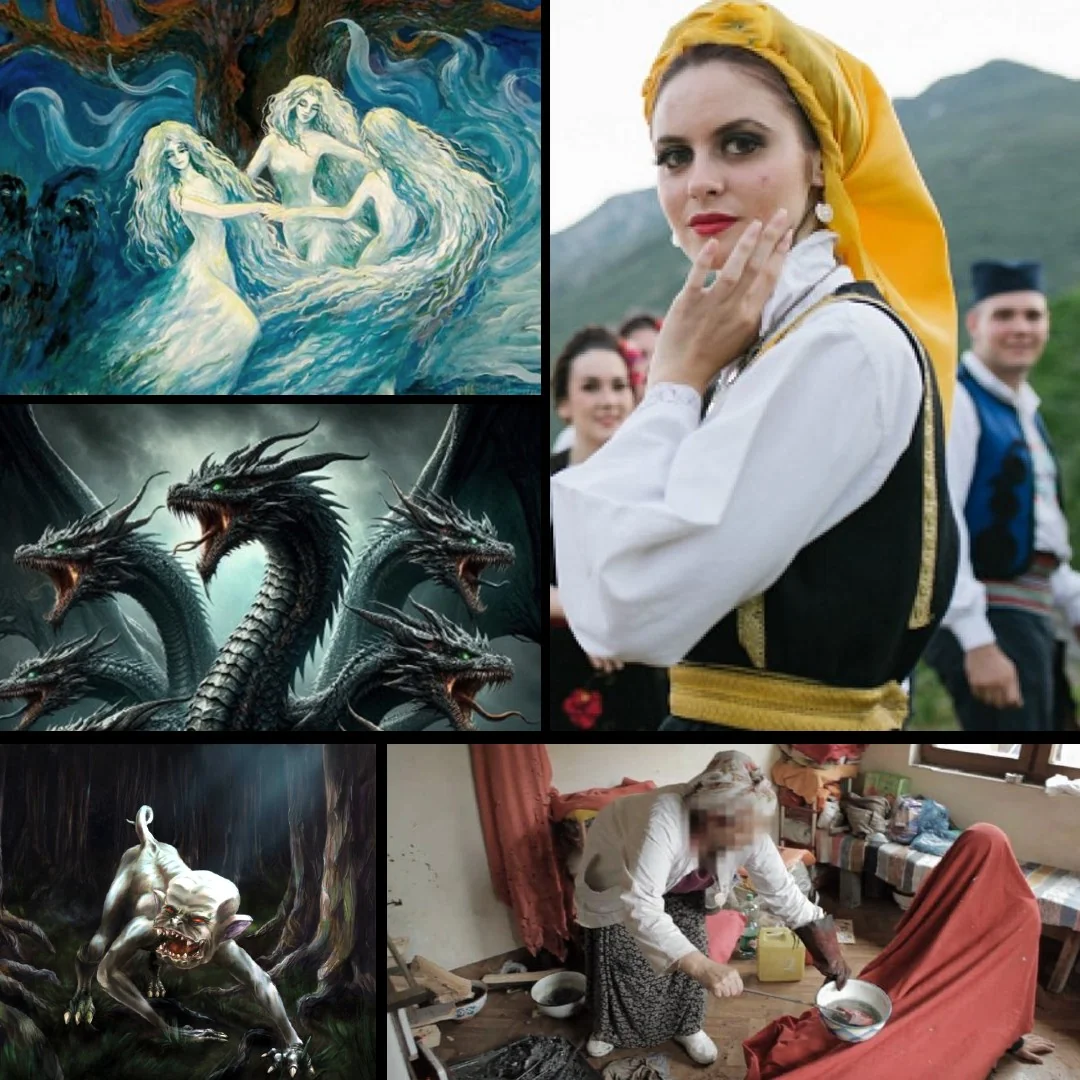
Amid soaring mountain peaks, scattered hilltop villages, and misty forests in southeastern Europe lies the Balkans, a region known for its diverse ethnicities, religions, and turbulent history. But beneath the surface, the Balkans also harbor one of the world's richest traditions of supernatural legends and folklore. These aren't just old wives' tales or local myths; they're stories of hidden beings, guardian spirits, magical rituals, and places charged with mysterious energy. Here’s a journey into the heart of this shadowy world of legends:
1- Zana: The Guardian Fairies
High in the Albanian Alps, along hidden riverbanks, the legend of the Zana is told, female spirits said to be part light, part fire. They're not your typical fairies; Zana are protectors of the brave, granting them strength and insight. It's said they watch over newborns, and if a Zana chooses a warrior, she bestows him with power, quick wit, and a "silent courage." Many folk heroes in the Albanian epic "Kanun" are believed to have had a Zana whispering to them in the stillness of battle.
But these fairies aren't always gentle. Those who anger a Zana risk blindness, madness, or being whisked away to a strange dimension, sometimes suffering a kind of "internal burning." Encounters with Zana are said to warp time and space, leaving people with wisdom or a curse that never fades. Zana choose who can see them, granting a "second sight" that reveals hidden beings invisible to others.
2- The Ritual of Molten Lead
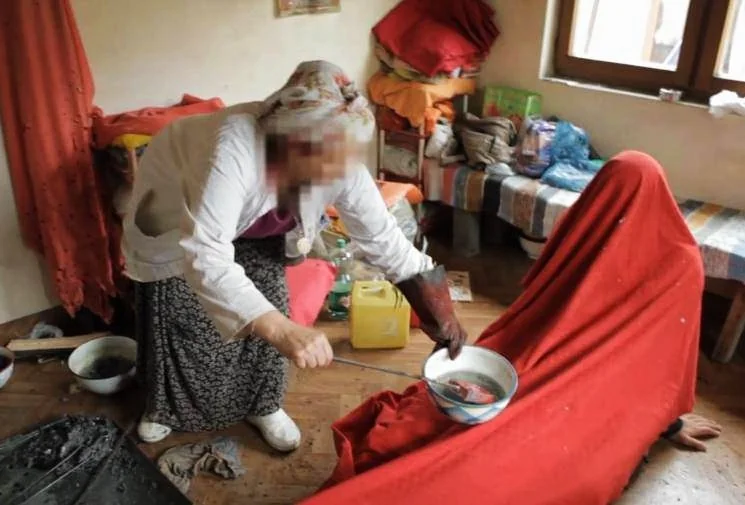
During the ritual, women whisper mysterious prayers, often blending Orthodox Christian and Quranic verses—a testament to the region’s unique religious coexistence. This ritual is used after traumatic events or unexplained experiences. If a child cries for no reason, it’s believed they may have been frightened by spirits, and the lead ritual is performed as a cure.
These rituals are common in Bosnia and Kosovo.
3- Drekavac: The Screaming Child Spirit
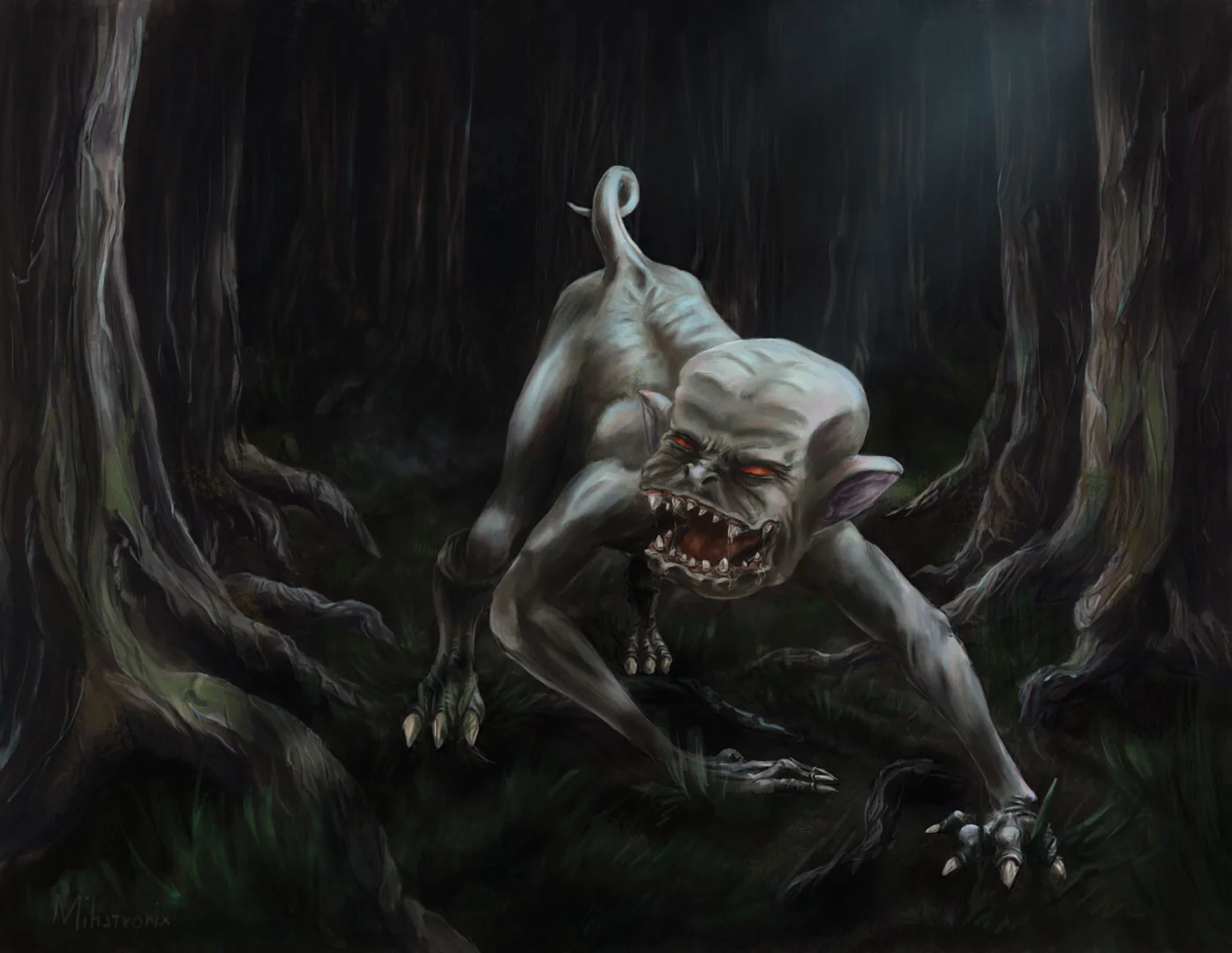
Over time, the Drekavac is said to become more distorted, sometimes appearing as a small monkey or a creeping shadow. Its screams are believed to precede sudden deaths. In some villages, burying children at night is forbidden for fear they might become Drekavac. Even today, people avoid certain places at night, especially after hearing unexplained cries. This legend is widespread in Serbia, Bosnia, and Montenegro.
4- Folk Magic and Spells
Villages like Bijelo Polje in Montenegro and Struga in Macedonia still believe in elderly women who practice folk magic and are said to possess a "third eye." These natural-born witches are called upon to break curses, using symbols like red thread, garlic, eggshells, cat ashes, ink mixed with blood, and even clippings of the victim’s nails to attract or ward off misfortune. One ritual involves burning an item representing an enemy, like a name or photo, while reciting incantations. These witches are also asked to heal livestock, bind lovers, break unwanted marriages, or create a "charm" , an object buried under a house to bring illness or bad luck. Some believe magic only works if performed during a full moon or on Tuesdays and Fridays, times thought to weaken the barriers between worlds.
- In Albania, people turn to "hajjaj" to write spells that are buried or carried for protection or binding.
- In Bulgaria, children are protected by tying a red thread around their wrist or placing a small knife under their pillow.
- Folk witches, known as "frašare," remain an integral part of life for many, especially in eastern Serbia.
5- Chuma: The Old Woman Spirit of Disease
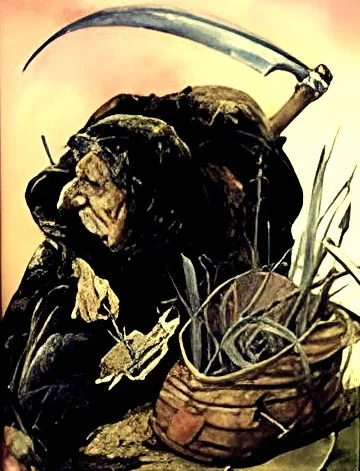
Čuma is said to never speak or scream. Instead, she drifts through locked doors like a breeze, spreading fever and weakening bodies, especially targeting children and the elderly.
In some stories, she is directly linked to outbreaks of deadly diseases such as the plague, tuberculosis, and the Spanish flu. For this reason, she's sometimes called the 'Lady of Illness' or the 'Old Woman of Infection.'
To ward her off, people would leave bowls of water on their doorsteps or write protective phrases on their doors, such as:
"Go where you are not called. We are free of sin and complaint."
It was believed that Čuma would never enter a clean house, so during outbreaks, entire communities would join in thorough cleaning rituals, often accompanied by incense and secret prayers.
In some villages, grandmothers still refer to sudden bouts of illness as 'Čuma visited us,' treating her like a dreaded guest whose very name is spoken in hushed tones.
6. The Fairies: Vila and Samodiva
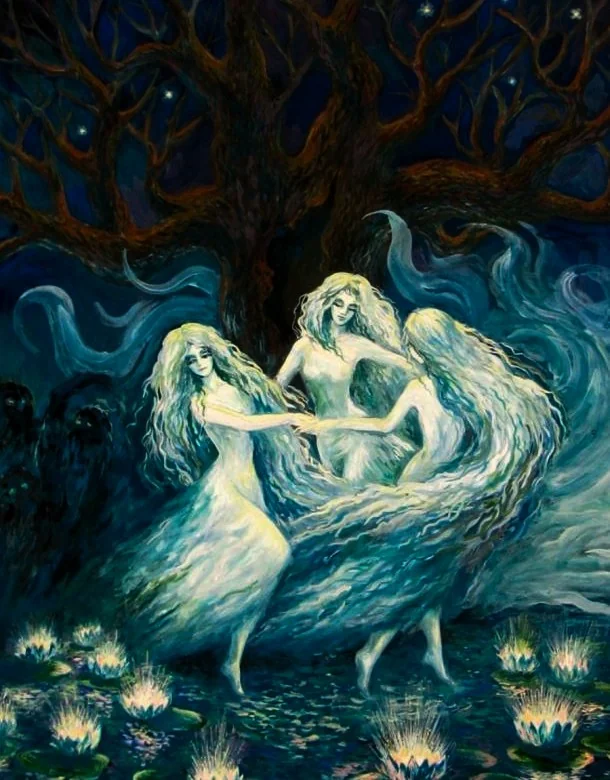
In Bulgaria, the legend of the Samodiva tells of enchanting fairies who sing in the woods and dance in glowing circles at night. It's said they can be deadly to those who catch a glimpse of them.
In Serbia and Macedonia, they're known as Vila: female guardians of nature who reward the courageous and punish the arrogant.
Serbian folklore also features the fairy Ravuela, who aids heroes in epic tales of chivalry.
7. Haunted Places
In remote villages, there are houses that no one dares to live in, no matter how beautiful they appear. After sunset, people avoid these homes, where lights flicker on unexpectedly and footsteps echo through empty rooms. In one Croatian village, an abandoned house became infamous as the 'Oven House' after several mysterious fires broke out despite the absence of electricity or any heat source. Witnesses have reported wandering shadows, windows opening on their own, and the faint sound of footsteps climbing the stairs at night.
In Serbia, the region of Zablace is famous for stories of houses that groan at night, fill with the scent of incense no one has lit, and echo with the cries of unseen children. Some locals believe these phenomena are linked to ancient curses or improper burials that failed to honor traditional rites.
Bran Castle in Romania, famously linked to Dracula, is said to be haunted by the apparition of a lady in white.
Petrovaradin Fortress in Serbia is known for sightings of fallen soldiers appearing in its underground tunnels.
In Croatia, there are tales of abandoned castles haunted by the restless spirits of nobles who died unjustly.
- Hoia Baciu Forest Located in Romania, this forest is often called the most 'haunted' in Europe, with reports of strange lights and people suddenly losing consciousness.
In Bulgaria, some cemeteries are associated with the legend of the 'wandering bullet,' where those who sleep nearby claim to hear screams or whispers.
Trakošćan Castle in Croatia is rumored to be haunted by the spirit of an aristocratic lady who wanders the grounds at dawn.
8. The Guardian Family Spirit
In Serbian and Croatian folklore, every family is believed to have a 'Krsnik', a spiritual entity born alongside a family member, usually without their knowledge. The Krsnik only discovers their identity after dreaming of battling a giant shadowy creature or seeing themselves flying to protect their home. Their role is to defend the family from dark spirits, especially 'Kudlak' or vampires. The Krsnik fights at night and draws strength from the moon. It's said that a dream experienced by a grandfather will be shared by his granddaughter decades later, as if the spiritual legacy is never forgotten. In these dreams, the Krsnik wears a gray cloak and carries a staff made of pomegranate wood, and is believed to leave 'marks'—often three dots in a triangle—on walls as warnings of danger. This entity is rarely spoken of, as it is considered a 'family secret.'
9. Returning from the Grave: Iron Nails and Chains
Out of fear that the dead might return, some are buried with iron nails driven through their hearts, bound with chains, or with garlic placed in their mouths. These secretive rituals, still practiced in some villages, are meant to protect against the ancient fear of the dead rising—especially those who died under unnatural circumstances or by suicide.
In certain Bulgarian cemeteries, human remains have been found bound with iron chains or with nails driven into the heart, to prevent them from rising from the dead.
In Serbia, garlic cloves were sometimes placed in the mouth or under the tongue for the same purpose.
Romania has many stories of the 'Strigoi' restless spirits of those not properly buried, who return to torment the living.
10. Vampires
The vampire legend, as known in the West, originated in the Balkans before being immortalized in Western literature by the character "Dracula The character is based on a real person: Vlad the Impaler, infamous for torturing his enemies and drinking their blood in Transylvania, Romania, where he is still considered a national hero.
In Serbia, the first official report of vampires dates back to 1725, when villagers claimed that the farmer Petar Blagojević returned from the dead to drink the blood of his relatives. The church responded by exhuming his body and driving a wooden stake through his heart.
11. Kulshedra and Dragons
12. Legendary Places
Devil's Town (Serbia)
Massive stone pillars said to be the remains of a wedding party turned to stone by a mysterious curse.Belogradchik Rocks (Bulgaria)
Rock formations resembling human faces, believed to be the spirits of those exiled from heaven. Another tale says a girl who loved a soldier was unjustly killed, and her tears became stone.Rtanj Mountain in Serbia
Said to be a natural pyramid radiating spiritual energy. Hundreds visited during the rumored 'end of the world' in 2012.Kuklica (Macedonia)
Stone columns said to be wedding guests frozen in place after the bride betrayed the groom, according to legend.Where Legends Never Die
The Balkans are more than just a region—they are a living memory of legends that refuse to fade. Every mountain casts a shadow, every old house holds a story, and every whispered ritual hints at another realm—one we cannot see, but that sees us.
This land still respects the unknown and fears angering the world beyond.
Legends here are still passed down as if they happened just yesterday.
About the Author