
For thousands of years, Syria has been a crossroads of civilizations, a land where religions and beliefs have mingled, and where myth and history are deeply intertwined. While ancient temples, tombs, and palaces stand as proud reminders of a glorious past, the Syrian night whispers stories that only come alive in the darkness: fleeting shadows, mysterious apparitions, strange entities, and whispers from an unseen world. In this exploration, we delve into the depths of Syrian folklore, not searching for documents or artifacts, but for the traces left on the soul when one crosses into the unknown, where the supernatural blends with popular belief and legend becomes a living reality passed down through generations.
Haunted Places
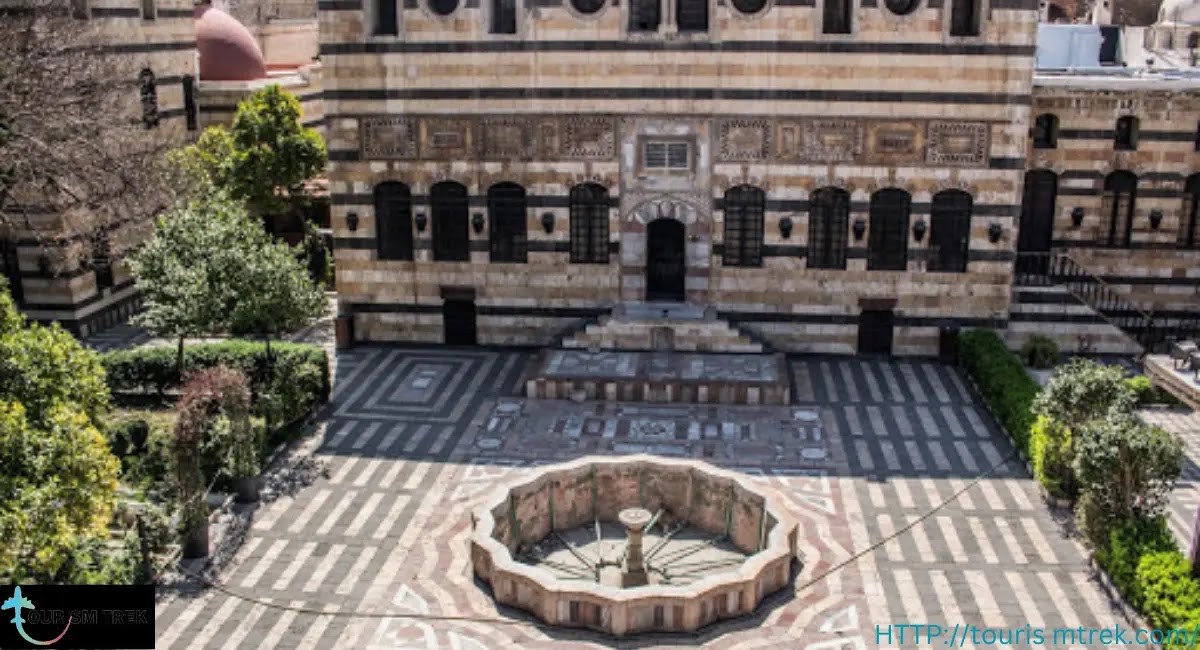
Azem Palace – Damascus
Mount Qasioun – Damascus
Beyond its religious significance, residents of neighborhoods near the base of Mount Qasioun share stories of mysterious lights appearing on the mountain at night. It's believed that the mountain contains undiscovered caves, possibly used for seclusion or secretive rituals.
Bab al-Saghir Cemetery – Damascus
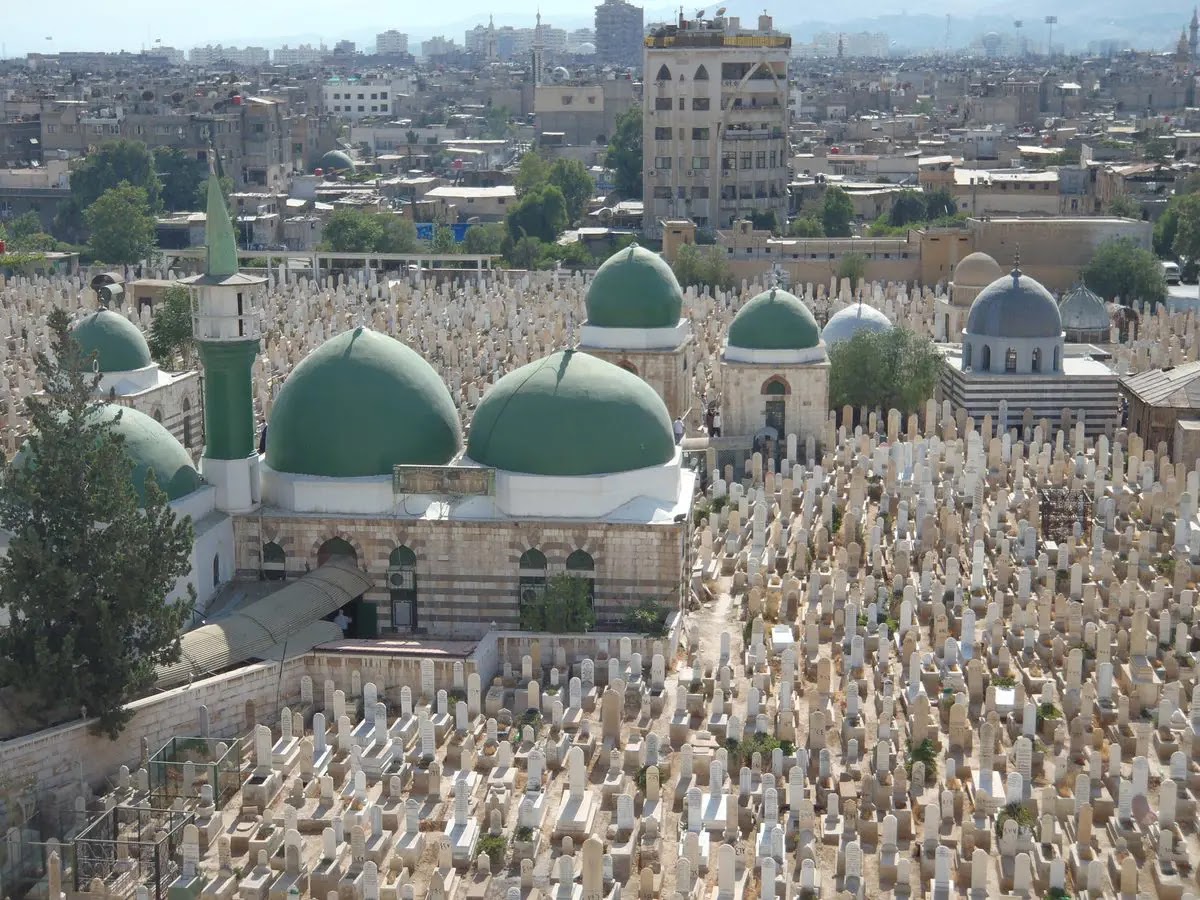
The cemetery is surrounded by legends and stories of unexplained phenomena: whispers heard at night among the graves with no clear source, shadows moving between tombs that vanish when approached, and sudden chills on warm nights, as if someone is passing through you. Visitors also recount dreams and visions after visiting the cemetery, reinforcing its reputation as a place of spirits and memories.
In the past, Damascenes would avoid passing by Bab al-Saghir at night, fearing encounters with wandering spirits or jinn. Oral traditions speak of mysterious lights sometimes appearing above certain blessed graves on dark nights, or indistinct voices coming from the tombs, some attributing these to the recitation of Quran or prayers by the souls of the righteous. While there's no scientific evidence for these occurrences, they reflect the deep respect and awe locals hold for their ancient cemetery. Many visitors also believe that praying at specific tombs especially those of the Prophet's family can help fulfill wishes or bring blessings, inspired by stories of miracles experienced by those who sought intercession there.
The cemetery is estimated to contain around 15,000 graves. With space running out, families in Damascus have sometimes resorted to burying their loved ones in layers, one above the other, due to the lack of horizontal space.
Baron Hotel – Aleppo
A historic landmark that has hosted many prominent figures, the Baron Hotel is also known for stories of unexplained activity in some of its rooms, especially on the upper floor. Guests have reported furniture moving on its own and sightings of apparitions, particularly in the room once occupied by the poet Mohammad al-Maghout, which is said to carry an air of melancholy and isolation.
Yelbaga Bathhouse – Aleppo
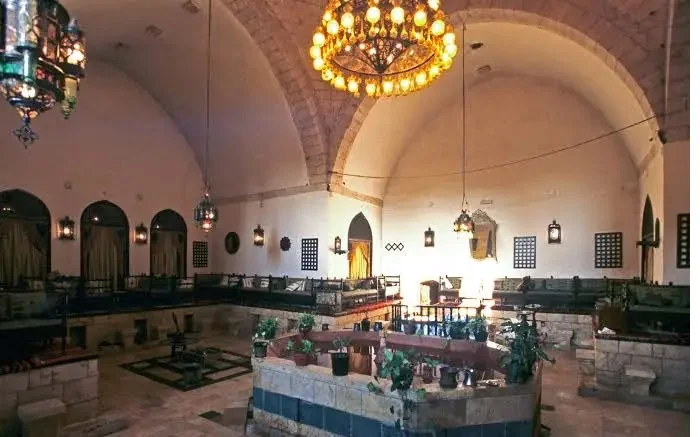
One well-known story tells of a man who tried to spend the night inside, only to wake up terrified, claiming that a mysterious presence tried to strangle him. Some link these occurrences to the spirit of a woman who was murdered there under mysterious circumstances decades ago. It's said that she still "haunts" the bathhouse, appearing to anyone who dares to enter after sunset. Read more about Yelbaga al-Nasiri Bathhouse.
Hammam al-Nahhasin – Aleppo
One of the oldest public bathhouses in Aleppo, closed for many years. Locals tell stories of ghostly women in white appearing inside, and the sound of running water echoing through the halls even though the water supply has long been cut off. Legend has it that a woman was murdered there, and her restless spirit still haunts the place.
Diq al-Jinn – Homs
Diq al-Jinn was the nickname of Abd al-Salam ibn Raghban, a 9th-century Abbasid poet known for his lyrical yet dark and violent poetry. His life became shrouded in fear and mystery after he killed his wife, Ward, accusing her of infidelity though there was no proof. According to legend, he ordered her body to be completely burned, then used her ashes to make ink with which he wrote poems mourning her.
Since then, people in Homs have believed that Diq al-Jinn’s house, or the site of the crime is haunted by the sound of a woman’s moans at night and the fleeting apparition of a woman in white. Some say Ward’s ghost still wanders the unknown spot where she was buried without a marked grave, and that Diq al-Jinn himself was tormented by guilt, living out his days in isolation and depression until his obscure death.
Um al-Zunnar Church – Homs
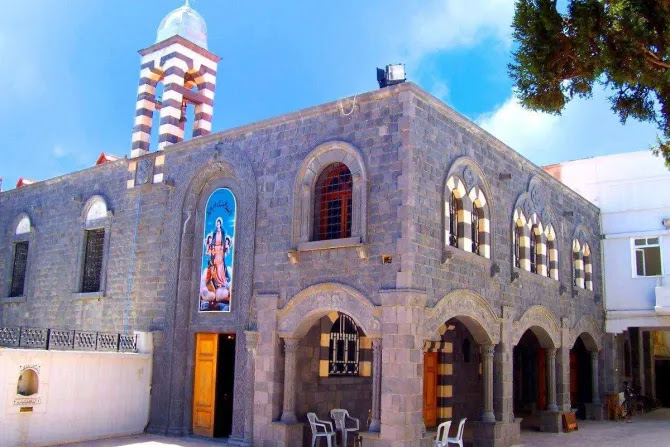
But the church’s reputation goes beyond its religious significance. Locals and visitors alike share stories of faint chants rising from beneath the ground at night, even when the church is empty. Some have felt the floor tremble slightly while praying above the cave where the girdle was found. Others claim to have seen the glowing figure of a woman passing through a side corridor, vanishing near the altar—believed to be a spiritual apparition of the Virgin Mary.
The church draws pilgrims from many denominations, not only seeking blessings but also hoping for healing or relief. Some say their prayers were answered after spending a night in the church or offering a silent prayer there. Many describe a strange mix of awe and peace upon entering, as if crossing a threshold between the physical world and something unseen.
In short, Um al-Zunnar Church remains a mysterious spiritual landmark, where Christian sanctity and supernatural legend intertwine reflecting the unique blend of history, faith, and mystery that defines Homs.
Cave of Prophet Job – Sweida
Located in the Qanawat area of southern Syria, this cave is believed to have been a place of retreat and worship for the Prophet Job. Visitors often report a strange energy there, feeling either deep tranquility or a shiver—especially at night. Some have witnessed mysterious lights or apparitions that appear and vanish without explanation.
Lake Muzayrib – Daraa
Stories abound around the lake of strange whirlpools and voices coming from beneath the water. Some locals believe the lake is inhabited by water spirits or jinn, and they avoid going near it after dark.
The 'Silent' Storms – Palmyra and Deir ez-Zor Desert
Deep in the desert, people speak of sandstorms that occur without a sound. Those caught in them report a sense of losing all sense of time and place. In Bedouin tradition, these phenomena are linked to 'parallel worlds' or 'spiritual trials.'
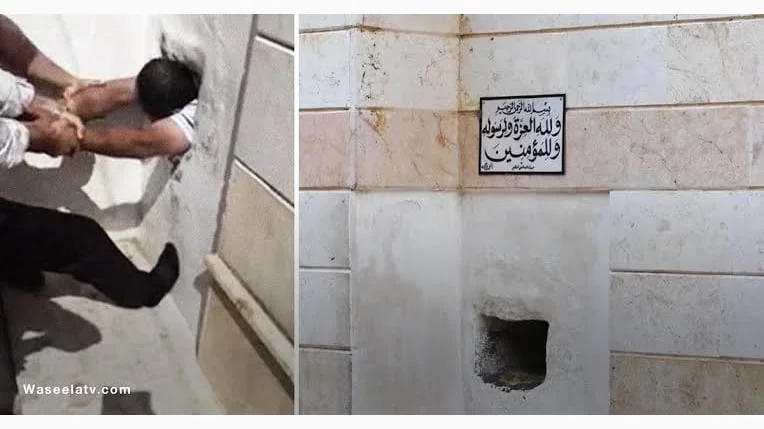
The Window of Truth – Masyaf
Mythical Creatures
Abu Lahab / The Fiery Twin
In some parts of the Syrian desert, it's believed that certain people are born with a fiery jinn companion, known as a 'fiery twin.' This entity may appear in dreams or during moments of solitude, sometimes granting temporary knowledge or power. However, if angered, it is said to burn its host from within. 'Abu Lahab' is considered a symbolic name for this companion.
The One-Eyed Woman
A supernatural figure said to appear in mirrors at night, especially to those who spend too much time looking at their reflection after sunset. She appears as a woman with a single eye in the center of her face. Stories about her are told in the old neighborhoods of Damascus, often as a warning against vanity or applying makeup late at night.
The Dwellers of the Black Caves
In the rural areas of Sweida and Quneitra, people warn against entering certain caves believed to be inhabited by ancient jinn. There are tales of individuals who ventured inside and returned days later with no memory of what happened, or suffering from permanent delirium. It's said they encountered beings who communicated without sound and demanded a pact.
Umm al-Shoor
A female jinn figure reported in some villages of Hama, Idlib, and Latakia. She's described as having extremely long hair that completely covers her face, and she appears at night near trees or streams. She lures children or women, silently following them. The only way to escape her is to suddenly turn around without fear, or to loudly recite protective verses from the Quran.
Abu al-Shoor
Stories from rural western regions describe him as a hairy, tall jinn with red eyes who lives in forests or mountains. He appears to children walking alone and may abduct them, only to return them hours later in a dazed state. He is believed to be a reclusive jinn who avoids humans but becomes angry if approached.
Al-Tantall
A legendary figure common in Syria and Iraq, appearing as a huge man with no distinct features. He is said to haunt ruins and abandoned wells. In Levantine tales, those who see him are paralyzed with fear and unable to scream. He is thought to be a demonic jinn that feeds on human fear.
The Mimic Jinn (sometimes called 'The Voice')
In villages, this entity mimics the voice of a mother, father, or sibling, calling someone from a distance to lure them to an isolated place. Encounters often end with the person fainting or temporarily disappearing. It's believed to be a type of jinn that is either infatuated or lying in wait.
Umm al-Subyan
Umm al-Subyan A terrifying female jinn said to haunt homes with pregnant women or infants. She is blamed for miscarriages or sudden infant deaths at night, and her image sometimes appears in black magic talismans. Grandmothers would advise hanging protective charms or a blue bead on a baby's crib to ward her off.
Al-Sabdala
In Aleppine folklore, 'Al-Sabdala' was always mentioned in hushed tones. She is described as an evil spirit or female entity who appears to naughty children or those who stay up late. Grandmothers would warn, 'Go to sleep before the Sabdala comes from the courtyard!' Her appearance varies from one neighborhood to another, but she is always said to move with lightning speed, have hair that drags on the ground, and make heavy breathing or growling sounds. She usually appears in narrow alleys or behind old mud-brick doors. Elders often warned against opening doors after sunset or looking out old windows when the wind howls at night. Some stories claim that anyone who sees her temporarily loses their voice or comes down with a fever.
Sheikh Weiss
In Aleppo, 'Sheikh Weiss' is a rare figure in local legends, both feared and respected. The story goes that he is an elderly man dressed in white, appearing at the entrances of old neighborhoods at midnight. He walks silently, carrying a staff, and is said to know who has lied, cheated, or wronged others. If he passes by while you're sleeping on a rooftop or near a staircase, he might whisper your name before vanishing. When asked about him, grandmothers would say, 'Sheikh Weiss only appears to those with an unclean heart.' Some tales claim he is the spirit of a holy man whose grave was never found, continuing to appear to warn people—especially children who disobey, steal, or lie.
One of the most widespread beliefs is that if you recite the Fatiha for Sheikh Weiss before sleeping, with sincere intent, and ask to wake up at a specific time, you will wake up at exactly that hour—without an alarm.
This 'awakening' is said to be gentle, as if someone is calling your name inside your mind or lightly touching you, and you open your eyes at the exact time you wished.
Umm al-Shoor – Hama
Folklore tells of 'Um al-Shoor,' a supernatural being who appears as a woman with long hair completely covering her face. She is said to lure children at night, and local legends warn against wandering near large trees or streams after sunset.
Sufi Orders and Their Phenomena
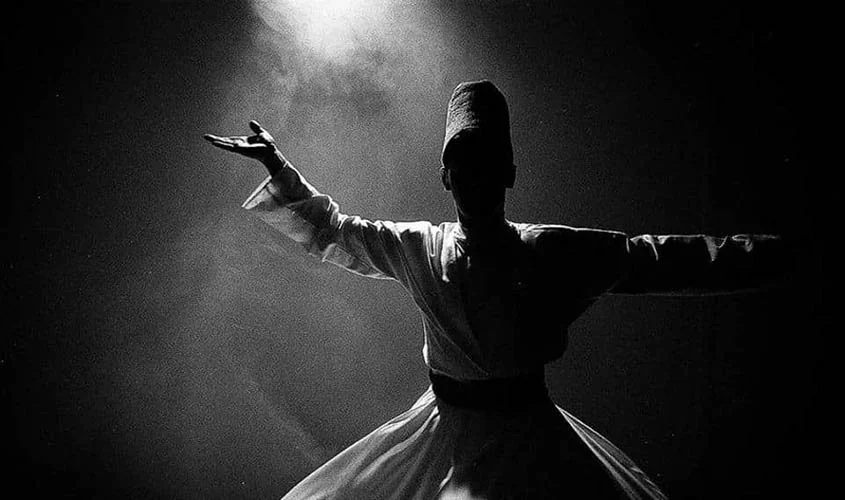
In Sufi chanting circles, especially among the Rifa’iyya and Qadiriyya, certain phenomena are often observed: involuntary shaking, followers collapsing as if in a trance, fits of uncontrollable laughter or weeping, and a sense of total dissolution into the 'divine presence', a state known in Sufi terms as 'fana.' Disciples describe profound spiritual experiences, such as seeing their sheikh as a radiant light or a giant figure in dreams, hearing their name called at dawn with no visible source, smelling perfume in places of worship where no scent is present, or witnessing small miracles like sudden relief from pain or knowing news before it happens. One of the most famous legends in Syrian Sufism is that of the Ahl al-Khutwa saints believed to cross vast distances in a single step by divine grace. They are said to appear in different places at the same time, revealing themselves only when they choose and keeping their abilities hidden from the public.
Magic and Sorcery
Magic and sorcery in Syria have deep roots stretching back to Canaanite and Aramaic traditions, through the Islamic era, and into modern popular beliefs. In rural areas and old cities, stories still circulate about sorcerers, fortune-tellers, and practitioners of magic who are believed to work with jinn and hidden forces to achieve goals such as breaking up couples, attracting lovers, preventing marriages, or causing harm to rivals physically or psychologically.
These practices are usually carried out in secret, using talismans, hair, nails, animal blood, incense, and by burying written spells in abandoned places or under doorsteps. Some rituals are believed to open gateways to the world of jinn, especially when they involve demonic names or the reversal of Quranic verses. Women known as 'Fattahat' or 'Sheikhat' often claim the ability to break or cast spells. Certain locations—such as cemeteries, old wells, or ancient trees surrounded by legends—are thought to be 'negative energy points' used in black magic. Despite scientific progress, many Syrians still turn to these practitioners in times of desperation, reflecting a persistent belief in hidden forces that shape destiny. Between fact and folklore, magic and sorcery remain a part of Syrian popular culture—shrouded in fear, mystery, and constant caution.
Druze Traditions and Reincarnation
Among the Druze, the concept of reincarnation is central, making stories of people recognizing the souls of the deceased in others quite common. Some families recount tales of children who remember detailed events from the lives of people who died before they were born seen as evidence of soul transmigration and sometimes interpreted as supernatural phenomena.
True Stories
The Valley Spirit – from rural Masyaf
In a village near Masyaf, grandmothers tell of a woman who would fetch water from a spring in the valley every dawn. She began returning pale and absent-minded, then started singing in strange voices and wandering to the valley at night. It was said that a spirit appeared to her as a woman in white with long black hair, speaking to her and asking her to stay. When she was prevented from going to the valley, she suffered temporary paralysis and only recovered after a lengthy spiritual healing by a well-known local sheikh.
Marriage to a Spirit – from the Suwayda desert
A Bedouin man from Jabal al-Arab reportedly disappeared for several days, returning silent and withdrawn. Later, he claimed he had been in a cave with a beautiful woman who never touched the ground—'a spirit descended from kings.' She fed him food he’d never seen before and made him promise not to tell anyone. When he broke his silence, he was found dead in his tent a week later, with no visible injuries. The elders said, 'He broke his vow to the spirit, so she took him back to her world.'
The Child Who Saw Them – from rural Aleppo
It’s said that a child was playing near an old mulberry tree at sunset when he told his mother he could see 'little people in black cloaks, laughing.' He pointed them out with uncanny accuracy. The family thought he was imagining things, until he began crying uncontrollably every evening at dusk. The village sheikh said the child had 'accidentally opened his eyes to the jinn,' so they burned incense and recited the Quran. After that, the child stopped seeing anything unusual.
The Midnight Fire – from the villages of Idlib
An elderly woman living alone was sometimes seen at night with red light and smoke rising from her rooftop, even though there was no actual fire. Neighbors believed a jinn inhabited the ceiling and would become angry if anyone neglected to clean the 'abandoned corner' of the house. Later, an old clay dish with strange inscriptions was found there. After it was buried far away, the strange occurrences stopped.
The Tale of 'Abu al-Shaour' – from Hama
In a village near the al-Ghab plain, locals tell stories of a creature seen at dusk. It looks human but is completely covered in hair, appearing suddenly behind children before vanishing. People said it was a 'mountain jinn' living among the thickets, and warned children not to play in that area. It was believed to attack those who laughed or shouted too much, but left alone anyone who walked quietly. Some claimed they heard it call out children's names before appearing.
The Shadow of the Woman in the Cloak – Damascus
In an abandoned house in the Qaymariyya neighborhood, residents repeatedly reported seeing a woman in a black cloak passing through a dark alley between old houses, disappearing near a wooden door that never opens. She was said to be a jinn left behind after the area was deserted. Those who tried to follow her would suddenly find themselves outside the neighborhood or fall ill.
In Syria, stories don’t end with the day, they begin when the noise fades and people fall silent. In a land that has witnessed prophecy, poetry, and bloodshed, spirits linger too, sharing their tales with those willing to listen.
Some of these phenomena might have psychological or environmental explanations, while others remain mysterious. Ultimately, they are part of a collective memory that shapes the spirit of a place. This journey isn’t just a trip into the imagination, but a dive into the depths of the collective mind, where fact and folklore, reason and faith, intertwine in a land that still keeps its secrets between stone and whisper.
About the Author