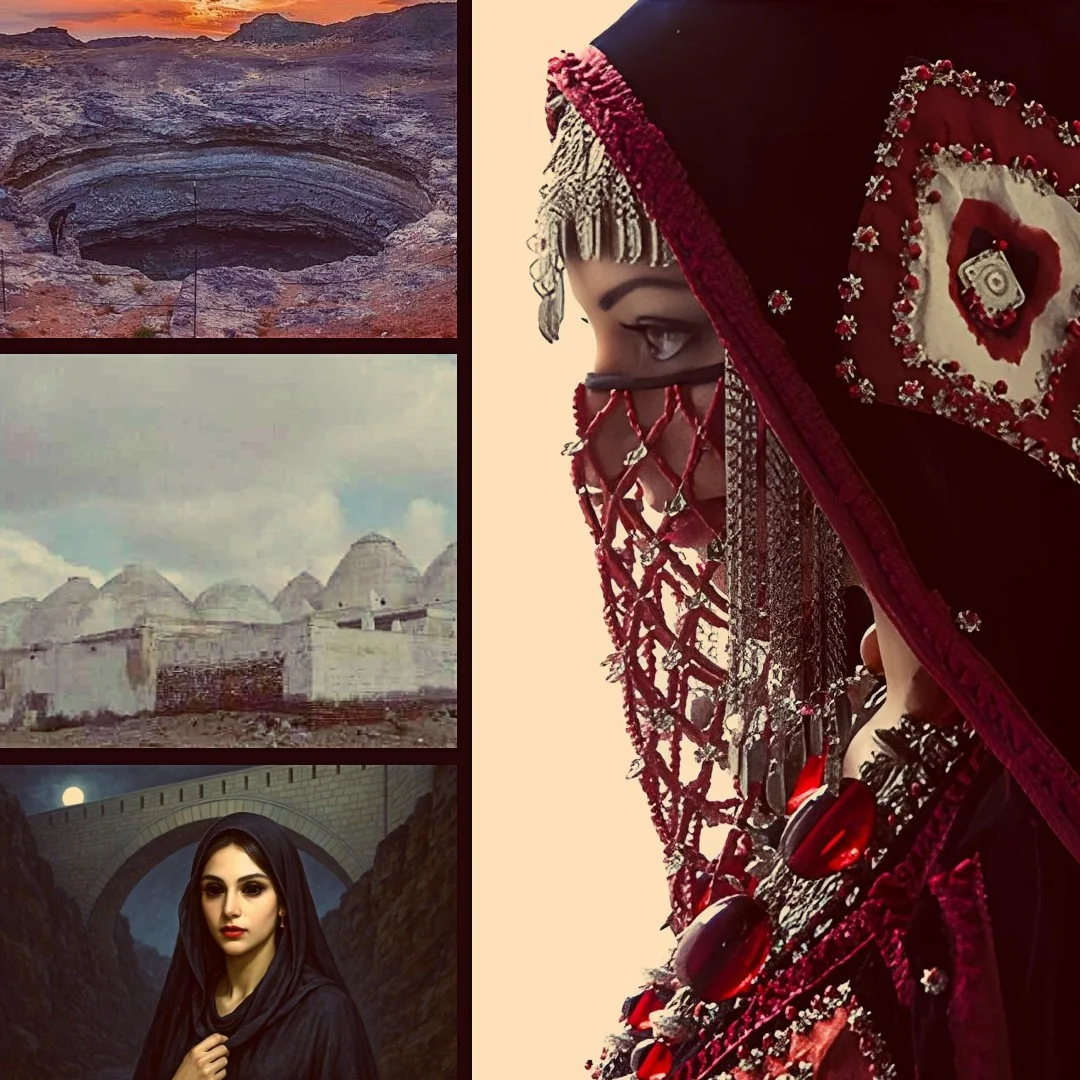
Amid rugged mountains and deep valleys, beneath the shadows of ancient temples that have witnessed the rise and fall of civilizations, Yemen hides a parallel world of legends, mysterious tales, and enigmatic sights that capture the imagination.
This journey is unlike any ordinary sightseeing tour, it's a passage into a land where imposing ruins intersect with stories of spirits and mysterious rituals, weaving together history and the supernatural into a single tapestry.
The Most Notable Jinn Creatures in Yemeni Folklore
The Aqaba Jinni (Aden)
A famous local legend in Aden, especially in the 'Aqaba' or 'Bab Aden' area, tells of a stunningly beautiful girl with the legs of a donkey. She appears at night, luring passersby; some drivers have reportedly stopped just to catch a glimpse, and some claim she waved at them or even got into a car, taking a ride to the so-called 'City of the Jinn' beneath the Haqqat Sea. The story is a longstanding source of fear, fueled by a real incident in the early 1960s when officers were sent into a long-abandoned villa and witnessed objects moving on their own, adding to the legend's mystique. Read more about The Legend of the Aqaba Jinni.
Umm al-Subyan
Umm al-Subyan ,This demonic figure appears in magical texts circulated in rural Yemeni communities. She is described as a hideous jinni with cow's feet, but disguises herself as an attractive woman who appears at night or just before dawn. She is said to abduct men or drive them mad, or even kill those who see her true form, especially children. Some manuscripts mention protective charms and spells written in invisible ink to ward her off.
Al-Sillah
Another female jinn in Arab folklore, said to be masters of disguise who take on a false human appearance, though certain odd features can give them away. They are believed to inhabit deserted deserts, where they mislead travelers, guide them, or even marry humans and bear hybrid offspring.
Abu Fanous
A mysterious light phenomenon seen in the Arabian desert, including parts of Yemen. It appears as a glowing orb or moving light at night or just before dawn, tempting travelers to follow it. The light then vanishes suddenly, leaving people lost in the desert. While some believe it has a natural explanation (such as glowing gases), folklore links it to jinn using it as a means of deception.
Haunted and Mysterious Places Inhabited by Jinn
Yemen's heritage is rich with stories of invisible beings, some benevolent, others malevolent, said to inhabit caves, forgotten valleys, and the ruins of ancient cities. In these folk tales, jinn appear as humans or strange animals, control water or wind, and even guard hidden treasures. Legends tell of jinn abducting travelers on dark nights or leading them astray among the mountains.
Barhout Well: 'The Prison of the Jinn'
In Yemen's eastern Al-Mahra province lies a deep pit known as Barhout Well, or as some call it, the 'Well of Hell.' For centuries, this spot has been shrouded in fear, believed to be home to evil jinn and tormented souls. In 2021, a team of Omani cavers descended into the well for the first time, discovering underground waterfalls, snakes, and animal remains—but no sign of jinn or demons. Still, the legend persists, and people continue to speak of a curse that befalls anyone who comes near.
Ambeikha Cemetery
Located in the heart of Mukalla, Hadramaut, Ambeikha Cemetery is the oldest and largest burial ground in the area, holding significant religious and social importance. However, it’s also known for mysterious legends and unexplained events. Locals have reported animals vanishing, strange lights appearing, and whispers heard after sunset. Some attribute these phenomena to occult rituals or devil worship. One resident recalls the cemetery gate opening on its own, followed by a blast of hot wind that knocked him unconscious. The caretaker refuses to go out at night, citing terrifying noises. Historically, the cemetery is the final resting place for victims of wars and conflicts, and it has suffered damage from floods—factors that have only added to its aura of mystery. Explanations range from people exploiting local fears to the site’s "dark memory" as a witness to tragedy, making it a focal point for paranormal stories.
Tarbeh Mosque: Whispers During Prayer
In Hadramaut, Tarbeh Mosque stands tall amid the sands, a sacred place surrounded by strange tales. Worshippers sometimes hear faint whispers during prayer, seeming to come from all directions, even when the mosque is empty except for them. No one knows the cause, but locals see it as a sign of unseen forces at work.
Awam Temple: A Gateway to Other Realms
Near the city of Marib stands Awam Temple, also known as the "Sanctuary of Bilqis." It’s one of the largest and most awe-inspiring Sabaean temples. The site was once a center for religious rituals, where people sought closeness to their gods. Some believe that rituals resembling "sacred sleep" took place here, with visitors spending the night inside the temple in hopes of receiving visions or messages from beyond. These practices give the temple an otherworldly dimension, making it feel like a bridge between the human world and the spiritual realm.
Ghamdan Palace: The Legend of the Lost Structure
In Old Sana'a, people still tell the legend of Ghamdan Palace, said to have been built by Sam, son of Noah, atop a mountain. The palace was an architectural marvel, towering high with multiple towers. According to the stories, the roars of lions kept inside would echo through the city when the wind blew. The palace was destroyed centuries ago, leaving behind only stories and poetry to keep its memory alive.
Dar al-Hajar: A Fortress Carved from Stone
In Wadi Dhahr near Sana'a, Dar al-Hajar Palace rises dramatically from a massive rock, as if it grew out of the stone itself. Some believe it was built on the ruins of an ancient Sabaean fortress and has witnessed mysterious events, having been rebuilt several times. Its striking architecture and commanding location have inspired tales of supernatural guardians protecting it from total destruction.
The Jinn Mosque in Hodeidah
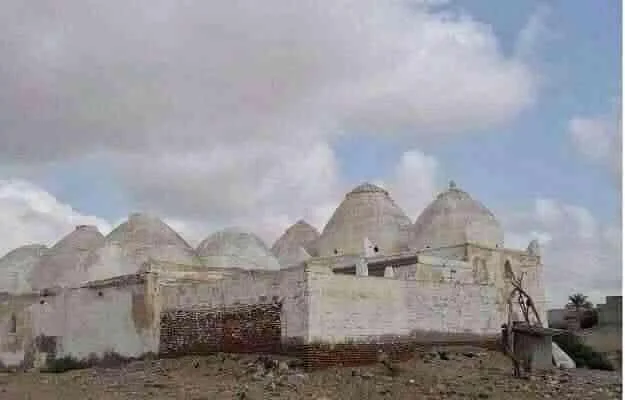
Behind its ancient walls lies the legend that gave the mosque its mysterious name: according to local lore, it was the jinn who completed the southern section of the mosque in a single dark night, after Sayyid Ali bin al-Maqbul had built the first three domes. The story goes that the builders vanished before dawn, leading locals to believe they were supernatural beings, especially since the work was finished at an incredible speed.
But behind this supernatural tale is a more down-to-earth version: local sources say a group of Indian pilgrims stopped in the area and offered to expand the mosque at their own expense. After some negotiation, they agreed to work for a fee but left before collecting their payment, prompting locals to weave a legend around their sudden departure. Even though some residents dismiss the fantastical story, the name 'Jinn Mosque' has stuck, adding an enduring air of mystery and intrigue to the site.
Magic Rituals: Summoning Spirits and Protection
Zar Rituals
Zar rituals in Yemen, especially in Aden and Taiz, zar rituals are among the most prominent inherited magical and spiritual practices. They blend mysterious spiritual healing with rhythmic musical performances, aiming to reconcile with what are believed to be spiritual entities inhabiting a person, often women and causing illness or psychological distress. The ritual is led by a 'za'ara' and includes reciting the Fatiha, burning pure incense to attract spirits, and covering the head with cloth to trap the smoke, which is then passed under the arms, between the legs, and around the feet. Participants dance rhythmically around the possessed person to the beat of drums and songs. Offerings such as eggs, dates, food, or even blood may be placed in the center of the ritual, sometimes leading the participant into a trance-like state. The goal is believed to be either expelling the troubling spirit or reaching an understanding with it.
The Magic Seven – Talismanic Inscriptions
In the city of Al-Jabin and the western highlands, inscriptions have been found on the remains of water cisterns, featuring magical symbols from the book 'Shams al-Ma'arif 'by Ahmad al-Buni. These include seven magical signs believed to have the power to summon and protect, used for purposes such as safeguarding water supplies or warding off evil.
Magic Rituals among Yemen's Jews
In Yemeni folklore, the term 'al-Bahud' refers to a group of Yemeni Jews who, according to tradition, were known for their special knowledge of magic, spells, and spiritual healing. This reputation is rooted not just in imagination, but in centuries of coexistence and cultural exchange between Muslims and Jews in cities, markets, and mountain villages. Stories tell of some Bahud being called upon to break curses or create protective amulets, and of their possession of ancient books written in Hebrew and Musnad scripts, filled with symbols and talismans believed to summon hidden powers or ward off harmful spirits. Their rituals often involved special incense or writing with ink mixed with the blood of a bird or animal—practices described in folklore as secrets 'understood only by the Bahud.' In some villages, tales persist about houses once inhabited by Jews and later abandoned, rumored to be haunted by jinn guarding buried treasures. Other stories link the names of old Yemeni rabbis to their skills in spiritual healing or breaking the evil eye, blurring the line between healer and mystical sorcerer in the popular imagination.
The Repentant Yemeni Sorcerer: From the World of Magic to the Drama of 'Al-Maddah'

The Story of the Throne of Bilqis
The account of the Queen of Sheba’s throne being brought to the Prophet Solomon, as described in the Quran’s Surah An-Naml, stands out as one of the most supernatural episodes in tradition. Solomon was offered the throne’s transport by a powerful jinn in a short span of time. But someone 'who had knowledge of the Book' brought it instantly, 'before Solomon could even blink', in a scene that seems to defy the laws of time and space. Despite the story’s fame, ancient Sabaean inscriptions do not mention the name Bilqis, perhaps due to variations in her historical names, lost records, or the political nature of the inscriptions, which may have avoided referencing a queen’s submission to another king. This gap between the supernatural narrative and the archaeological record only adds to the story’s mystery and allure, making it a subject of ongoing debate among scholars and historians.
A Land Where Legend and Reality Meet
Yemen is more than just a country rich in antiquities; it is a mosaic of beliefs and legends, where fact and fiction intertwine, ruins blend with rituals, and breathtaking landscapes are woven with tales of the supernatural. In this land, it’s often impossible to tell whether what you see is part of history, or part of another world that occasionally reveals itself.
About the Author