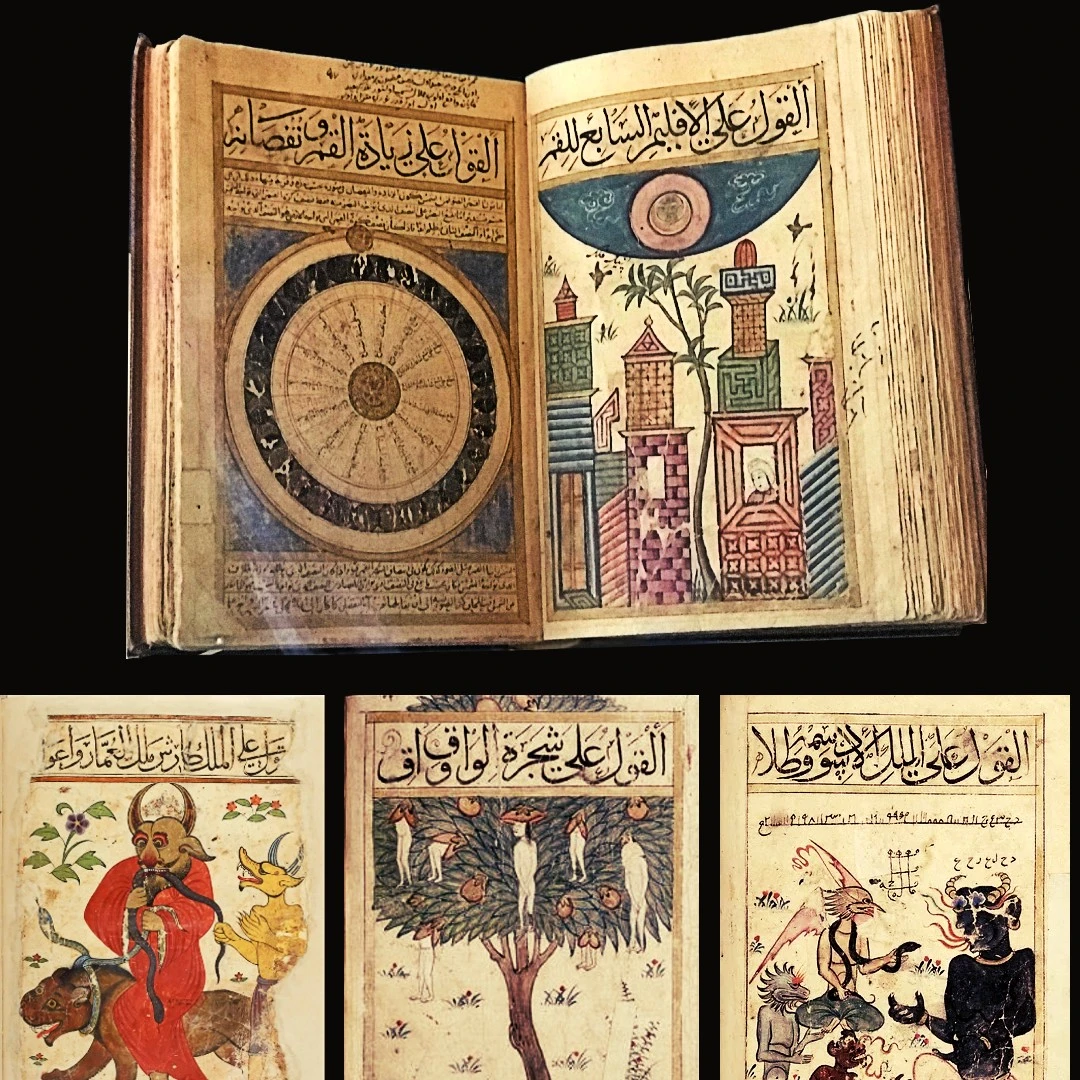
In the history of Arab-Islamic culture, there are books that defy easy categorization, they’re not strictly religious, scientific, or purely literary. The Book of Al-Bulhan is one such enigmatic work, straddling the line between knowledge and imagination, between the desire to understand and the fascination with the strange. Often classified as a "book of wonders," it actually serves as a mirror reflecting the mindset of an entire era, rather than simply being a manual of magic or a guide to the supernatural.
What is the Book of Al-Bulhan?
The Book of Al-Bulhan is an illustrated Arabic manuscript from the late 14th century, copied in Baghdad during the Jalayirid dynasty and attributed to Abd al-Hasan al-Isfahani. Rather than a single-authored text in the modern sense, it’s a carefully curated collection of diverse knowledge—astronomy, astrology, stories, geographic marvels, and illustrations of prophets, kings, jinn, and strange creatures. The title itself, Al-Bulhan, suggests amazement and wonder, not madness. From the outset, the compiler signals that readers are about to enter a world beyond the ordinary.
A Book or a Miniature Library?
Al-Bulhan doesn’t follow a single narrative thread. Instead, it’s made up of independent sections, each with its own unique world:
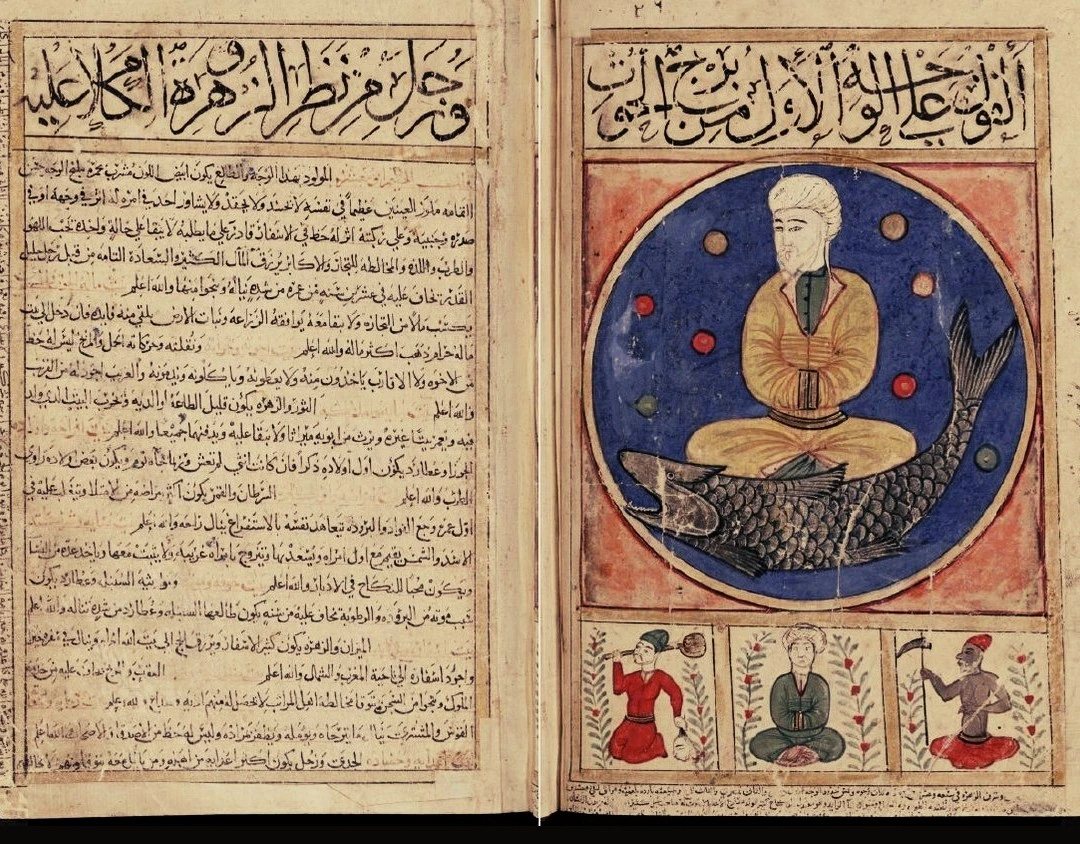
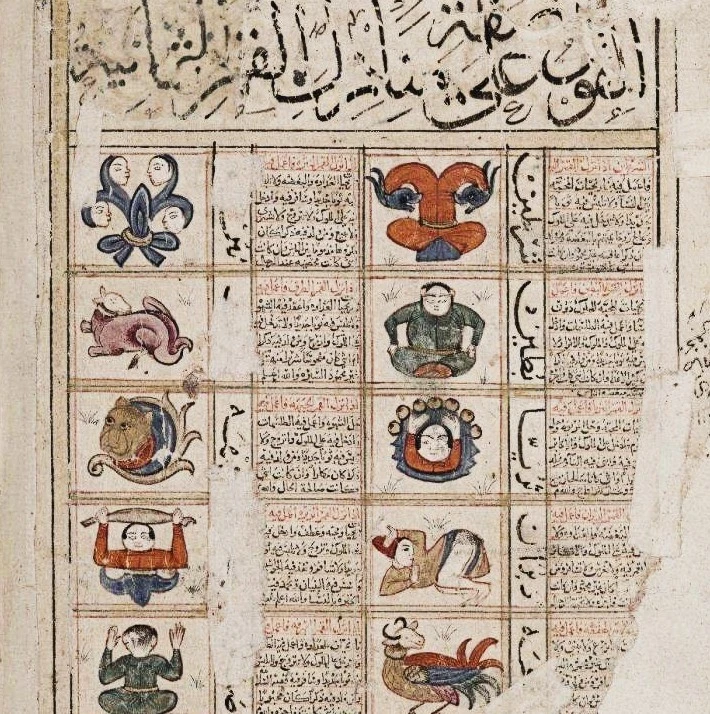
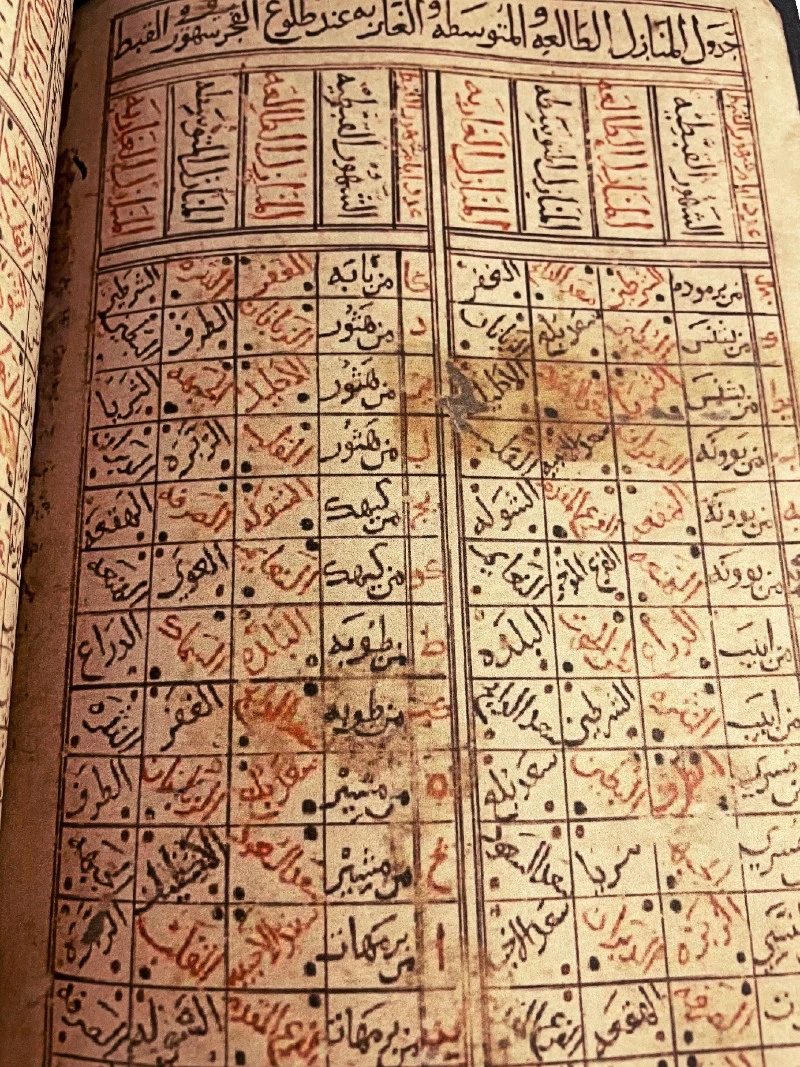
1. Astronomy and Astrology
This section features illustrations of planets and zodiac signs, along with astronomical diagrams influenced by the legacy of Abu Ma'shar al-Balkhi. Here, astrology and astronomy are treated as respected sciences of the time, used to interpret fate, time, and the influence of the stars—not as popular magic.
2. Marvelous Geography
The book transports readers to the edges of the imagined world—distant islands, strange peoples, and places absent from any real map. The most famous are the Waqwaq Islands, where, according to legend, fruits grow in the shape of women's heads that cry out "Waq" when ripe. These tales weren’t just for entertainment; they filled the gaps in the maps of the era, offering explanations for the unknown.
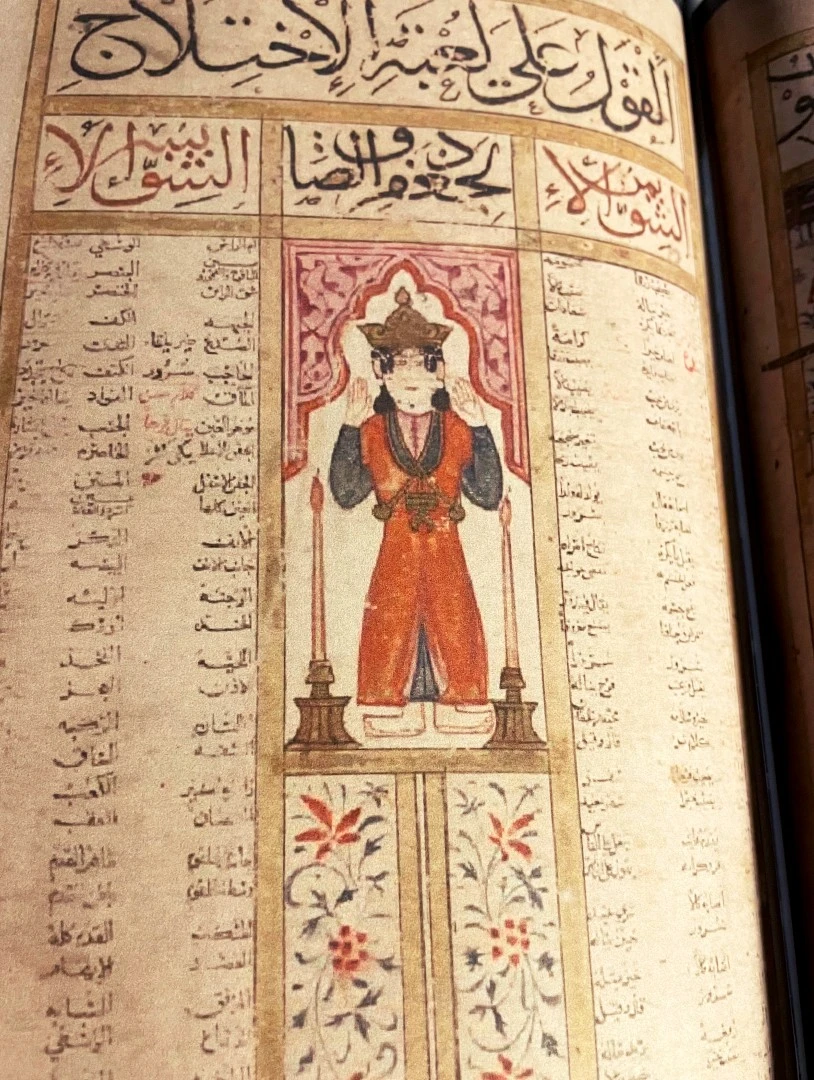
3. Prophets and Kings
Here you’ll find illustrations of figures like Alexander the Great, the Prophet Solomon, the Prophet David, and other legendary or semi-historical characters. These images aren’t presented as religious icons, but as part of a broader cosmic narrative that weaves together history and marvels.
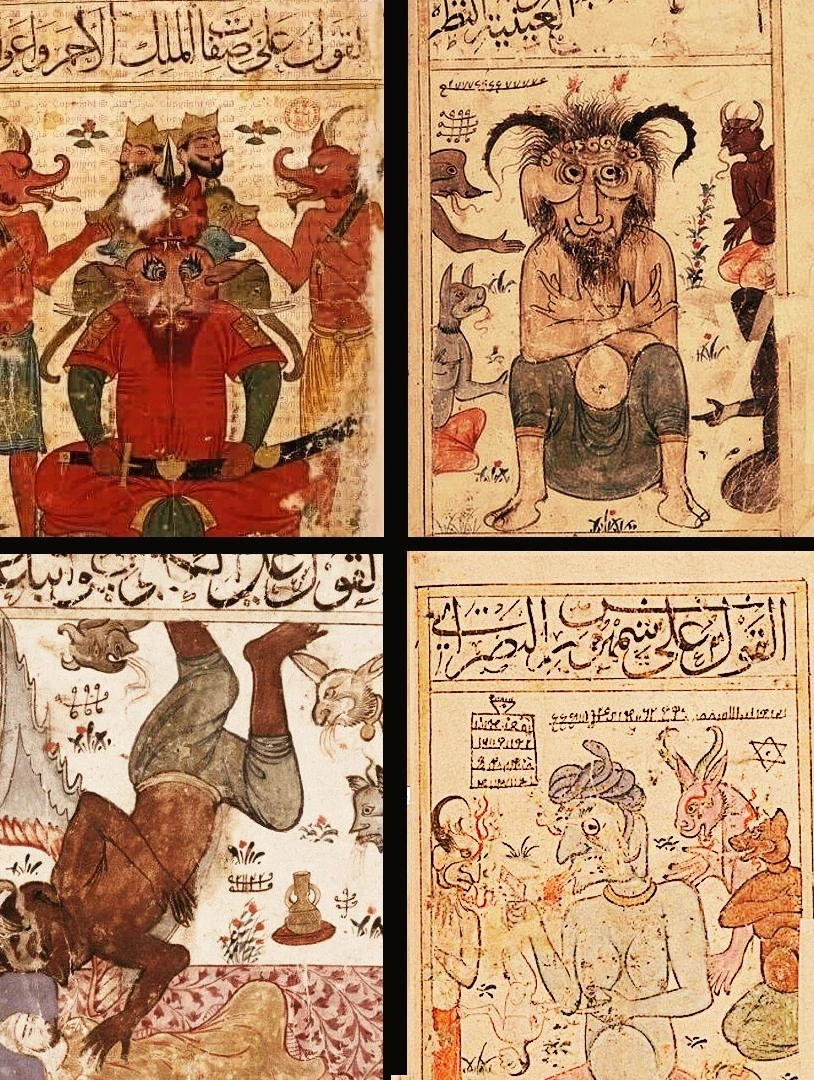
4. Jinn and Non-Human Creatures
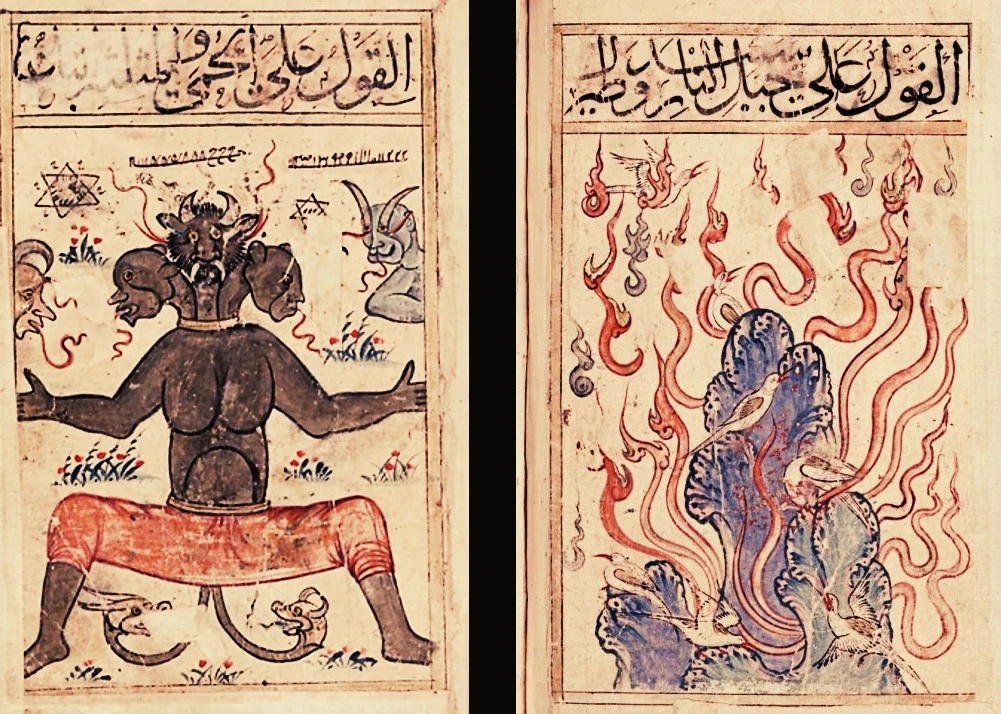
This is perhaps the most controversial and intriguing part of the book:
- Kings of the jinn associated with days of the week
- Colorful demons with specific names and forms
- Beings that are half-human, half-animal
What stands out is the absence of spells or summoning rituals. The images are descriptive, not instructional.
The Illustrations: The True Heart of the Book
If you removed the text and left only the illustrations, the essence of the Book of Al-Bulhan would remain intact. The drawings aren't just decorative, they're foundational. They are the primary language through which the manuscript speaks to its reader. Strange-faced creatures, colorful demons, kings of the jinn, distant cities, and legendary geographies, all rendered in a simple yet striking style. These images don't aim to frighten or convince the viewer of their reality; instead, they present the unseen as something 'depictable.' This is the boldness of Al-Bulhan: it transforms the unknown into an image, giving shape to the invisible—something you can look at for a long time without fear.
Is it a Book of Magic?
This question has haunted the Book of Al-Bulhan for centuries and is perhaps the source of its greatest misunderstanding. The book contains no recipes, spells, or instructions for summoning or controlling jinn. It doesn't speak with the voice of a magician, but rather that of an observer. The jinn appear as part of a cosmic order, not as tools for human use. Some may confuse Al-Bulhan with books like Shams al-Ma'arif, but there's a crucial difference: Shams al-Ma'arif is a manual for practice, while Al-Bulhan is a book of observation.
The difference between Al-Bulhan and practical magic books is that the former describes the unseen world as imagined, while the latter attempt to intervene in it. Labeling it as a 'book of sorcery' is a modern projection, rooted in contemporary anxieties about anything that visually represents the supernatural.
Al-Bulhan Through the Eyes of Orientalists
When Orientalists first encountered the Al-Bulhan manuscript, they didn't see it as a book about jinn, but as a rare cultural document. What fascinated them wasn't just the strangeness of its creatures, but the way the universe was organized within its pages. They saw evidence of a mind that blended Greek, Persian, and Islamic heritage into a unique visual form. Modern scholarship treats Al-Bulhan as a key to understanding pre-modern Islamic imagination, not as 'superstitious,' but as an imagination that filled gaps in knowledge through images and storytelling.
The Book of Al-Bulhan is a testament to how medieval Muslims envisioned the world, and to the interplay of science and myth. That's why copies have been preserved in major libraries, most notably the Bodleian Library in Oxford, along with later Ottoman versions that reorganized and expanded its content.
Why the Renewed Interest Today?
The recent resurgence of interest in the Book of Al-Bulhan isn't just about digitized manuscripts or easy access to images, it's also about how our perspective on the past has changed. For today's reader, living in an age of hyper-rationality, Al-Bulhan offers a window into a time unafraid to imagine the unknown. Modern pop culture, obsessed with myths and parallel worlds, has rediscovered these books as sources of inspiration rather than guides for belief or practice. In this way, Al-Bulhan has moved from library archives back into the cultural conversation.
In the end, the Book of Al-Bulhan is neither a marginal artifact nor a fleeting visual curiosity. It's a testament to a historical period when the unseen was part of how people thought about the world, not its opposite. It represents the medieval Muslim's attempt to understand the incomprehensible through drawing, storytelling, and collection. Yes, it's a book about jinn but more than that, it's a book about humanity facing the unknown, choosing to depict it rather than deny it. In this sense, Al-Bulhan tells us less about the jinn and more about ourselves.
The Book of Al-Bulhan isn't a manual for contacting jinn, nor a magic encyclopedia, nor just a collection of stories. It's a rare work of art that brings together science, myth, and illustration in a single volume and above all, it stands as a silent witness to an ancient question:
How do we make sense of the world when we lack the tools to explain it?
That question is the very soul of the Book of Al-Bulhan.
About the Author