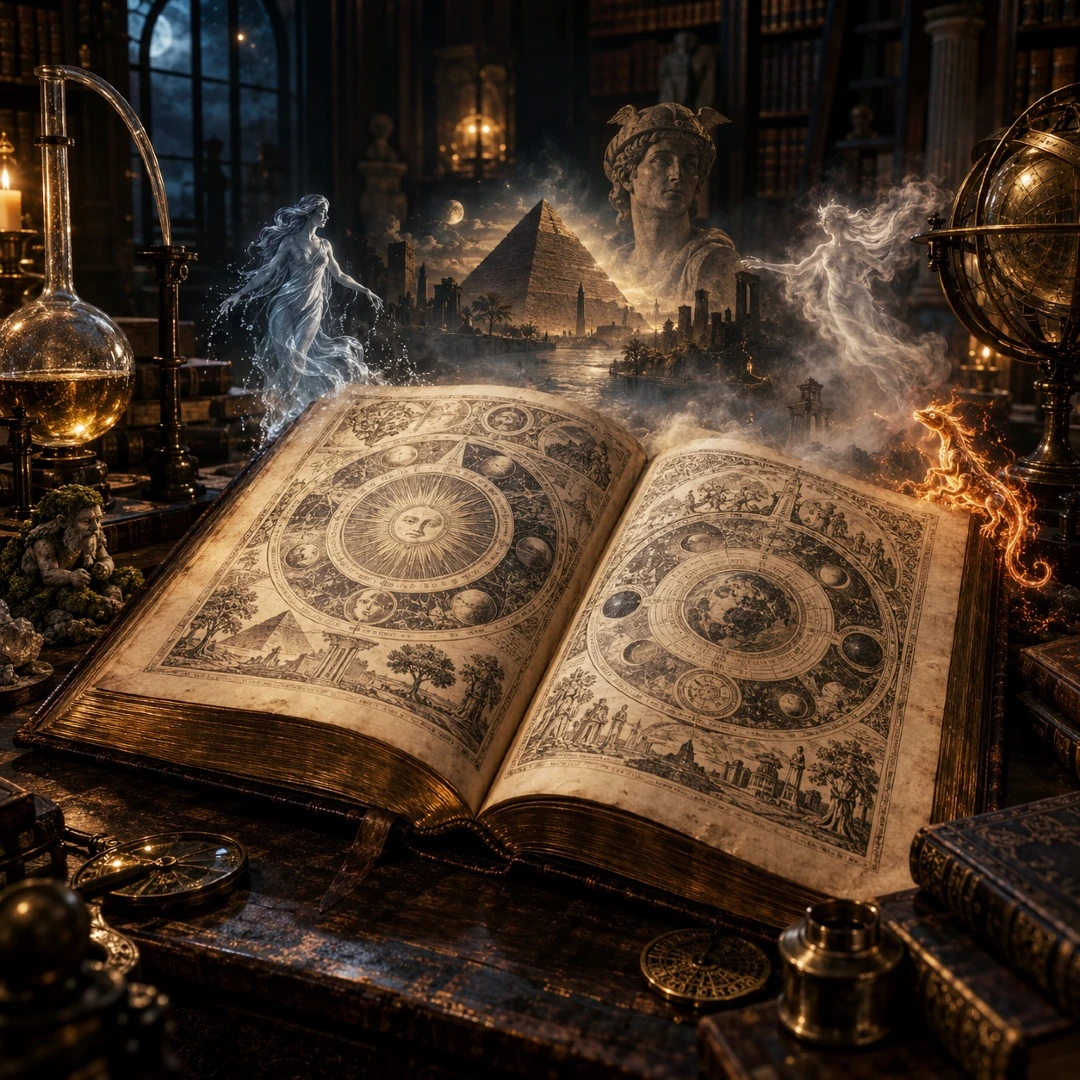
Deep within the Great Pyramid, where stone corridors lead toward hidden knowledge, a story unfolds. Manly Palmer Hall describes a mysterious figure dressed in blue and gold, holding a seven-branched key. In his vision, the pyramid becomes a place of rebirth: one enters with limited understanding and emerges transformed, with a new relationship to oneself and the world.
This is a scene from the book "The Secret Teachings of All Ages", not an account of an archaeological discovery. From the outset, it reveals the nature of the journey the book promises: meaning lies behind the structure, wisdom behind the myth, and a secret waits to be uncovered behind the familiar image.
Did its author truly gather the keys to wisdom passed down through civilizations, or did he simply weave together distant beliefs into what appears to be a single story?
A young man before a library of secrets
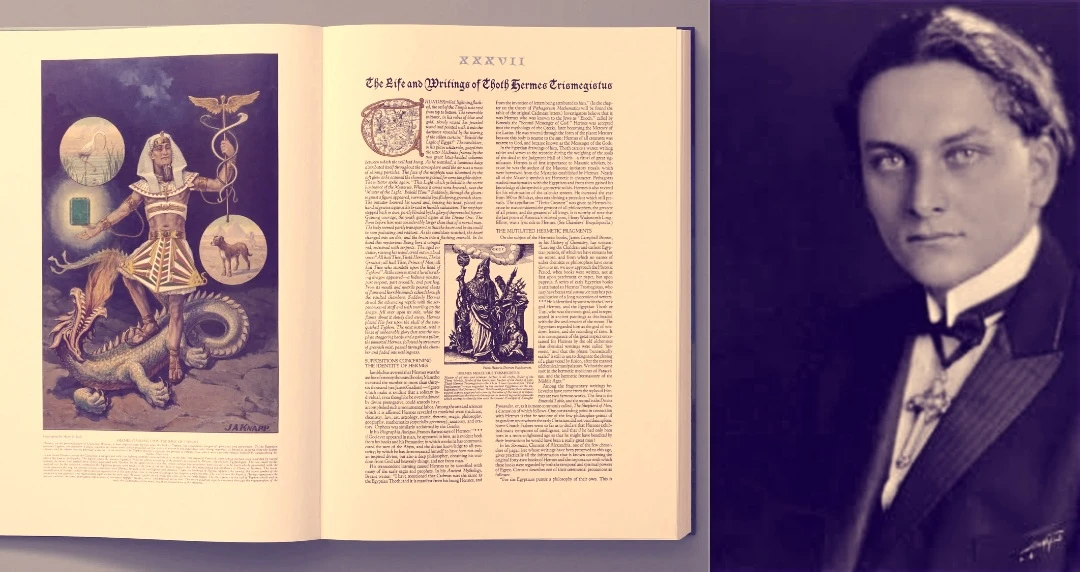
Published in "The Secret Teachings of All Ages" appeared in 1928, when its author, Manly Palmer Hall, was just twenty-seven. Born in Canada in 1901, Hall became known for his lectures and writings on esoteric symbols and philosophies. Largely self-taught, he devoted his life to exploring the deeper meanings within the world's cultural heritage. In 1934, he founded the Philosophical Research Society in Los Angeles, which he led until his death in 1990.
According to the book's introduction, it didn't come together overnight. Hall began gathering sources in 1921, developed his plan three years later, and started writing in early 1926. He drew on libraries, translators, and editors, while advance subscriptions from readers helped fund the printing. Behind this volume about the secrets of sages lies a very human story: years of reading, help from others, and an ambition that required money, paper, and illustrations to become a reality.
The subtitle makes Hall's project even clearer than the famous main title: "An Encyclopedic Outline of Masonic, Hermetic, Qabbalistic and Rosicrucian Symbolical Philosophy."Freemasonry Hermeticism, and Kabbalah and the traditions of the Rosicrucians, it's a vast scope, but it also reveals Hall's perspective: the world is interpreted through schools of thought that seek hidden meaning in symbols, rituals, and myths.
When the world becomes a code waiting to be cracked
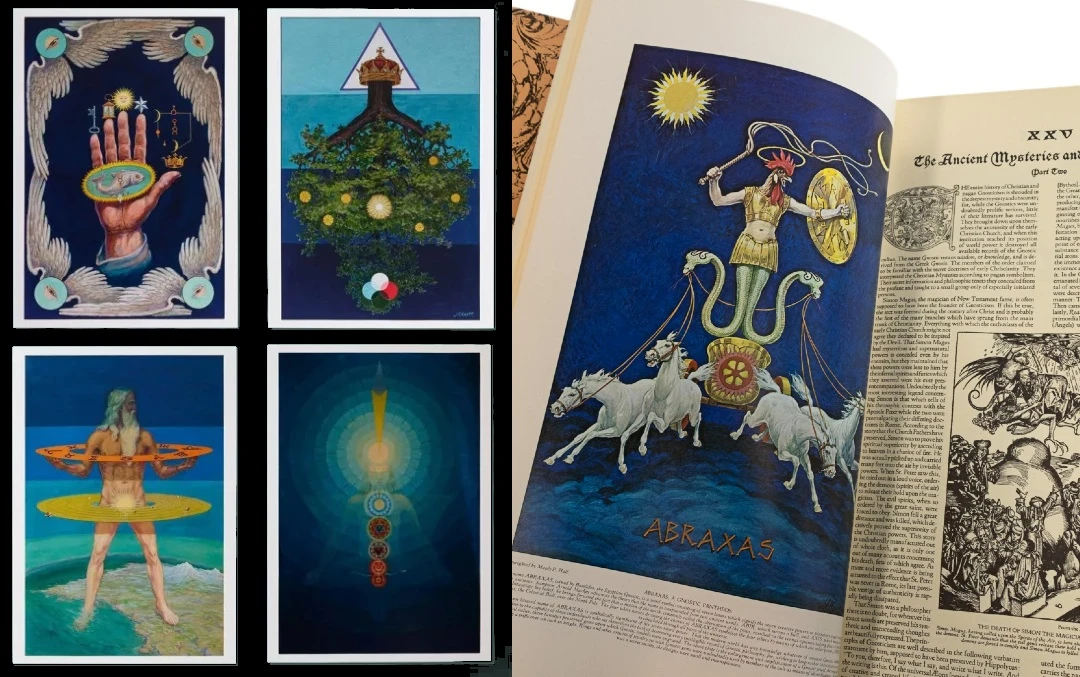
In the context of this book, esoteric reading refers to the belief that things hold a deeper, hidden meaning beyond their surface. For example, while one person might see a simple drawing of the sun, an interpreter might view it as a symbol of knowledge or life. A story about death and rebirth could be read by someone else as a metaphor for the journey from ignorance to understanding.
The book’s table of contents brings together topics that might seem unrelated: ancient Egypt and Atlantis, numerology, the symbolism of plants and animals, alchemy, tarot, and secretive societies that guarded their knowledge. By placing these subjects side by side, the reader is encouraged to look for connections that transcend time and place.
The appeal of this approach lies in how it gives new life to details, but it also raises an important question: how can we be sure that the meaning we discover was truly intended, and not something we’ve projected onto the image ourselves?
The pyramid: between stone and interpretation
This question is especially relevant in Hall’s reading of the Great Pyramid, where he assigns it a role connected to initiation—the process of introducing a seeker to secrets not revealed to everyone. Hall interprets the journey through the pyramid’s chambers as a symbol of inner transformation, turning the structure into a stage for spiritual experience, with its darkness representing the phase before enlightenment. In contrast, archaeological descriptions place the pyramid firmly in its royal funerary context: it is Khufu’s pyramid, with chambers, corridors, and a sarcophagus, part of an Old Kingdom construction project, and officially recognized by Egypt’s Ministry of Tourism and Antiquities as the king’s tomb.
This doesn’t rule out studying the religious and symbolic meanings of Egyptian architecture, but it doesn’t make Hall’s initiation narrative a proven fact. There’s a big difference between saying a building held sacred meaning and claiming that specific rituals took place inside its chambers—imagination alone can’t bridge that gap.
This distinction becomes even more important when a scene in the book captivates us: vivid descriptions can make us feel as if we’re witnessing an event, but that doesn’t mean it actually happened.
Hermes: the name that carried the promise of ancient wisdom
From the pyramid, the reader moves on to Hermes The figure known as the 'Thrice-Greatest,' associated with the Egyptian Thoth and the Greek Hermes, is surrounded by a legacy attributed to him—one that explores the universe, knowledge, and the divine. In this world, Hermes becomes a symbol for the longing to reclaim a lost wisdom, traces of which remain in ancient texts.
Yet the history of these writings is more precise than the legend of their supposed author. The collection known as the Corpus Hermeticum, according to the Cambridge reference, dates back to the second and third centuries CE. These texts are not treated as the authenticated works of a single individual from Pharaonic Egypt, but rather as products of a milieu where multiple cultures intersected and new ideas emerged.
Still, the belief in their antiquity had a profound impact. When a set of these texts arrived in Florence in the fifteenth century, Cosimo de’ Medici instructed translator Marsilio Ficino to prioritize them over Plato’s works. This episode alone illustrates the powerful promise these writings held: perhaps here was knowledge even older than Greek philosophy, worth delaying Plato for. (Cambridge: Hermeticism in the Renaissance)
The Gold Within
In the chapters on alchemy, the quest for wisdom takes on a different form. Alchemy is a tradition focused on the transformation of materials, famously seeking to turn base metals into gold and to discover substances that could heal or prolong life. But Hall also connects material transformation with spiritual renewal; in his interpretation, purifying matter mirrors the purification of the human soul.
In this sense, gold becomes a symbol of the perfection we strive for, and the long hours spent at the furnace reflect an inner process of self-refinement. This perspective helps explain why those fascinated by symbolism are drawn to alchemy: it offers a way to see humanity as a work in progress, not yet complete.
However, not all of alchemy’s history fits this interpretation. Alchemists worked with metals, heat, distillation, and medicines, conducting real experiments with tangible goals. The collections at the Institute for the History of Science present this world as part of the experimental tradition that eventually led to modern chemistry. So, the image of the alchemist can represent both a real laboratory and a spiritual metaphor, one layer of meaning shouldn’t erase the other.
Who inhabits earth, water, air, and fire?
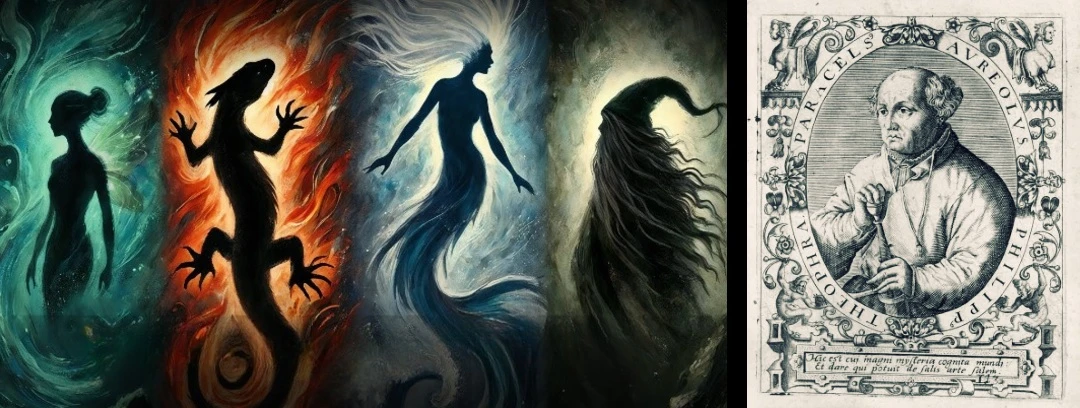
Some chapters of the book move from philosophical reflection into the realm of hidden beings. In the section 'The Elements and Their Inhabitants,' Hall presents a view attributed to Paracelsus, the physician and alchemist, describing creatures linked to the four elements of nature.
Earth is home to beings known as 'gnomes,' often depicted as dwarves; water to 'undines'; air to 'sylphs'; and fire to creatures called 'salamanders', here referring to mythical fire spirits, not the animal with the same name.
According to Hall’s account, these beings exist in realms beyond ordinary human perception, making nature a place teeming with hidden life, much of which remains unseen by humans.
This might remind readers of legends about the spirits of springs and mountains, or creatures that dwell at the edge of the known world. But similarity doesn’t mean these beliefs are identical, nor does it justify equating these beings with jinn in Islamic tradition. What they share, at the level of storytelling, is humanity’s curiosity about what might exist beyond our sight; their origins and religious significance, however, are unique to each context.
A Door Opens After 120 Years
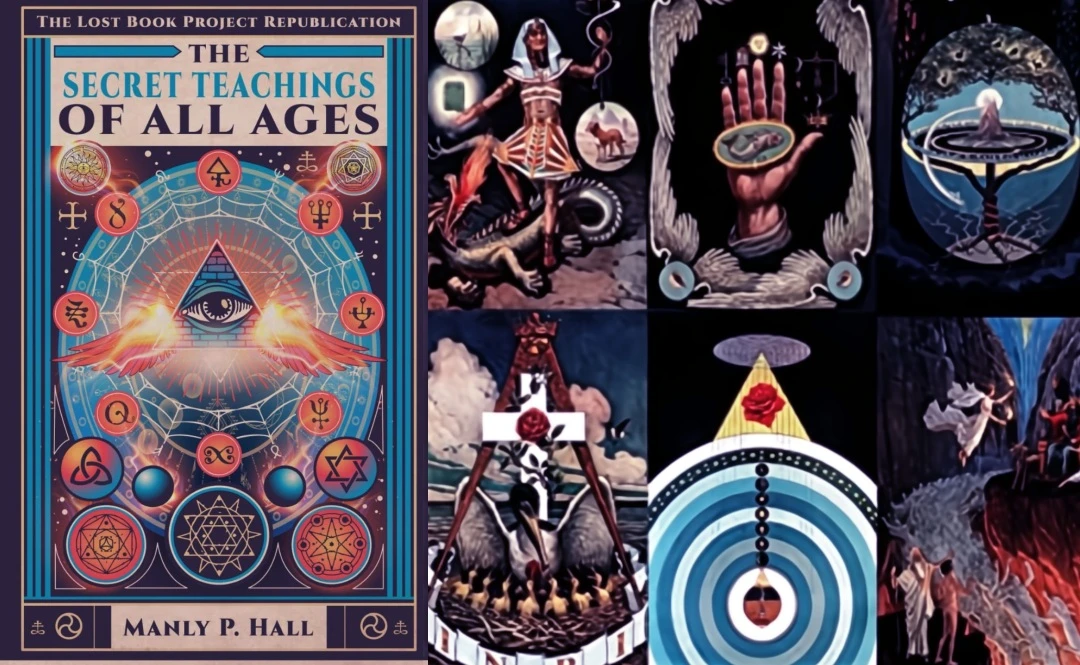
One of the book’s most intriguing tales concerns Christian Rosenkreuz, the foundational figure in Rosicrucian literature. Hall recounts how renovations led to the discovery of a hidden entrance, behind which lay a burial chamber marked with symbols. Inside was a body, preserved for 120 years, along with a mysterious manuscript.
This story weaves together elements that are hard to resist: 'knowledge hidden from the world,' a place waiting for its time, and a dead man who seems to guard a secret beyond the grave. Yet its source is the literature of the Rosicrucian order, and Hall’s presentation doesn’t claim it as an archaeological fact. Instead, he opens with questions about the identity, organization, and founder of the Rosicrucians. (Rosicrucian Brotherhood)
Here, one of the book’s key principles emerges: a text may show that a group told a story about itself, but the events in that story still require independent evidence. Legends can reveal the hopes and self-image of their creators, even when there’s no proof they actually happened.
Tarot: Was the Secret There from the Beginning?
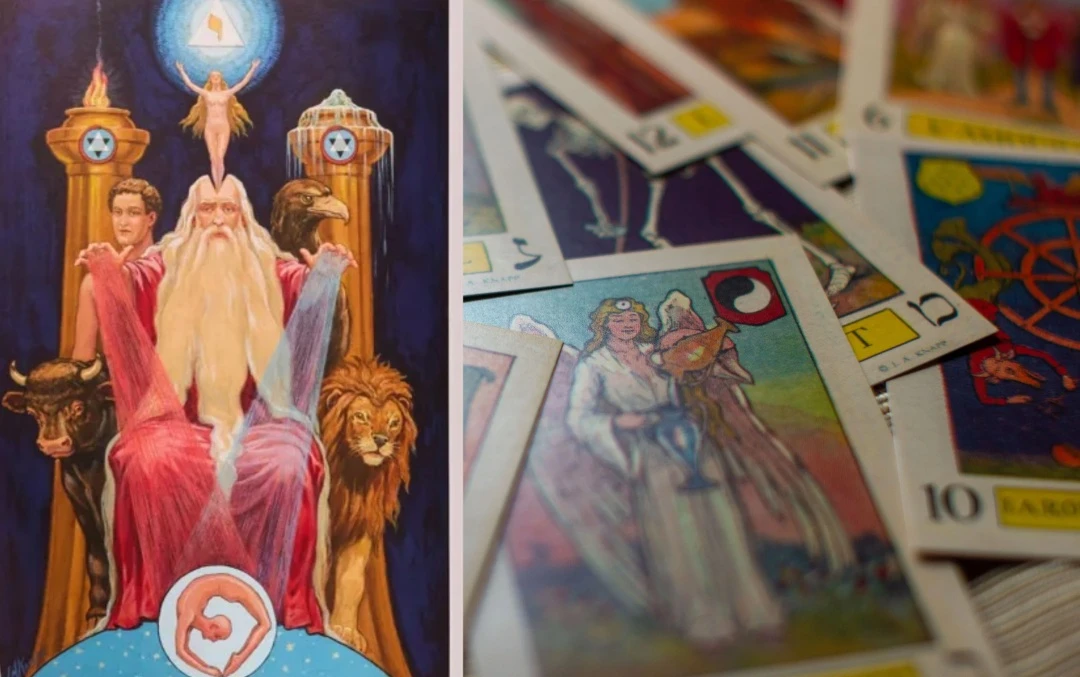
Hall devotes a chapter to analyzing tarot cards, using them as a case study for how meanings accumulate around images. A card depicting a character or scene can be interpreted as a symbol of human destiny or a stage in one’s journey.
However, museum records document Italian tarot cards from the fifteenth century and show that tarot was originally a game, only later becoming associated with fortune-telling and esoteric secrets. The presence of symbolic images alone isn’t enough to prove that tarot was designed as a vessel for hidden wisdom.
This doesn’t dismiss later interpretations as part of the history of ideas, but it does shift the question: Is the interpreter explaining the card maker’s original intent, or building a new system on top of it? Often, the most intriguing story is not the secret an object held from the start, but the meaning it acquired over time.
Hall’s Paradox and Freemasonry
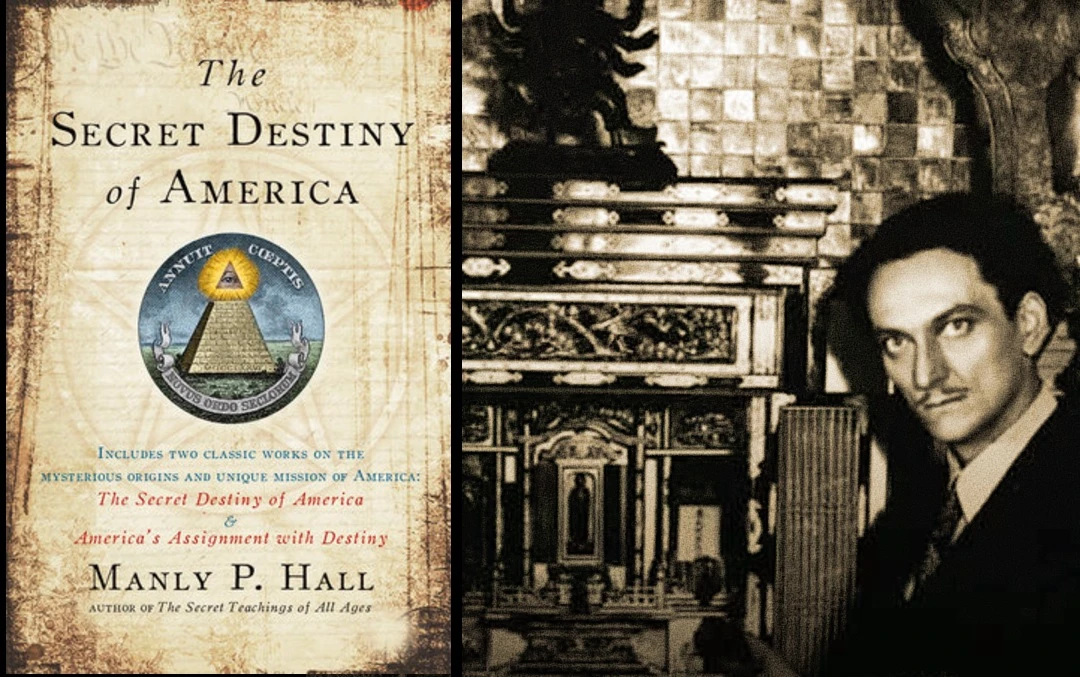
Some readers might see the book’s topics as a revelation of secrets Hall learned through his Masonic connections. Yet the timeline reveals an important twist: the book was published in 1928, while Hall joined the Freemasons in 1954, twenty-six years later, and received the honorary thirty-third degree in 1973.
His interest in Masonic symbolism predated his membership, so it’s inaccurate to present the book as confessions written from the perspective of a high-ranking Mason. According to Masonic sources, his interpretations don’t represent official doctrine.
This detail reminds us not to read the past through titles someone earned later in life. The Hall who wrote the book as a young man was not the same, in terms of affiliations and status, as the Hall people came to know decades afterward.
When Images Give Ideas a Body
The book’s appeal is inseparable from its illustrations. The introduction thanks artist John Augustus Knapp and typographer John Henry Nash, highlighting the care taken to produce a work worthy of the author’s ambitions.
Images allow readers to see what’s hard to imagine from words alone, but they can also lend a story an extra sense of reality. A modern painting of a ritual said to be ancient is still just an artist’s or source’s interpretation, not a witness from that era. That’s why it’s essential to read the accompanying commentary and dates, rather than relying solely on the power of the image.
So how should we read it, after all this?
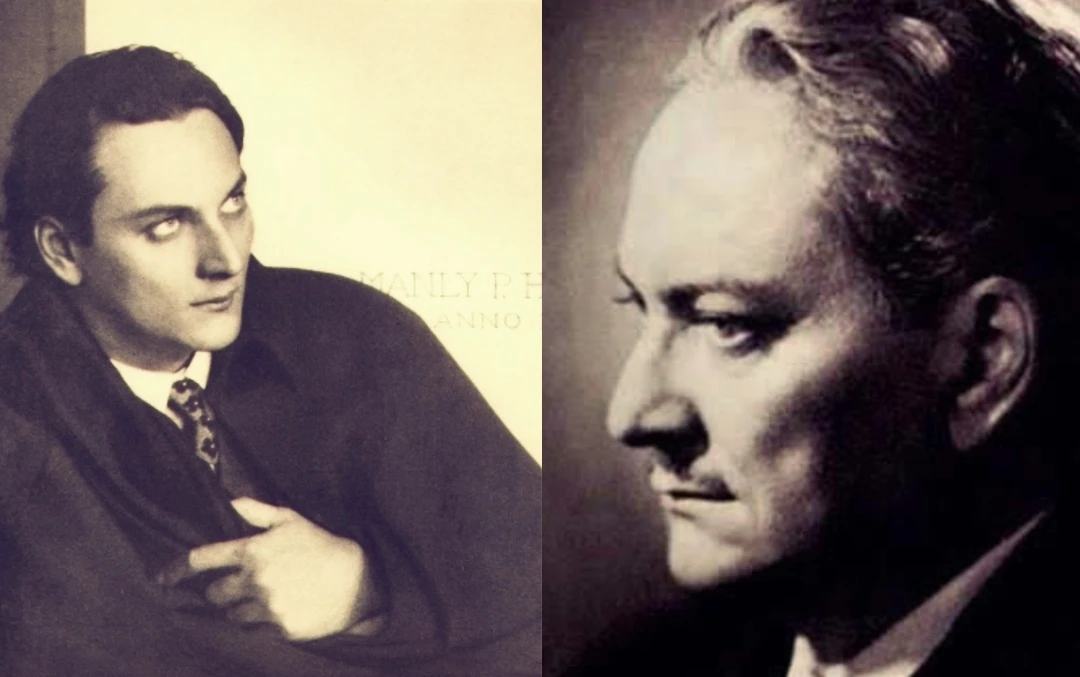
In his introduction, Hall admits he doesn’t claim infallibility or originality for all his statements, and he sets out a philosophical aim that goes beyond a purely material perspective. This honesty helps clarify his project, but leaves it to the reader to scrutinize the historical and factual details.
The book can be appreciated as an ambitious collection of symbols and interpretations, and its stories and images are enjoyable in their own right. But it’s important to keep clear distinctions between myth, belief, and documented fact. Similarities between symbols are worth questioning, but proving that a secret passed from one civilization to another requires more than just resemblance.
Perhaps the real strength of "The Secret Teachings of All Ages" lies in how it draws attention to a deep human desire: the hope that the world is more than what we see, and that familiar things hold meanings we haven’t yet discovered. Hall offers a library of images and stories to feed this longing, but it’s up to the reader to discern what these tales reveal about the past, and what they reveal about our own fascination with the unknown.
About the Author