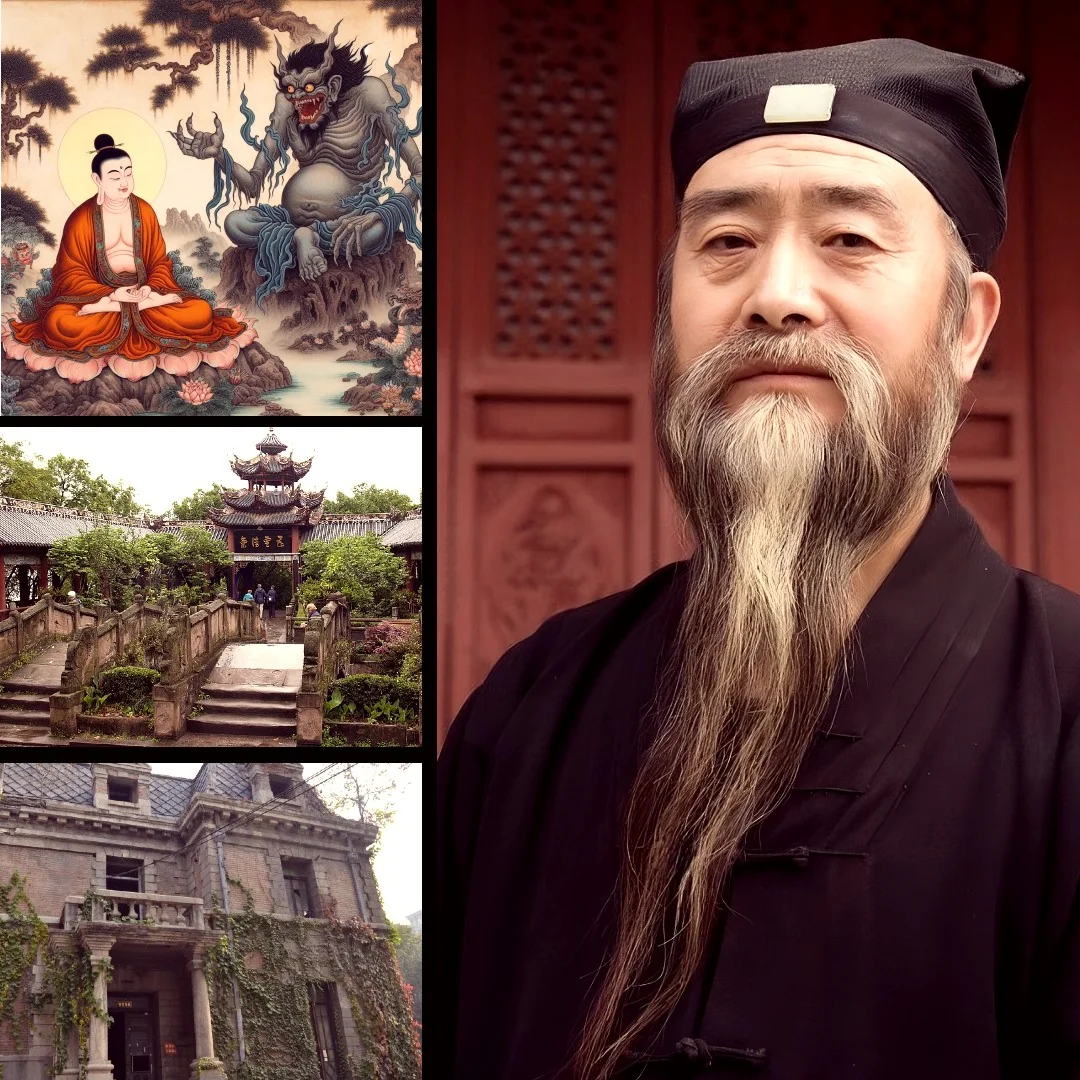
China is renowned for its rich tapestry of supernatural folklore, where ancient legends blend seamlessly with major religions like Taoism and Buddhism. This fusion has created a world teeming with spirits, mysterious creatures, and enigmatic rituals.
Despite sweeping political and social changes, China still preserves a treasure trove of stories and sites that spark the imagination and invite questions about the paranormal. From the Ghost Festival held during the seventh lunar month to shamanic rituals in rural villages, the country feels like an open book bridging two realms: the world of the living and the world of spirits.
The Cultural Revolution and the Attempt to Eradicate the Paranormal
Between 1966 and 1976, Mao Zedong launched the Cultural Revolution, targeting what he called "feudal superstitions." Temples and shrines were destroyed, and practices like fortune-telling, feng shui, and ancestor worship were banned. Slogans such as "Trust in science, not in ghosts" became widespread, and folk traditions were suppressed as backward. Intellectuals and dissidents were even labeled "monsters and demons" as a form of political shaming. Yet, the Cultural Revolution failed to uproot deep-seated beliefs in the supernatural; instead, these traditions went underground. With China's opening up in the 1980s, old customs resurfaced, temples were rebuilt, and rituals once again became part of public life.
Legends and Beliefs
Hungry Ghosts
One of the most striking supernatural concepts in Chinese culture is the Hungry Ghosts (Èguǐ 餓鬼). These are the spirits of people who died violently, were denied a proper burial, or whose families failed to offer them sacrifices after death. They are depicted with swollen bellies and tiny mouths that can never be satisfied, symbolizing eternal hunger. It's believed that they wander at night searching for food or incense smoke to consume. This is why the Hungry Ghost Festival, held during the seventh lunar month, is so important, offerings of food and incense are placed in streets and temples to appease these spirits and protect the living.
The Legend of Bodhidharma
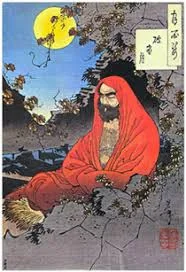
This claim shocked his followers, who decided to open his grave to investigate. When they did, they found it completely empty except for one sandal, the other sandal was the one the official had seen in Bodhidharma's hand. This story left a lasting impression on the Chinese imagination, seen as proof that the master had not truly died, but had journeyed to another realm or attained a state beyond human limits.
Tulpa
The concept of tulpa Originally rooted in Tibetan Buddhism, the concept later resonated with Chinese thought, especially within Taoist and Buddhist mysticism. A tulpa is a mental entity or 'imagined being' believed to be created through intense concentration and meditation. In spiritual circles, a tulpa is seen as a manifestation of powerful thought, capable of separating from its creator and existing with a degree of independence.
In China, this idea became linked to concepts like 'manifested intention' or 'the power of the mind.' Stories emerged of Taoist monks projecting images from their consciousness that appeared to others as real entities. This notion overlaps with tales of fox spirits and other beings born from collective belief, making the tulpa a fascinating example of how psychology and the supernatural intertwine in Chinese folklore.
Wudang Mountains – Hubei
The birthplace of Taoism and spiritual martial arts, these mountains are home to temples where monks are said to have achieved immortality. The 'Five Immortals Temple' atop one of the peaks still attracts visitors who believe the spirits of its monks guard the site and answer prayers.
Haunted and Mysterious Places
Chaonei No. 81 Mansion
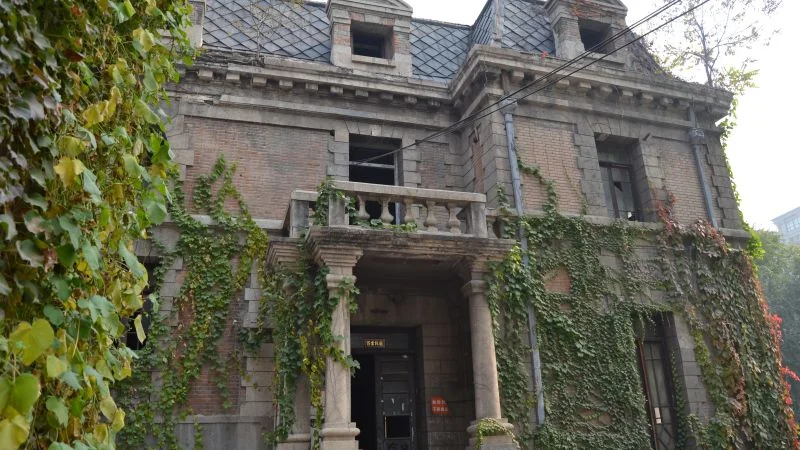
Legend has it that the wife of an officer hanged herself in the mansion after her husband abandoned her during the civil war. Since then, locals claim her restless spirit still roams the halls. Neighbors and visitors report seeing a woman in white at the windows or feeling a sudden chill in the air, even during the heat of summer. Some workers who tried to renovate the mansion in the 1990s allegedly fled in terror after witnessing doors slamming shut on their own and hearing mysterious moans.
The mansion’s notoriety grew after it was used as a filming location for a Chinese horror movie in 2014, turning it into a favorite spot for fans of the paranormal. Despite its popularity, the site remains officially closed to the public and is monitored by authorities due to its 'frightening' reputation.
Terracotta Army – Xi’an
The mausoleum of Emperor Qin Shi Huang is guarded by a vast army of clay soldiers. Legends speak of a 'curse' befalling those who approach the tomb, much like the tales surrounding the pharaohs of Egypt. Some say the terracotta warriors are the spiritual counterparts of a real army serving the emperor in the afterlife.
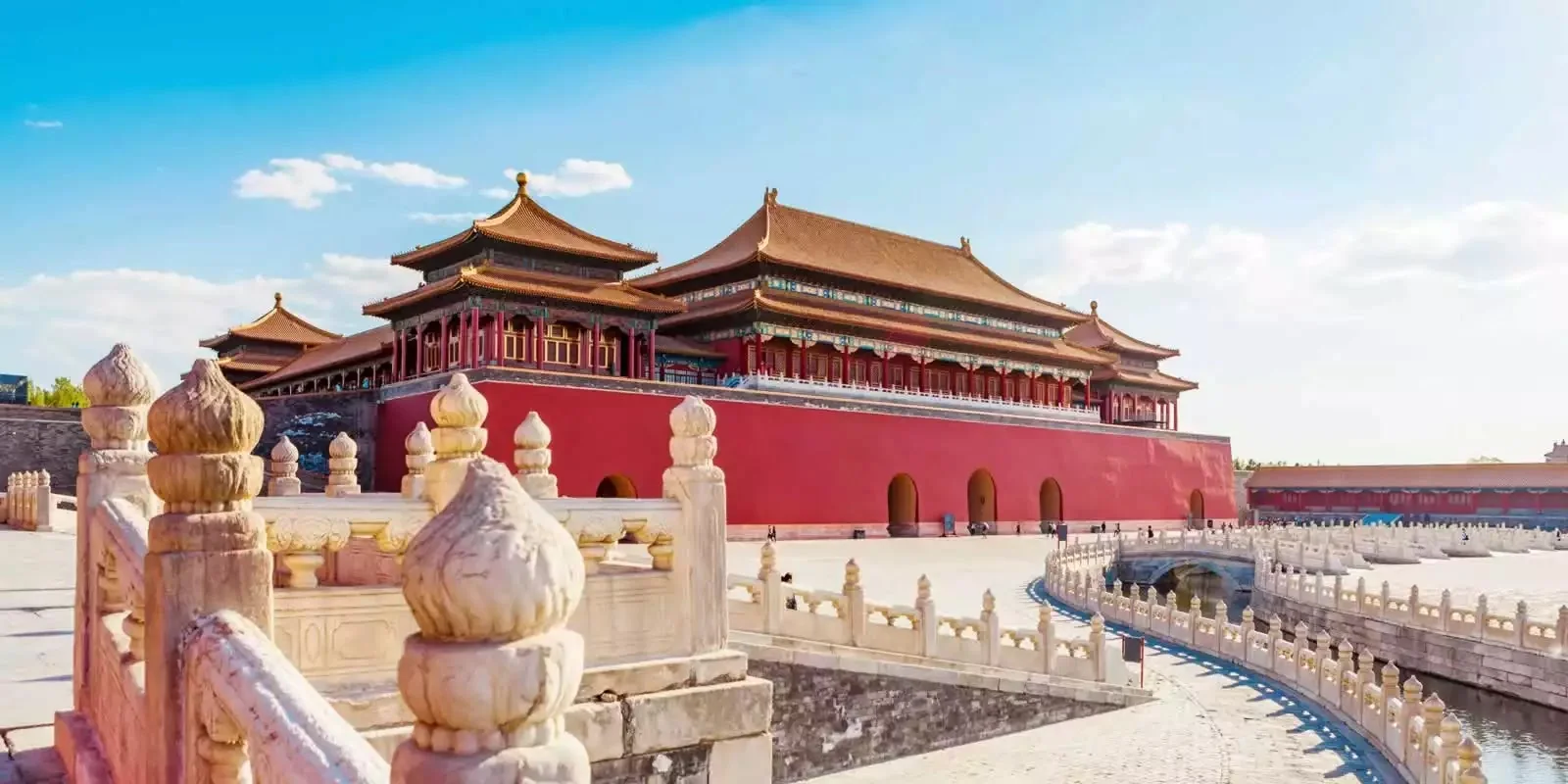
The Forbidden City – Beijing
The Great Wall of China
While it stands as China’s greatest engineering feat, the Great Wall is sometimes called 'the world’s longest cemetery.' Thousands of workers died during its construction and were buried within its stones. Legends claim their spirits still guard the wall at night, with visitors reporting the sound of footsteps and mysterious wailing in deserted sections. One of the most famous tales is that of Meng Jiangnu, whose tears caused the wall to collapse and reveal her husband’s buried remains.
Fengdu Ghost City
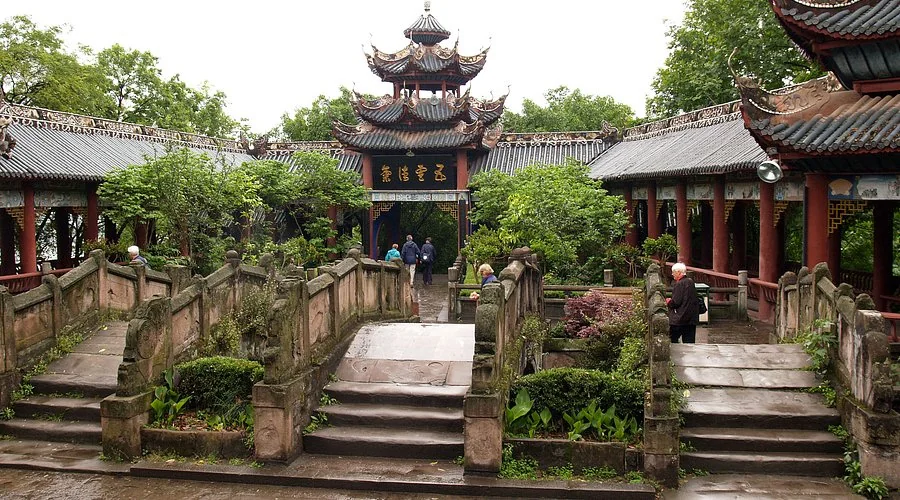
The city features a sprawling complex of temples, statues, and bridges depicting the soul’s journey after death. Visitors cross the 'Last Bridge,' which spirits must traverse to be judged for heaven or hell, and arrive at the Gate of Hell (鬼門關), guarded by towering demon statues representing the underworld’s sentinels. Inside the temples, detailed scenes portray the judgment of souls by King Yama and the punishments awaiting wrongdoers in the lower realms.
Today, Fengdu has become a popular tourist destination, yet it still retains an eerie sense of mystery. Visitors find themselves wandering among murals and statues that bring to life a legendary nightmare of the afterlife, blending myth and folk religion in a truly unique setting.
Haunted Cemeteries in China
The stories aren’t limited to palaces and temples, Chinese cemeteries are also steeped in supernatural lore. Some of the most notable examples include:
Babaoshan Cemetery in Beijing
This is the official burial ground for Communist Party leaders and prominent figures since the 1950s. Despite its formal status, night guards often share tales of phantom footsteps and shifting shadows among the tombs, said to be the restless spirits of soldiers who never found peace.
Lukang Cemetery in Fujian
Dating back to the Ming Dynasty, this old cemetery is surrounded by stories from nearby villagers who claim to see mysterious lights glowing above the graves or hear wailing at night. These phenomena are often attributed to unhonored spirits who haven’t received the proper offerings.
Mass Graves of Japanese War Victims
Especially in Nanjing and northern China, where Japanese forces committed horrific massacres in the 1930s. Some visitors report feeling an overwhelming chill and a sense of suffocation when entering these sites, as if the murdered souls are still crying out for justice.
Ancestral Graves in Mountain Villages
Traditionally, families buried their dead on mountain slopes. Some of these graves are said to be haunted by angry spirits, especially if descendants neglect to make offerings during certain times of year, such as the Qingming Festival (Tomb-Sweeping Day).
Supernatural and Legendary Beings
Ghosts (Guǐ 鬼)
Ghosts are a deeply rooted part of Chinese imagination, appearing either as protective ancestral spirits or as vengeful, hungry souls seeking offerings.
The Nine-Tailed Fox (Húlijīng)
A cunning creature that can transform into a beautiful woman, ensnaring men in its trap. Sometimes depicted as a destructive demon, other times as a devoted lover.
Chinese Dragon (Lóng 龍)
is considered the dragon a symbol of luck and imperial power, a celestial being that brings rain and fertility—unlike the fearsome dragons of Western lore.
Hell Beasts
Terrifying Buddhist creatures like the 'Ox-Head and Horse-Face' who escort souls to the court of the dead, embodying scenes of torment in the underworld.
Morio Creatures
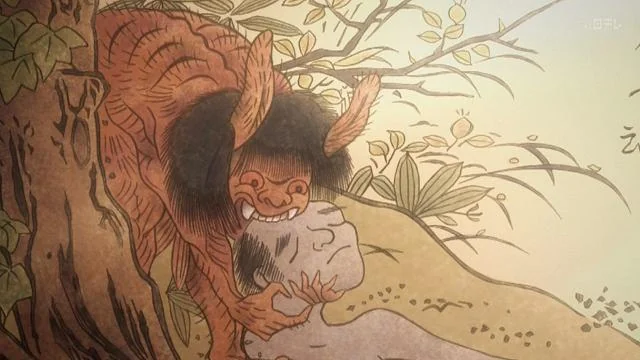
Because of these gruesome acts, Morio are widely feared and despised. To ward them off, ancient Chinese developed special protective measures: planting oak trees near graves, believing Morio are afraid to approach them, and lining cemetery paths with stone tiger statues, since these creatures also fear tigers. It was also customary for a servant to enter the grave first, probing the ground with a long spear to ensure no Morio were hiding beneath the soil.
These practices show how supernatural beliefs shaped Chinese burial rituals, blending fear of the unknown with deep respect for the dead to create unique traditions aimed at protecting both body and soul.
Red Taoism and Its Invocation
In esoteric Taoism, Red Taoism The essence of sacred femininity is embodied in the energy of life and fertility, a hidden red current that balances yang and yin, bringing clarity and renewal to the spirit. Taoist practitioners invoke this force through esoteric rituals that begin with fasting, deep breathing, and bodily purification, followed by focused meditation on the energy centers (dantian) until a warm red sensation rises and fills the body. The ritual is accompanied by secret chants and the scent of cinnamon or saffron incense to create a spiritual atmosphere. During the process, the practitioner visualizes a luminous feminine being embracing them with the power of creation and birth, dissolving the boundaries between body and universe in a profound sense of unity.
Creatures of Zhiguai Literature
Stories recorded since ancient times, filled with spirits, monsters, and mysterious encounters between humans and supernatural beings.
Rituals and Practices
Ghost Marriage
Although rare today, what is known as Ghost Marriage (Mínghūn 冥婚) is still practiced in some Chinese villages and in Taiwan. The idea is to marry off the spirit of someone who died without a partner, ensuring they have a complete life in the afterworld. Traditionally, the family searches for a suitable "bride" or "groom" for the deceased, then holds a full wedding ceremony with offerings of food and gifts. A symbolic representation of the spouse is buried with the deceased.
This practice has taken on even stranger forms in some areas, where a secret market for recently deceased bodies has emerged to provide for these wedding rituals—raising legal and security concerns. Poorer families sometimes resort to symbolic solutions, such as a clay doll or even a loaf of bread shaped like a bride with bean eyes. Despite its strangeness, this ritual reflects a deep belief that a person should depart this world with their fate fulfilled, even in the afterlife.
Shaman Villages – Sichuan and Yunnan
Here, minority groups still practice ancient shamanic rituals, with priests summoning spirits for healing or divination. The Bimo priests of the Yi people are a prime example, performing ceremonies to drive out evil spirits and recite sacred texts.
Qigong

In folklore, Qigong is linked to tales of monks or masters who could break stones with a touch, stop bleeding, or even walk on hot coals without being burned, all thanks to their mastery of Qi. In the 1980s and 1990s, China saw the rise of the 'Qigong Movement,' with massive groups practicing these exercises in public squares at dawn—a phenomenon the media dubbed a 'spiritual renaissance.'
Although authorities later tried to regulate the movement after some groups became associated with controversial religious sects, Qigong remains an important part of Chinese spiritual heritage, bridging health, meditation, and the supernatural.
PSI Energy Balls
With China's opening up in the late 20th century and a renewed interest in spirituality, new concepts influenced by Western culture and parapsychology began to emerge among young people and some modern practitioners. Parapsychology For example:PSI Balls These are imagined balls of energy that a person visualizes forming between their hands by focusing on their 'life energy' (Qi).
Practitioners typically sit in a meditative position and try to gather sensations of warmth or tingling in their palms, until they feel as if they're holding an invisible ball of energy that can be expanded or compressed. Some see this as simply a mental exercise in focus and visualization, while others believe it's a genuine way to interact with life energy. Although this idea is relatively new, it resonates in China because it connects with ancient traditions that view Qi as the essence of existence.
Consuming Exotic Animals to Gain Energy
In Chinese folklore, there's a widespread belief that eating certain animal organs transfers their qualities and powers to the person. For example:
- Eating tiger organs to gain courage and strength.
- Consuming bear glands to absorb the 'essence of life.'
- Eating turtles or snakes to prolong life.
This is closer to a form of food-based magic or supernatural belief, based on the idea that the 'essence' or 'energy' of the animal passes to the eater.
Today, this practice is condemned for ethical and environmental reasons, but historically it was part of the overlap between folk medicine and supernatural beliefs.
Despite China's scientific and economic progress, its mystical side remains. Ghost stories are still told, haunted sites attract visitors, and dragon dances are performed during festivals. Some historical sites have even started promoting 'paranormal tourism' to draw crowds. In this way, China remains an open book when it comes to the supernatural.
About the Author