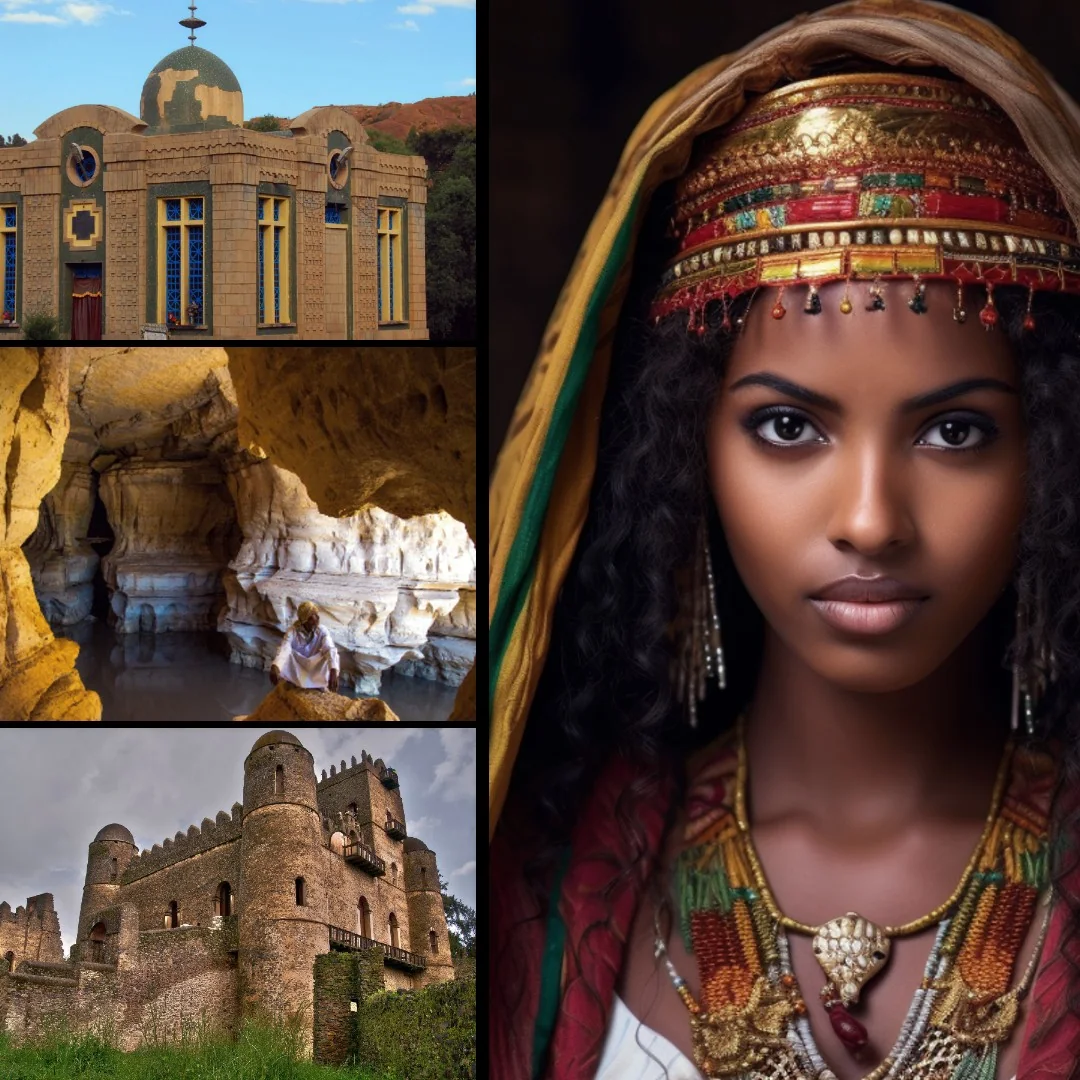
Ethiopia is not only a land of ancient religions and civilizations, but also a place steeped in legends and supernatural rituals that blur the line between the mystical and the real.
From the Ark of the Covenant and the mysterious lineage of Queen Bilqis, to the rock-hewn churches of Lalibela, said to have been built overnight by angels— to the raucous Zār rituals, and the wailing Danakil Well deep in the desert, Ethiopia stands as a testament to a long legacy of wonders and the supernatural.
Legends
Queen Bilqis and Her Lineage
According to Ethiopian tradition, Queen Bilqis (the Queen of Sheba) was not entirely human. In one tale, during a battle with a dragon that was ravaging the land, she was aided by seven saints who helped her defeat the beast. However, when a drop of the dragon’s blood fell on her foot, it transformed into a donkey’s hoof—a mark believed to be a sign of the supernatural. Despite this strange stigma, the people accepted her as their queen after she saved them from the dragon. This story cemented her image in popular imagination as both a wise and devoted ruler, and a figure touched by the otherworldly.
One of Ethiopia’s most enduring traditions links Queen Bilqis (the Queen of Sheba) to a marriage—according to local lore—with the Prophet Solomon. Legend has it that their union produced a son, Menelik I, who returned to Ethiopia and founded the country’s royal dynasty. Some accounts claim this lineage continued all the way to the twentieth century. The Rastafarian movement, which emerged in Jamaica, regards Emperor Haile Selassie as a direct descendant of Bilqis and Solomon, viewing him as a near-divine figure—an example of how ancient legend continues to shape modern beliefs.
The Ark of the Covenant
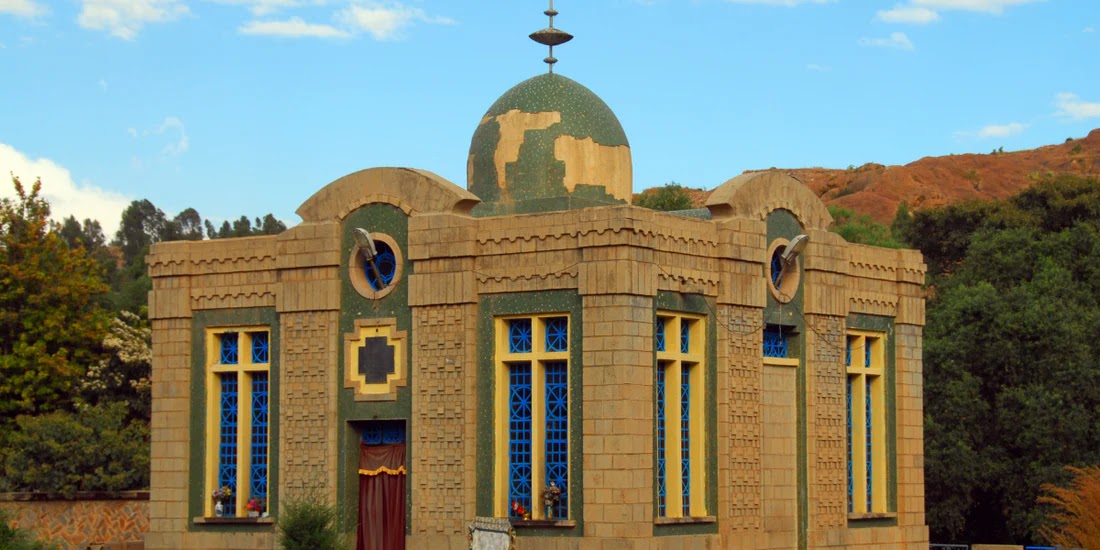
Mythical Beings
Ethiopian folklore features creatures as strange and fascinating as any found in world mythology:
Buda
Some people are believed to possess the 'evil eye,' capable of harming others, and are even said to transform into hyenas at night to prey on humans. Locals tell stories of men who become hyenas after dark (the Buda). One woman recounted hearing human laughter coming from the mouth of a hyena chasing her livestock, confirming her suspicion that it was a person in animal form.
Adbar
Guardian spirits are believed to inhabit trees and springs, revered by locals who offer them sacrifices.
Hybrid creatures
In some southern regions, legends tell of hybrid beings, part human, part animal such as sea maidens and forest children who appear on moonlit nights and then vanish without a trace.
Haunted places
Ethiopia is known not only for its ancient churches and caves, but also for places believed to be haunted or cursed.
Sof Omar Caves

The Rock-Hewn Churches of Lalibela
Alongside legends of angels helping to build them, some visitors claim to have seen shadows moving through the corridors at night, moving against the direction of the light—almost as if the spirits of the builders or angels are still watching over the site.
Fasilides Castle in Gondar
This old royal fortress is the subject of stories about the ghosts of emperors who still guard it. Some guards have reported seeing figures in royal robes who appear for a moment and then vanish.
Danakil Well

There's a well-known story about a traveler who passed by the Danakil Well and heard voices calling his name from deep within, even though he was alone. He returned to his village terrified and swore never to go near the desert again.
The City of Harar
This famous walled city has a mysterious reputation. Some locals tell stories of people who disappear at sunset and reappear at sunrise, as if they've crossed into another world for the night. There are also tales of men who turn into hyenas after dark, a phenomenon known as 'buda.'
Rituals
Magic Scrolls
One of Ethiopia's most prominent magical practices involves 'magic scrolls' (raqima), which are amulets inscribed in Ge'ez or Arabic. These scrolls contain spells to protect the bearer from harm and envy. They're crafted by traditional religious figures known as debtera, and are used for healing, attracting good fortune, or, in some cases, causing harm through black magic.
Zar Ceremonies
Ethiopians are known for the zar ritual, a lively ceremony with drums, dancing, and incense meant to appease spirits believed to possess people. Zar is more than just a healing practice; it's seen as a 'reconciliation' with the spirit, persuading it to stop harming the victim in exchange for offerings and songs. In southern villages, families tell stories of wild zar ceremonies where spirits were driven out of afflicted people, sometimes a woman's voice would suddenly shift to a deep male tone before she collapsed, unconscious.
Exorcism Rituals in Churches
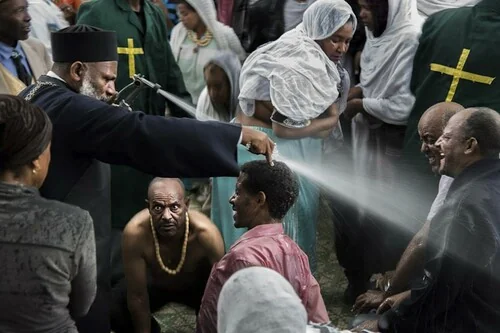
Despite advances in education and modern medicine, most Ethiopians still believe in spirits, jinn, and the evil eye. Orthodox churches regularly hold exorcism rituals attended by hundreds, while Muslims continue to practice spiritual healing rituals and use protective amulets. Zar ceremonies have not disappeared either; they are still performed, though on a smaller scale.
Ethiopia is a unique mosaic of the supernatural: legends of kings descended from the Queen of Sheba and Solomon, mysteries surrounding the Ark of the Covenant, magical rituals, zar spirits, and haunted places that continue to baffle visitors. It is a land where the visible and invisible stand side by side, where history blends into legend and imagination becomes a living faith that shapes the spirit of an entire people.
About the Author