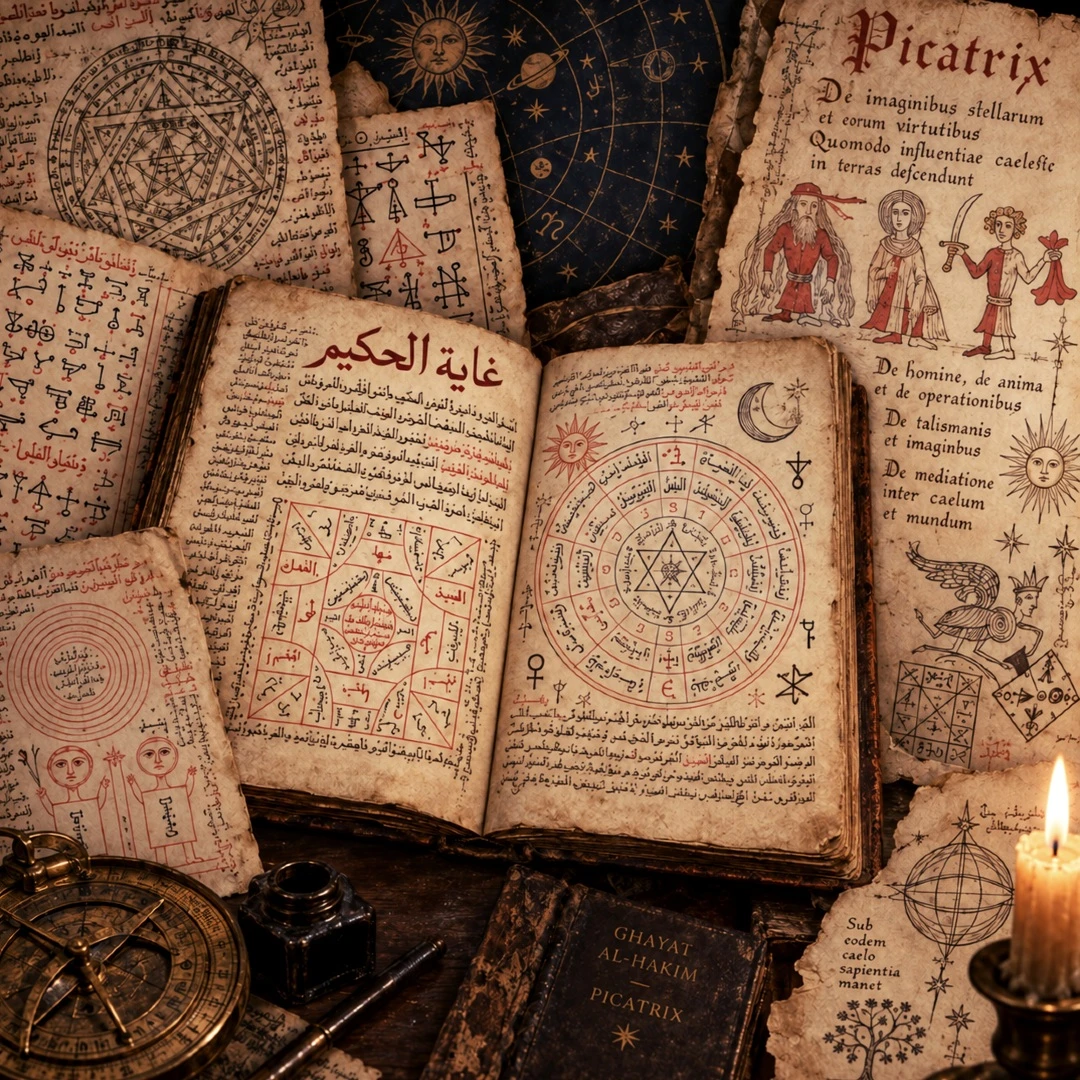
Over a thousand years ago, somewhere in Andalusia, an anonymous author compiled a sweeping collection of ideas that stood at the crossroads of philosophy, astronomy, astrology, natural sciences, and magic. The work explored planets, souls, talismans, and the hidden properties of things, painting a picture of the universe as a vast web of connections between the heavens and the earth.
The book was originally titled in Arabic as "Ghāyat al-Ḥakīm wa-Aḥaqq al-Natījatayn bi-l-Taqdīm," but after about three centuries, it made its way to Europe. There, its language, name, and cultural context changed, and it became known in Latin as Picatrix.
In Europe, it was no longer just an Arabic treatise on the occult sciences. It became one of the texts studied and debated by Renaissance thinkers, influencing figures like Marsilio Ficino and Heinrich Cornelius Agrippa, and helping to shape what later became known as "occult philosophy."
But the story takes an unexpected turn: the name that appeared on the book for centuries may not actually belong to its true author.
An Author Who Lived Under Another Man’s Name
Ghāyat al-Ḥakīm Traditionally, was attributed to the Andalusian scholar Maslama al-Majriti, a prominent astronomer and mathematician from the 10th and 11th centuries. This attribution became established in later manuscripts and sources, and al-Majriti’s name still appears on some modern editions. However, recent scholarship has upended this view. Researcher Maribel Fierro, supported by subsequent studies, concluded that the more likely author is Maslama ibn Qasim al-Qurtubi, who died in 964 CE, not al-Majriti, who lived later. Textual comparisons between "Ghāyat al-Ḥakīm" and another work, "Rutbat al-Ḥakīm," further support the connection to al-Qurtubi and the intellectual milieu of 10th-century Andalusia.
This means the book was written earlier than previously thought, with its original form likely emerging in the second half of the 10th century, specifically between 954 and 959 CE.
So from the very beginning, we encounter the first mystery of "Ghāyat al-Ḥakīm": a book that has survived for over a thousand years, while its true author spent most of that time hidden behind someone else’s name.
An Encyclopedia of the Occult Sciences
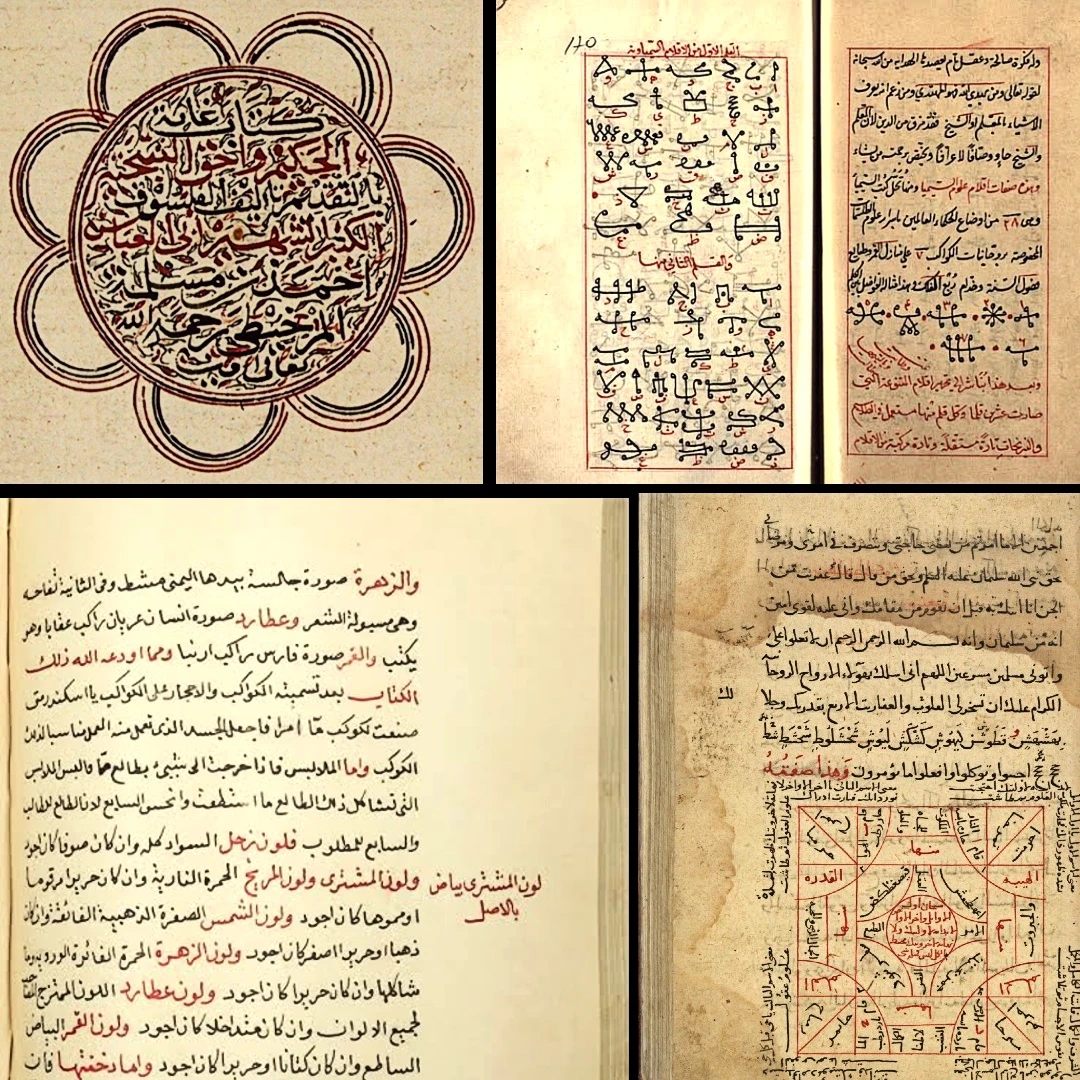
"Ghāyat al-Ḥakīm" is not a simple spellbook, as its modern classification among works of magic might suggest. Instead, it is an encyclopedic work that seeks to provide magical practices with a philosophical and cosmological foundation.
The author drew on a vast array of earlier books and traditions; modern studies indicate that he relied, directly or indirectly, on more than two hundred sources. The material spans from Andalusia and North Africa to Greece, Egypt, Iraq, Persia, and India, passing through Hermetic traditions as well as Neoplatonism, Greek and Arabic astrology, and beliefs associated with Harran and the Sabians.
The influence of the Brethren of Purity is also evident, particularly their views on the universe, humanity, numbers, and nature. Comparative studies have found strong links between "Ghāyat al-Ḥakīm" and the "Epistles of the Brethren of Purity," placing the book within a much broader intellectual network than just popular magical literature.
This is where its significance lies: it doesn’t just claim that talismans or planets have hidden powers—it seeks to explain why they are believed to possess such powers in the first place.
The universe as a web of correspondences
To truly understand the book, we need to set aside the modern, rigid divisions between science, religion, philosophy, and magic.
In the world where 'The Aim of the Sage' emerged, these boundaries were far less defined than they are today. It was entirely possible for someone to study the mathematical movement of the planets, explore their astrological significance, and then consider their supposed effects on nature and the human soul. At the heart of 'The Aim of the Sage' lies the idea that the universe is interconnected from top to bottom.
Each planet was thought to possess certain qualities, which corresponded to specific metals, plants, colors, scents, shapes, and times here on Earth. If everything was linked within a single cosmic network, proponents of these theories believed it was possible to use earthly materials to receive or represent celestial influences.
This concept would later become known in Western esotericism as the principle of 'Correspondences': the microcosm reflects the macrocosm, and everything on Earth has its counterpart in the heavens.
From this perspective, a talisman in 'The Aim of the Sage' is more than just a mysterious drawing; within the book’s intellectual framework, it represents an attempt to create a meeting point between image, matter, time, and the supposed influence of the stars.
This doesn't mean these ideas are scientifically proven facts. Rather, they reflect a historical model for understanding nature—one that remained influential for centuries before the rise of modern science.
Between philosophy and astral magic
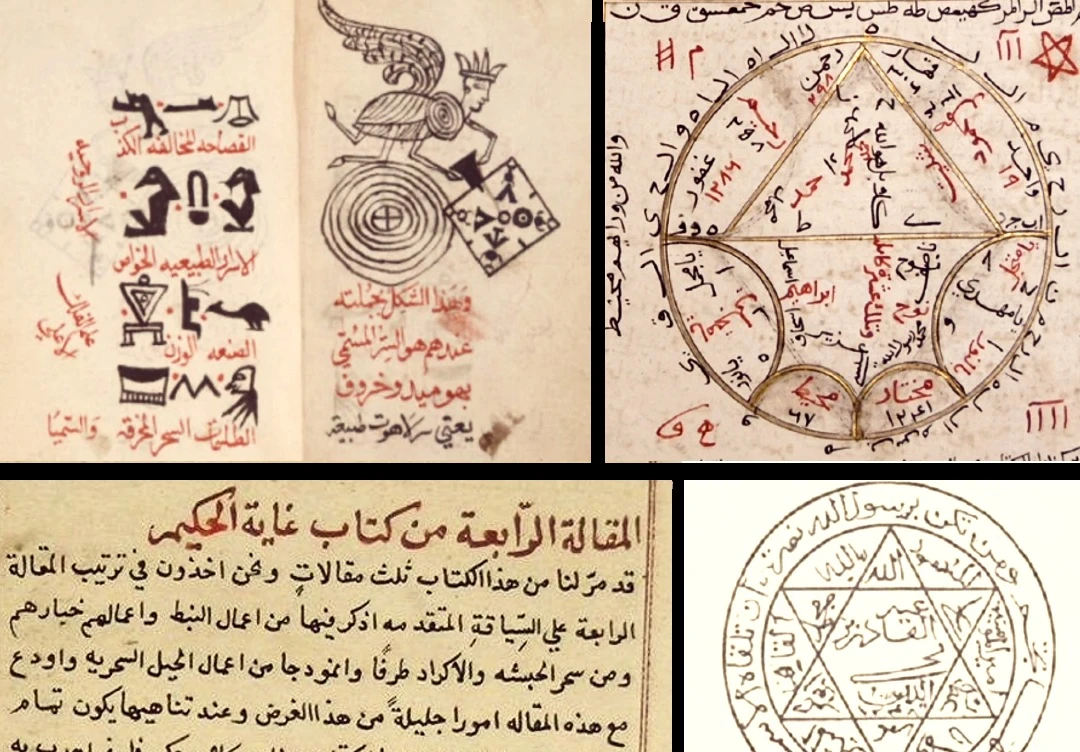
The book is divided into four major sections, but it moves fluidly between topics, blurring the lines between philosophy and practice. It begins with discussions about the nature of wisdom, knowledge, and the structure of the universe, then gradually delves into the realms of celestial spheres, images, talismans, and the supposed relationships between zodiac signs, planets, and earthly materials—what the author calls the 'spiritualities of the planets.'
It also includes material on names, symbols, shapes, incenses, and the properties believed to be inherent in certain plants, minerals, and natural substances.
But more important than these details is the intellectual framework that unites them: the book presents magic as a form of knowledge about the hidden relationships between things, not simply as a collection of supernatural acts divorced from nature.
The text also contains materials and ingredients that are unsuitable for modern experimentation, some of which are toxic or dangerous. Its value today is primarily historical and intellectual, offering a window into an ancient worldview and the place of magic within it—not as a practical manual to be followed.
Hermes returns once more
Hermes Trismegistus features prominently in the intellectual world to which 'The Aim of the Sage' belongs. In later traditions, Hermes became a semi-legendary figure credited with wisdom, astronomy, alchemy, and secret knowledge. Hermetic texts traveled across Greek, Hellenistic, Arabic, and later European cultures.
'The Aim of the Sage' clearly reflects this atmosphere: wisdom here is not just the accumulation of information, but an understanding of the hidden causes that connect different levels of the universe.
This idea would later become a key to understanding why European Renaissance thinkers were drawn to the book. They too lived in a time of renewed interest in Hermeticism, Neoplatonism, and the search for 'ancient wisdom' believed to predate Greek philosophy itself. When 'The Aim of the Sage' reached them, it found fertile intellectual ground.
The Great Journey: From Al-Andalus to Castile
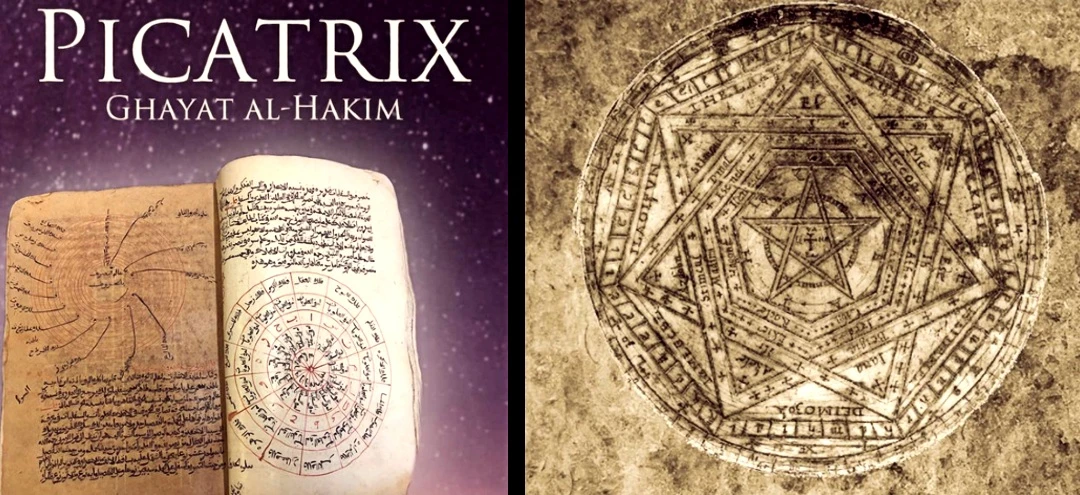
In the 13th century, the book began its second life. At the court of King Alfonso X of Castile, renowned for supporting the translation of Arabic works on astronomy, astrology, and science, 'Ghayat al-Hakim' was translated from Arabic into Castilian in the mid-13th century. Its content later made its way into Latin, and from there, the name that would eventually overshadow the Arabic original emerged: Picatrix.
The origin of the name itself remains a subject of debate, with various theories proposed to explain it. For this reason, it's important to avoid presenting any single etymology as definitive.
More importantly, the Latin text was not a complete, literal copy of 'Ghayat al-Hakim.' It passed through the Castilian translation, and certain sections were omitted, altered, or rephrased.
Historically, it's more accurate to view Picatrix as the European adaptation derived from 'Ghayat al-Hakim,' rather than an exact replica of the Arabic original.
The book begins its second life in Europe
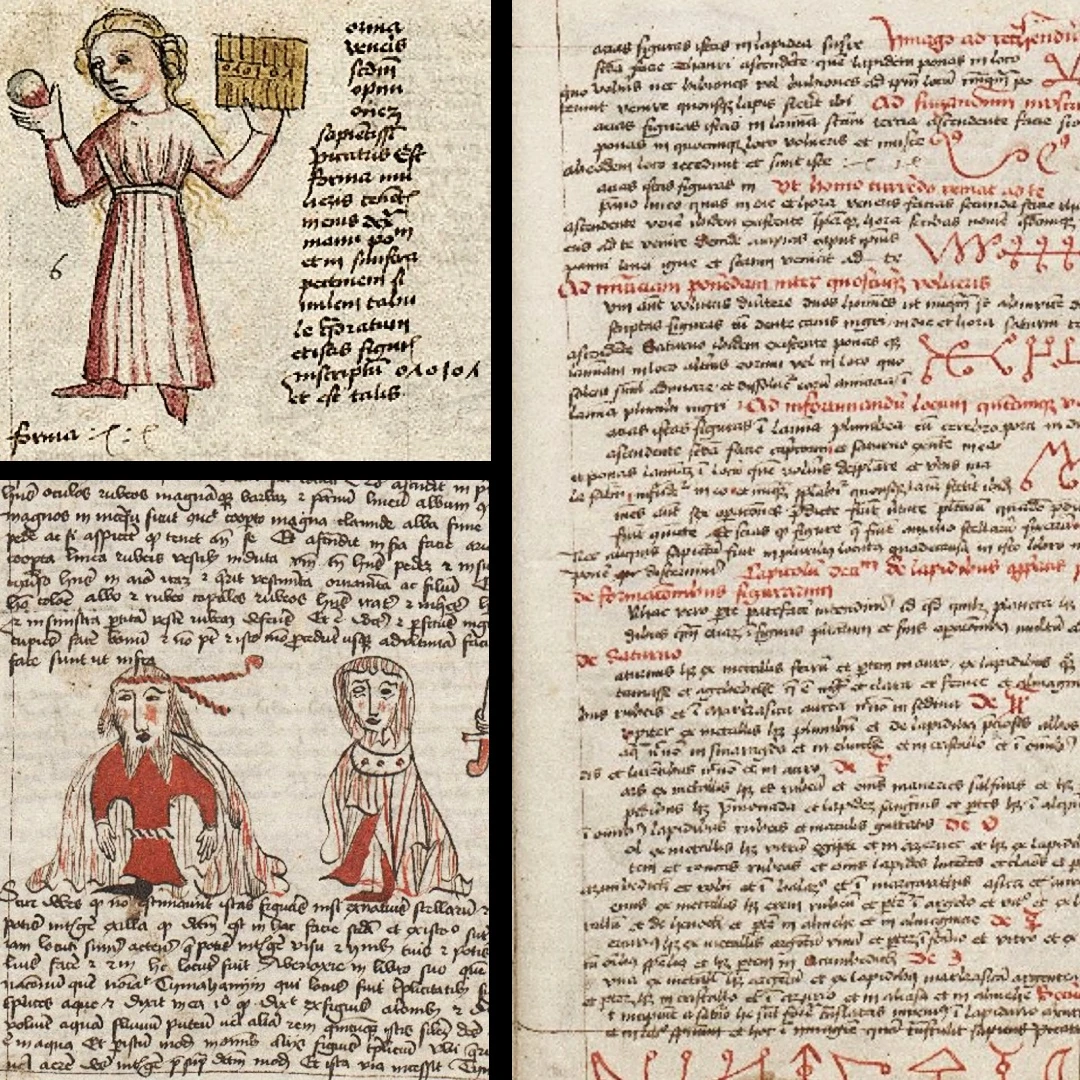
It took some time before Picatrix became widely known in European culture. But as Latin manuscripts spread during the 15th and 16th centuries, it became part of a completely new intellectual world.
During the Renaissance, Europe was rediscovering Plato, Neoplatonism, and Hermetic texts, with growing interest in astrology, alchemy, natural magic, and Kabblistic Christianity.
At this point, Picatrix seemed to emerge from a distant era, offering exactly what these thinkers were seeking: the universe as a single interconnected web, stars influencing the world, and materials, colors, sounds, and images all linked by invisible forces.
This is why the book became one of the most important texts in the history of what is now called Astral Magic and Western esotericism. Modern scholarship describes it as a foundational work for understanding how magical ideas traveled from the ancient and medieval worlds into European esoteric culture.
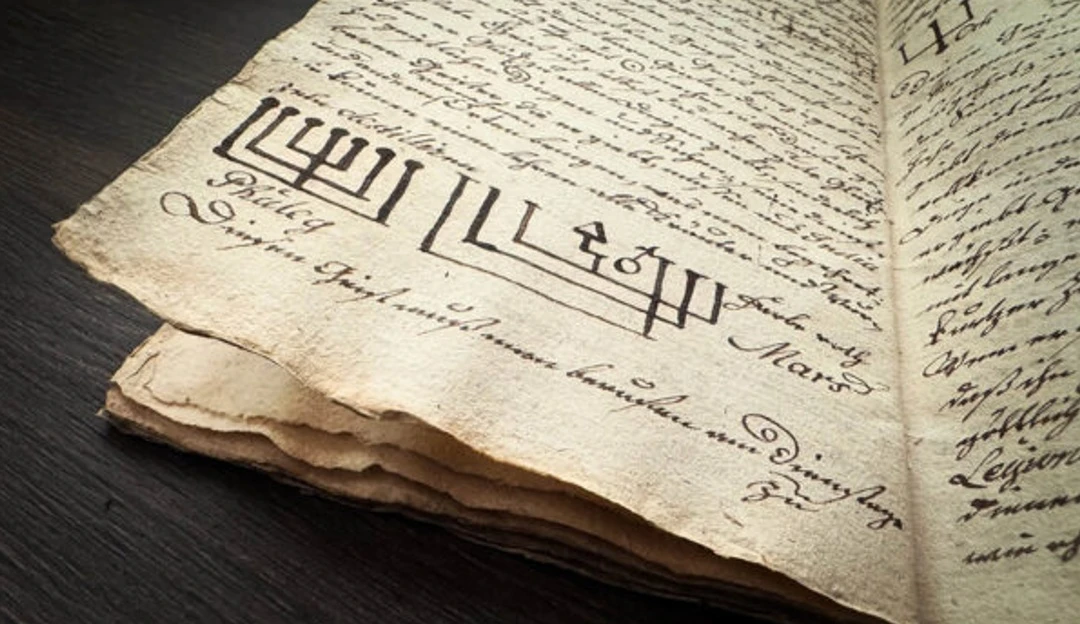
Marsilio Ficino: He read the book, but feared it
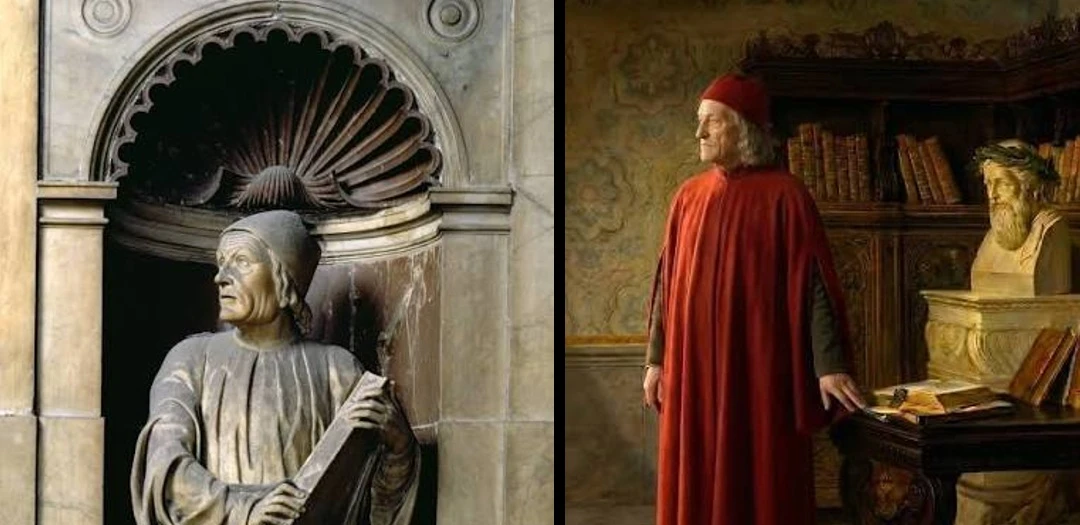
One of the most prominent thinkers associated with the book was the Italian philosopher Marsilio Ficino, a leading figure of the Florentine Renaissance.
Ficino translated Plato and Hermetic texts, and sought to explain the relationship between the soul, the cosmos, and celestial forces in a way that could be reconciled with Christianity.
Studies of his notes and manuscripts reveal that Ficino was familiar with Picatrix and referred to it when considering images, astrological influences, and the forces believed to operate through nature. However, he was uneasy about it. In his published works, Ficino was more reserved, avoiding any appearance of endorsing a book that the Church might consider forbidden magic or demon-summoning. Recent research shows that his private notes drew more openly from Picatrix than his published texts. In other words, the book was useful enough to read, but dangerous enough not to mention openly.
Agrippa and the Occult Philosophy
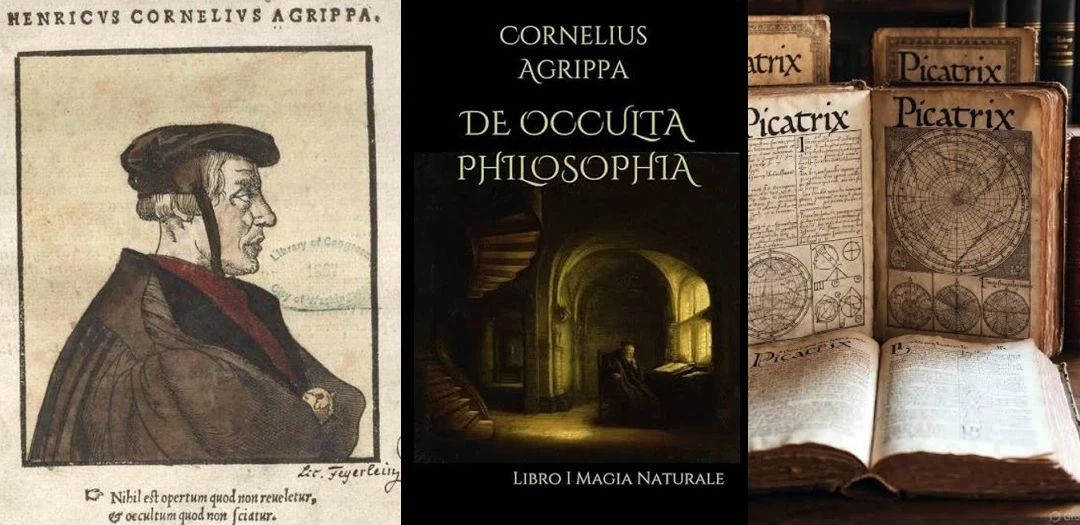
This brings us to a figure well known to many readers of Western magical history:Heinrich Cornelius Agrippa Heinrich Cornelius Agrippa.
In his famous work De Occulta Philosophia (On Occult Philosophy), Agrippa sought to build a comprehensive system uniting nature, the stars, numbers, names, angels, Hermetic texts, Kabbalah, and ancient philosophy.
Picatrix was among the sources Agrippa knew and drew upon, alongside other Arabic and Latin works. According to the Stanford Encyclopedia of Philosophy, Agrippa combined the most respected sources of his time with a magical tradition from the Middle Ages that included Picatrix, al-Kindi, and other thinkers whose works reached Europe in Latin. Still, it's an exaggeration to claim that Picatrix alone shaped Agrippa's magic or Renaissance magic as a whole.
The reality is more nuanced and fascinating: the book served as one of the bridges through which Arabic, Greek, Hermetic, and Eastern ideas entered a new world, where they mingled with Ficino's Platonism, Christian Kabbalah, and medieval European traditions.
In this way, concepts compiled in tenth-century Andalusia became part of Europe's 'occult philosophy' five centuries later.
The Islamic Paradox
But what became of the book in the very world where it first appeared?
This is where the story becomes more complex. Just because 'Ghayat al-Hakim' is an Arabic book that emerged within Islamic civilization doesn't mean its contents were accepted in Islam, nor that its practices reflect the beliefs of Muslims in general.
Magic was religiously rejected by mainstream Islamic thought, while other fields lingered on the margins of culture under names like talismanic science, properties, alchemy, letter science, and astrology. The boundaries between these areas were not always clearly defined.
A scholar might openly reject magic, yet discuss talismans as an ancient science. Another might study the properties of plants and minerals within a worldview that doesn't clearly distinguish between physical and supernatural effects.
For this reason, 'Ghayat al-Hakim' is evidence of esoteric currents within medieval Islamic culture, but it does not represent Islam's own stance on magic. This distinction is especially important when reading the text outside its historical context.
Ibn Khaldun and the Reputation of Ghayat al-Hakim
Centuries after it was written, the book remained well-known in Arabic literature. Ibn Khaldun, for example, referenced it when discussing magic and talismanic sciences in his 'Muqaddimah,' treating it as an important work in the field even though his own view of these sciences was ultimately critical and shaped by religious perspectives.
These references reveal an interesting paradox: a book can be rejected for the field it belongs to, yet still be recognized as a key reference for understanding that field. This is essentially what happened with 'Ghayat al-Hakim.' It never became a religious or legal text, but remained part of the occult sciences tradition known to authors and circulated in certain circles and manuscripts.
Ghayat al-Hakim is Not Shams al-Ma'arif al-Kubra
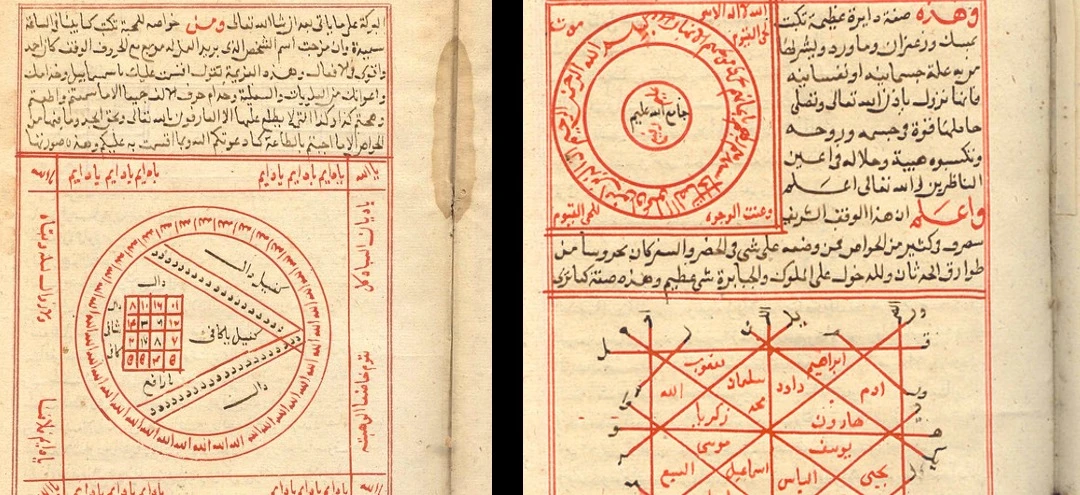
Today, many Arabic readers might be tempted to group 'Ghayat al-Hakim' and Shams al-Ma'arif together, but there is an important difference between them.
'Shams al-Ma'arif,' as it appears in popular culture, is closely associated with letter magic, talismanic squares, names, incantations, and spiritual practices. In contrast, 'Ghayat al-Hakim' stands on somewhat different ground, it's more connected to astral magic, astrology, natural philosophy, cosmic correspondences, and talismans, devoting much space to building a theoretical framework for the relationship between the heavens and the earthly world.
Put simply: if 'Shams al-Ma'arif' has become the archetype of a 'book of magic' in the Arab popular imagination, then 'Ghayat al-Hakim' is closer to an attempt to construct a 'philosophy of magic.'
This may be precisely why it had such a profound impact on Renaissance Europe. Thinkers of that era found it well-suited to their efforts to blend ancient philosophy, astronomy, Hermeticism, and the study of nature's hidden forces.
An Arabic Book That Became Famous in the West
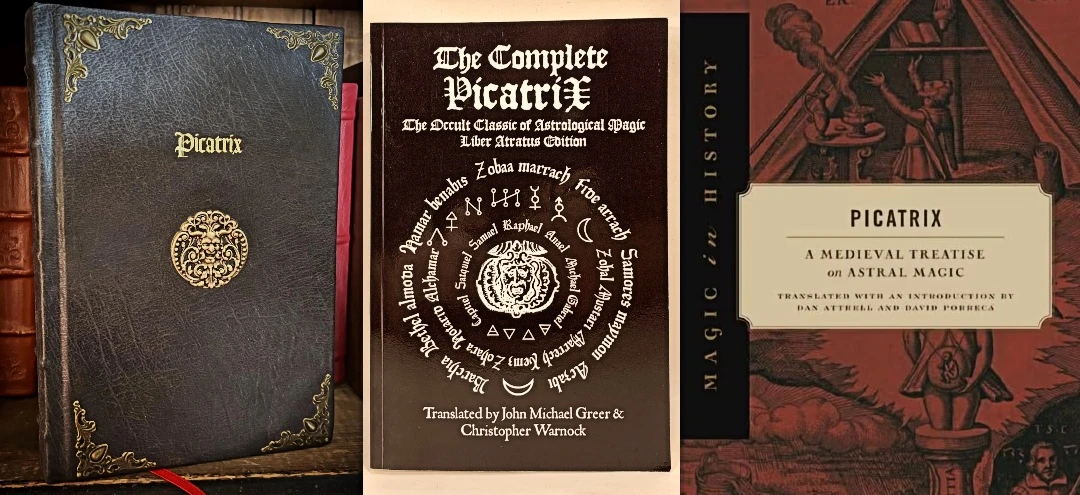
There's another twist in the history of 'Ghayat al-Hakim.' While its name remained familiar to specialists and some heritage scholars in the Islamic world, the book found a much broader life in the West under the name Picatrix.
It became the subject of studies on the history of magic, Hermeticism, the Renaissance, and medieval science, with modern translations and critical research exploring its sources and influence.
Today, a Western reader interested in esotericism might know Picatrix without realizing that behind this name lies an Andalusian Arabic book called 'Ghayat al-Hakim.'
This, in itself, reveals something important about how ideas move between civilizations: texts don’t always retain their original identity. Their names, meanings, and significance can shift as they cross languages and eras.
Was it a book of magic, or a book of knowledge?
Perhaps even asking this question is a modern perspective. For the author of 'Ghayat al-Hakim,' the boundaries we draw today between philosophy, natural science, astrology, and magic simply didn’t exist.
He imagined a world driven by hidden connections, where stars, numbers, images, and materials all had their place within a single cosmic order. Today, we know that many of the astrological and magical claims in this system lack scientific evidence.
But the book’s scientific theories falling out of favor doesn’t diminish its historical significance. It shows us how some medieval intellectuals tried to make sense of the world, how these ideas traveled from one culture to another, and how a text could transform—from an Andalusian treatise on 'wisdom' in Arabic, to one of the most famous books of magic in Western history after being translated into Castilian and then Latin.
A Secret Life Spanning a Thousand Years
Perhaps that’s why 'Ghayat al-Hakim' still fascinates readers after more than a thousand years, not because its secrets have proven effective at controlling planets or hidden forces, but because its journey is almost stranger than its contents.
'Ghayat al-Hakim' or 'Picatrix' was more than just a book of magic; it was a bridge that carried ideas from the ancient world and the Islamic world into Europe, where they were reimagined in new ways.
Perhaps the strangest part of its story is that much of what later became part of the image of the 'Western magician' can be traced, somewhere along its long journey, back to pages written in Arabic under the skies of al-Andalus.
About the Author