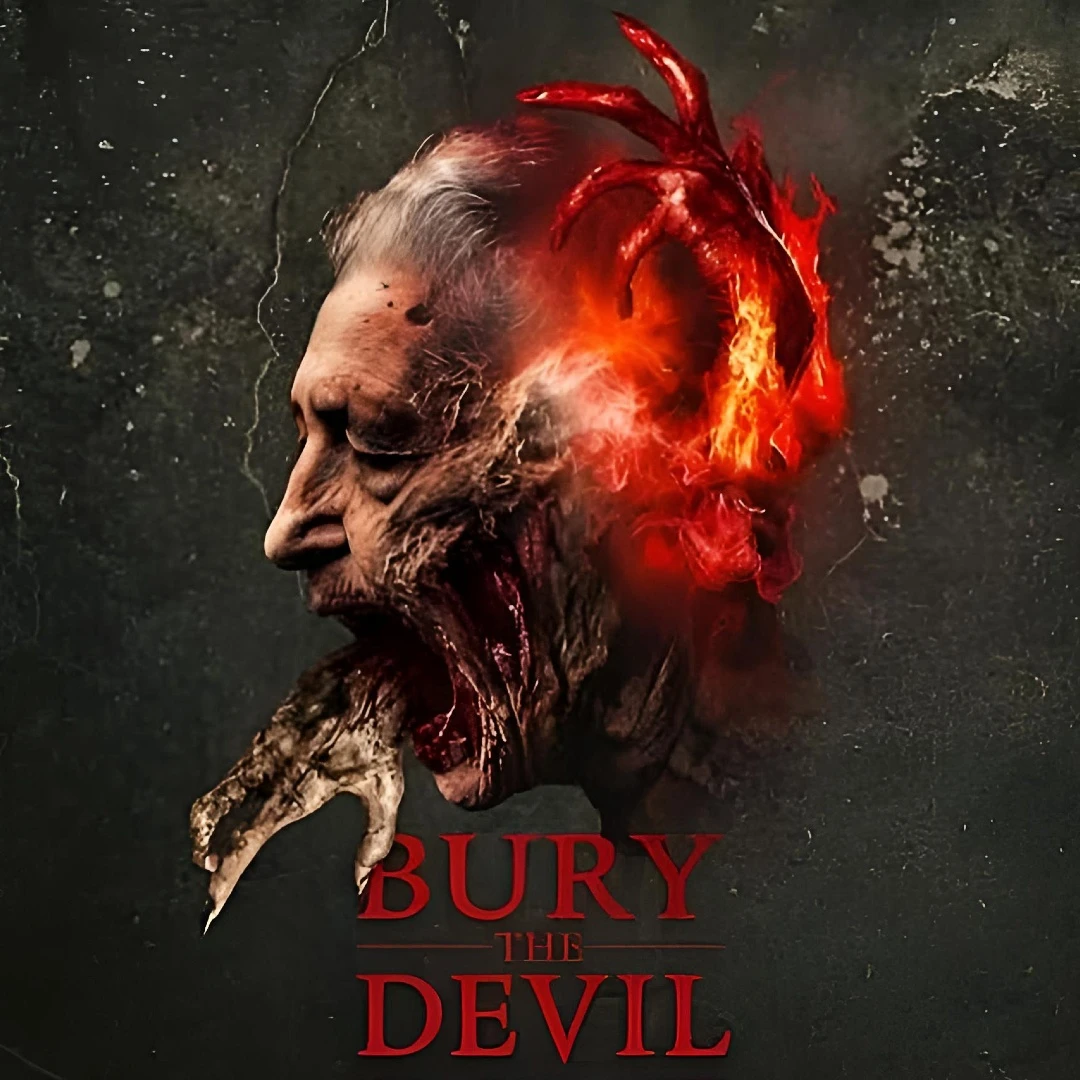
Is it possible for evil to inhabit a human body ? And what if it could be bound to a physical object a statue or a vessel and then disposed of by burying it in the ground ?
This is the premise behind the horror film Bury the Devil, which weaves together themes of possession, dementia, guilt, and attempts to contact the dead, all unfolding over a single night in an isolated house.
A Night at Evelyn’s House
Nurse Julia arrives at a remote house to spend the night caring for Evelyn, an elderly woman suffering from dementia. At first, Evelyn’s behavior seems explainable: forgetfulness, repeating herself, confusing people, and sometimes calling Julia by the name of her late daughter, Sarah. But something in the house feels off.
Evelyn recites a familiar children’s prayer, but twists the words in strange ways, speaking of spirits and their movement between bodies. Then her ex-husband Randall appears, demanding to know the whereabouts of something she’s hiding in the house. To Julia, Randall initially seems like the main threat, but she soon encounters behaviors that can’t be explained by dementia alone.
This is where the film poses its central question:
Are we witnessing the mental decline of an elderly woman, or is something else staring out from behind her eyes?
A Night With No Escape
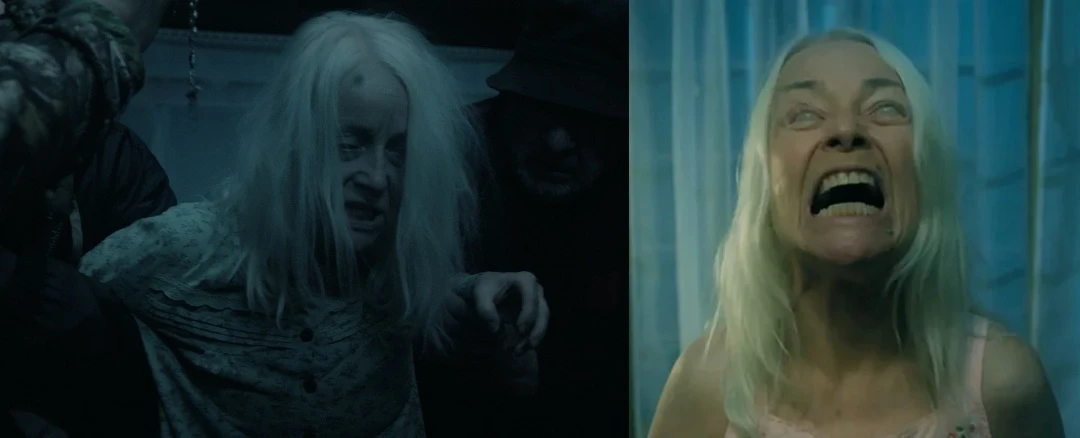
The film is crafted to appear as if it unfolds in a single, continuous shot, almost in real time. We follow Julia through the corridors and rooms, with no editing to give us a safe distance from the events. The director has explained that, for him, the film isn’t just about possession, it’s about guilt, and how it can take hold of a person and destroy them.
This idea is at the heart of the story: Evelyn is burdened by guilt connected to her daughter, while Julia carries her own guilt over her late mother. The entity in the house knows how to use the dead, memories, and regret to reach its victims.
Elim and The Book of Attrition
The film opens with a reference to a mysterious book called The Book of Attrition, which describes a being named Elim that gradually wears down its victims until it can take control. Elim isn’t a demon found in ancient lore, and The Book of Attrition itself is an invention unique to the film.
In this way, Bury the Devil creates its own mythology, using familiar elements from stories of possession and witchcraft rather than borrowing a well-known demon from folklore.
The Statue That Should Have Stayed Buried
As the story unfolds, it becomes clear that the house’s secret is tied to a small statue that serves as an anchor for the entity. In the past, Evelyn became involved in attempts to contact the dead after losing her daughter, and it seems something else answered her call.
The statue was buried—and should have remained so. Digging it up reopened the connection to the entity, making the solution for some characters clear: return the evil to the earth and bury it again. This is where the film’s title, Bury the Devil, takes on a literal meaning, not just a metaphorical one.
But is the idea of burying something to contain an evil force purely a cinematic invention? Not entirely.
Bowls Buried Against Evil Spirits
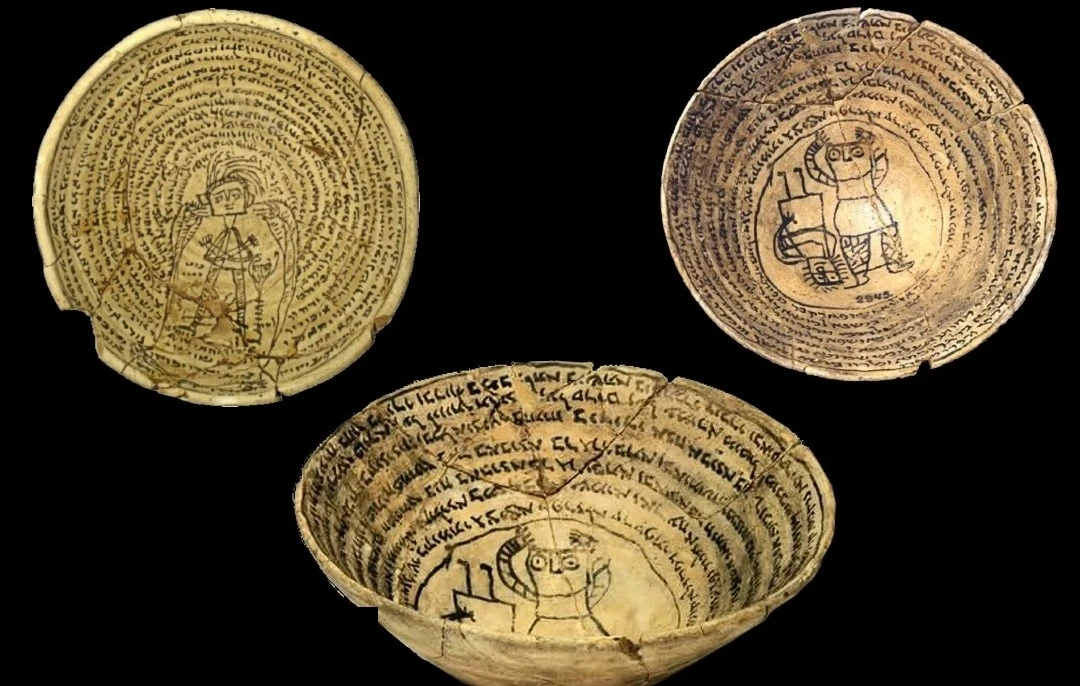
In ancient Mesopotamia, what are now known as Incantation Bowls were used during the late antiquity period. These bowls were inscribed with spells, texts, and sometimes drawings of harmful entities. They were then buried upside down beneath the floors of homes or near entrances. Read more at The Demon-Trapping Bowls of Ancient Mesopotamia.
The purpose of these bowls was to protect against spirits and malevolent forces. Some interpretations suggest that the bowls acted as traps, confining the entity within.
There's no evidence that the filmmakers directly drew inspiration from this practice when creating the Ilim statue, but the similarities are striking: a physical object, an invisible force, and burial in the ground to keep evil at bay.
Witch Bottles
A similar idea later emerged in Britain with so-called Witch Bottles. Some of these containers held nails, pins, and personal items, and were buried under floors or hidden near hearths and doorways as part of protective magic rituals.
These objects weren't usually intended to trap a demon, but they were based on a similar belief: that a hidden physical item in the home could block or intercept an unseen force.
In this way, the Bury the Devil statue fits, at least in the realm of imagination into a much older idea: that some objects are more than just things. In folk belief, they can become containers, barriers, or traps for invisible forces.
Dementia or Possession?
Centering the story of possession around a woman with dementia is one of the film’s most intriguing choices.
Memory loss, failing to recognize loved ones, changes in behavior, and confusion between past and present all leave viewers unsure at first where illness ends and the supernatural begins.
As a nurse, Julia initially looks for a medical explanation, while others arrive at the house already convinced there’s a spiritual cause. But as the film unfolds, it gradually pulls the rational explanations out from under her.
The Devil That Lives in Regret
In the end, Elim himself seems less important than what lets him in. Evelyn can’t let go of her daughter, and Julia can’t shake her guilt over her mother. The entity uses this longing to bring back the dead and the pain of past regrets as a weapon. The devil can be seen in two ways at once: as a real entity within the film’s world, and as a symbol of guilt that refuses to stay buried.
There’s no ancient legend about a demon named Elim living in a statue and moving from body to body. But the elements that make up his story, possession, communicating with the dead, buried magical objects, and attempts to trap hidden forces in physical vessels are well known in many cultures.
So Bury the Devil doesn’t present old folklore as much as it invents its own, drawing on ideas that have long haunted the human imagination.
And the question the film leaves behind is:
What if, in searching for someone we’ve lost, we dig up something that was better left buried?
About the Author